
Building Trust with Global Angel Investors

Building in MENA? You don't have to do it alone.
Join 300+ founders in the Founder Connects Residency. Monthly squad calls, warm intros, $3M+ in perks, and much more. All for less than your monthly coffee budget.

When seeking funding in the UAE, building trust with global angel investors is key. Investors prioritize the founder’s personal journey, regional market knowledge, and clear financial strategies over just the business idea. The UAE startup news and trends, with its free zones, government initiatives, and proven success stories, attracts global angels looking for long-term growth in the GCC and MENA regions.
Key Takeaways:
- Investor Priorities: Personal connections, regional scalability, and compliance with UAE regulations.
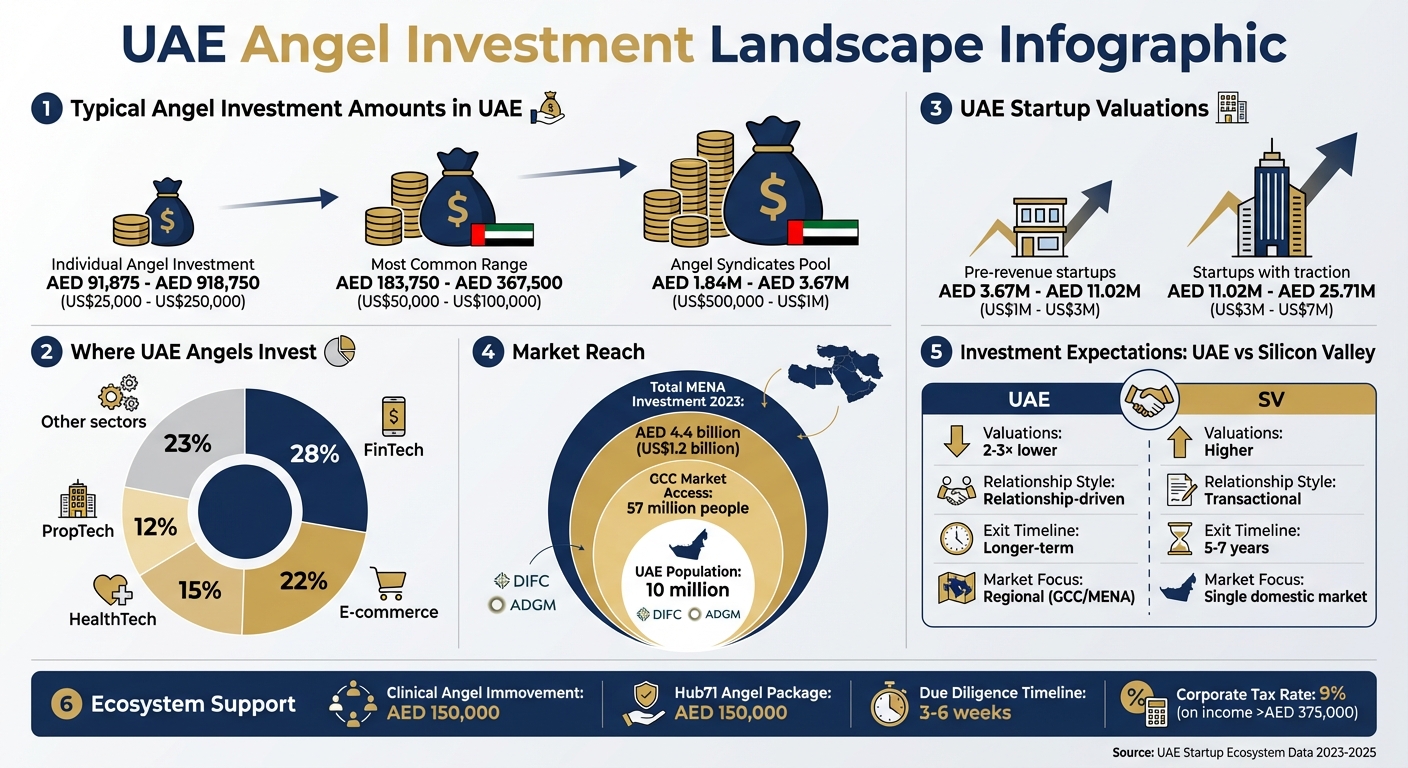
- Funding Landscape: Angel investments typically range from AED 91,875 to AED 918,750, with syndicates pooling up to AED 3.67 million.
- Market Challenges: Startups must adjust valuations and unit economics for local dynamics.
- Ecosystem Support: Free zones like DIFC and ADGM offer legal frameworks, while initiatives like Hub71 and Dubai Future Accelerators boost credibility.
- Pitching Tips: Use UAE-specific data, highlight regional expansion plans, and ensure regulatory compliance.
To succeed, founders should focus on creating tailored pitch decks, demonstrating regional traction, and maintaining transparent communication with investors. By leveraging the UAE’s resources and fostering personal relationships, startups can secure meaningful partnerships with global angels.
UAE Angel Investment Landscape: Key Statistics and Investor Expectations
Understanding Global Angel Investors and Their Interest in UAE Startups
Who Are Global Angel Investors?
Global angel investors are individuals who bring a wealth of experience, financial resources, and entrepreneurial success to the table. They invest their own money into early-stage startups in exchange for equity stakes [1][4]. Unlike venture capitalists, who work with institutional funds and usually invest during later stages, angel investors step in at the very beginning of a startup’s journey [1][6].
What truly makes angel investors unique is their active involvement. They don’t just provide funding; they also contribute industry insights, mentorship, hiring advice, and connections to other investors [1][2]. In the UAE, this approach differs significantly from the region's traditional focus on real estate investments. Angel investors are more willing to take risks, often waiting 5–7 years to see returns, and they prioritise guiding startups over simply earning passive income [4][2]. In 2023, UAE angel investors showed the most interest in sectors like FinTech (28%), E-commerce (22%), HealthTech (15%), and PropTech (12%) [2].
This hands-on strategy is one of the reasons UAE startups are increasingly drawing attention from global angel investors.
Why UAE Startups Attract Global Angels
The UAE offers a unique environment that appeals to global angel investors. Positioned as a key link between East and West, the country serves as a strategic gateway for startups looking to expand into the GCC and MENA regions [4][2]. Additionally, government initiatives like UAE Vision 2031 and Vision 2071 aim to diversify the economy and encourage innovation. These initiatives create a favourable climate for startups, offering benefits such as tax incentives and startup-friendly regulations [5][4].
Free zones like DIFC and ADGM further enhance the appeal by providing investor-friendly legal frameworks and clear paths for exiting investments [5][4]. High-profile success stories, such as Uber’s US$3.1 billion acquisition of Careem in 2019 and Amazon’s US$580 million purchase of Souq.com in 2017, have demonstrated the global potential of UAE startups [4]. These landmark exits have attracted a new wave of angel investors, including family office leaders, seasoned entrepreneurs, and corporate executives who are diversifying their portfolios beyond real estate [2].
This combination of strategic advantages and proven success stories explains why global angels are increasingly drawn to UAE startups.
What Global Angels Look For in UAE Startups
When evaluating UAE startups, global angel investors focus on several key factors:
- Regional scalability: Investors prefer startups that use the UAE as a launchpad to expand into the broader GCC market, which includes around 57 million people in countries like Saudi Arabia and Egypt.
- Founder-market fit: Teams with experience in the MENA region and the skills to navigate its relationship-driven business culture are highly valued. This often involves tackling local challenges, such as managing cash flow with post-dated cheques or handling logistics for cross-emirate deliveries [2].
- Traction: Investors look for validation specific to the region, such as partnerships with established players, participation in government accelerators, or pilot programmes with government entities. For example, Noor, an Arabic-first learning system, secured US$350,000 in 2022 after demonstrating its use in 43 schools across Dubai and Sharjah [2].
The table below highlights some key differences between UAE and Silicon Valley angel investment expectations:
| Feature | UAE Angel Expectations | Silicon Valley Expectations |
|---|---|---|
| Valuation | Typically 2–3× lower [2] | Higher valuations for early-stage startups [2] |
| Relationship | Relationship-driven [2] | Often transactional and fast-paced [2] |
| Market Focus | Regional expansion (GCC/MENA) is crucial [2] | Can focus on a single large domestic market [2] |
| Exit Horizon | Longer-term focus on sustainable regional success [2] | Generally 5–7 years [2] |
Regulatory compliance is another critical area. Startups must have a thorough understanding of UAE-specific legal requirements, including trade licences and other operational permissions. This is essential for earning the trust of angel investors and ensuring long-term success. Typically, angels spend 3–6 weeks on due diligence, with a strong emphasis on legal and regulatory compliance [2][4].
Preparing Your UAE Startup to Meet Global Angel Expectations
Creating an Effective Pitch Deck
When crafting your pitch deck, make sure it reflects the realities of the UAE market. Keep it concise - 10 to 15 slides in PDF format - and use local data to frame the problem. For example, you could highlight that "UAE SMEs lose 20% of revenue due to payment delays from post-dated cheques" [2].
In your market opportunity slide, go beyond the UAE’s 10 million population. Emphasise how the UAE serves as a gateway to the broader GCC and MENA regions, reaching a market of 57 million people [2]. A great example is Noor, who secured AED 1,285,000 (US$350,000) in 2022 by addressing a UAE-specific issue: 700,000 students struggling with remote learning. Her Arabic-first system, already in use at 43 schools in Dubai and Sharjah, had clear plans for expansion into Saudi Arabia and Egypt [2].
Your financial projections should reflect UAE-specific costs. This includes visa fees, differences in office space costs between free zones and the mainland, and higher customer acquisition costs [2]. These details show global angels that you have a solid understanding of the regional market and realistic financial goals.
Be sure to specify your incorporation type - whether ADGM, DIFC, or Dubai Internet City - as this impacts investor protections and exit strategies [2]. For B2C startups, showcasing Arabic language capabilities signals your commitment to the local market [2]. Also, outline potential exit paths, like acquisitions by regional powerhouses or international firms looking to enter the MENA region [2].
Once your pitch deck is in place, focus on proving your traction in the market.
Showing Traction and Market Validation
A strong pitch deck is only part of the equation - investors want to see real market traction. Use UAE-specific metrics to validate your market fit. For example, acceptance into government-backed accelerators such as Hub71, Dubai Future Accelerators, or Area 2071 demonstrates your understanding of the market. Partnerships with government entities or established regional players also add credibility [2].
Highlight key performance indicators (KPIs) such as monthly recurring revenue (MRR), customer acquisition cost (CAC), lifetime value (LTV), and churn rate, adjusted for the UAE market [8][9]. If your CAC is 30% higher than global benchmarks, explain how this leads to a 40% higher LTV [2]. With AED 4.4 billion (US$1.2 billion) invested in MENA startups in 2023, and a sharp funding decline in 2025, investors now prioritise financial discipline and proven traction over ambition [2][3].
Qualitative validation also matters. Conduct customer surveys, collect testimonials from respected local brands, and secure media coverage in outlets like Gulf Business, Arabian Business, or Wamda [2]. The average angel investment in the UAE ranges from AED 91,875 to AED 918,750 (US$25,000 to US$250,000), with most falling between AED 183,750 and AED 367,500 (US$50,000 to US$100,000). Angels also form syndicates, pooling resources between AED 1.84 million and AED 3.67 million (US$500,000 to US$1 million), which reflects a collective validation process [2].
To complement your traction, ensure your legal and regulatory compliance is airtight.
Meeting UAE Regulatory Requirements
A well-structured legal framework is essential to attract global angel investors. Many prefer free zones like DIFC and ADGM due to their familiar legal systems and strong investor protections [2][3]. It’s critical that your trade licence matches your actual business activities.
"We thought our 'trading and logistics services' licence covered our SaaS platform. During due diligence, an investor's lawyer flagged this... we had to amend our licence, which delayed the closing by three weeks" [2].
Register for UAE corporate tax, which applies a 9% rate on taxable income above AED 375,000 [11]. If your business operates in fintech, healthcare, or insurance, you may need additional approvals from regulatory bodies like the Central Bank of the UAE or the Telecommunications and Digital Government Regulatory Authority [11][8]. Activities with "Strategic Impact", such as banking or telecom, may require special approvals and could limit foreign ownership [11].
Prepare a data room with updated financials, trade licences, and intellectual property (IP) documents. Angels typically spend 3–6 weeks on due diligence and expect clean financials, valid trade licences, and clear IP ownership [2][10]. Ensure your developer agreements assign IP rights to your startup entity [2]. Consider using Simple Agreements for Future Equity (SAFE) or convertible notes, which are increasingly accepted in the UAE, to defer complex valuation discussions [1][2]. Pre-revenue startups in the UAE generally secure valuations between AED 3.67 million and AED 11.02 million (US$1 million to US$3 million), while those with proven traction can command valuations between AED 11.02 million and AED 25.71 million (US$3 million to US$7 million) [2].
Strategies for Building Credibility and Trust
Using the UAE Startup Ecosystem
Tapping into the UAE's thriving startup ecosystem can be a game-changer for building trust with global angel investors. Organisations like Dubai Angel Investors (DAI) and the Emirates Angels Investors Association offer more than just connections - they provide mentorship and vetted introductions that act as a "stamp of approval" for international investors [5][12]. These networks primarily focus on tech startups in the seed to Series A stages, helping founders build credibility without directly funding them.
Government-backed initiatives add another layer of trust. For instance, Abu Dhabi's Hub71 offers an Angel Investor Support Package worth AED 150,000, which covers setup and legal expenses, effectively reducing investor risk [5][6]. Similarly, being accepted into programmes like Dubai Future Accelerators or Area 2071 signals to global investors that your startup has both market insight and government backing [2]. Including experienced local advisors on your board further underscores your commitment to the region and strengthens your credibility [2]. Once you've leveraged ecosystem support, attending investor-focused events becomes the next logical step.
Attending Investor Events and Platforms
While networks are essential, direct engagement with global investors at major events is equally impactful. Events like GITEX Future Stars, Expand North Star, and the International Investors Summit (IIS) draw thousands of angels and venture capitalists from around the world [5]. For example, the 2024 Expand North Star event brought together over 1,200 investors managing more than $1 trillion in assets [16]. These gatherings provide opportunities to pitch your ideas, collect valuable feedback, and refine your market approach [13][15].
Take the case of Moove, a Nigerian startup that participated in Expand North Star in Dubai. After their appearance, they raised over AED 1.60 billion ($460 million) and expanded into 13 different markets [15]. Similarly, Dubai-based Qashio leveraged the fintech ecosystem and raised AED 72 million ($19 million) in early 2025, achieving profitability before expanding into Saudi Arabia and Europe [15].
In the UAE, building relationships often comes before formal deals. Use initial meetings to establish personal connections before diving into detailed pitches [2].
Connecting Through Founder Connects
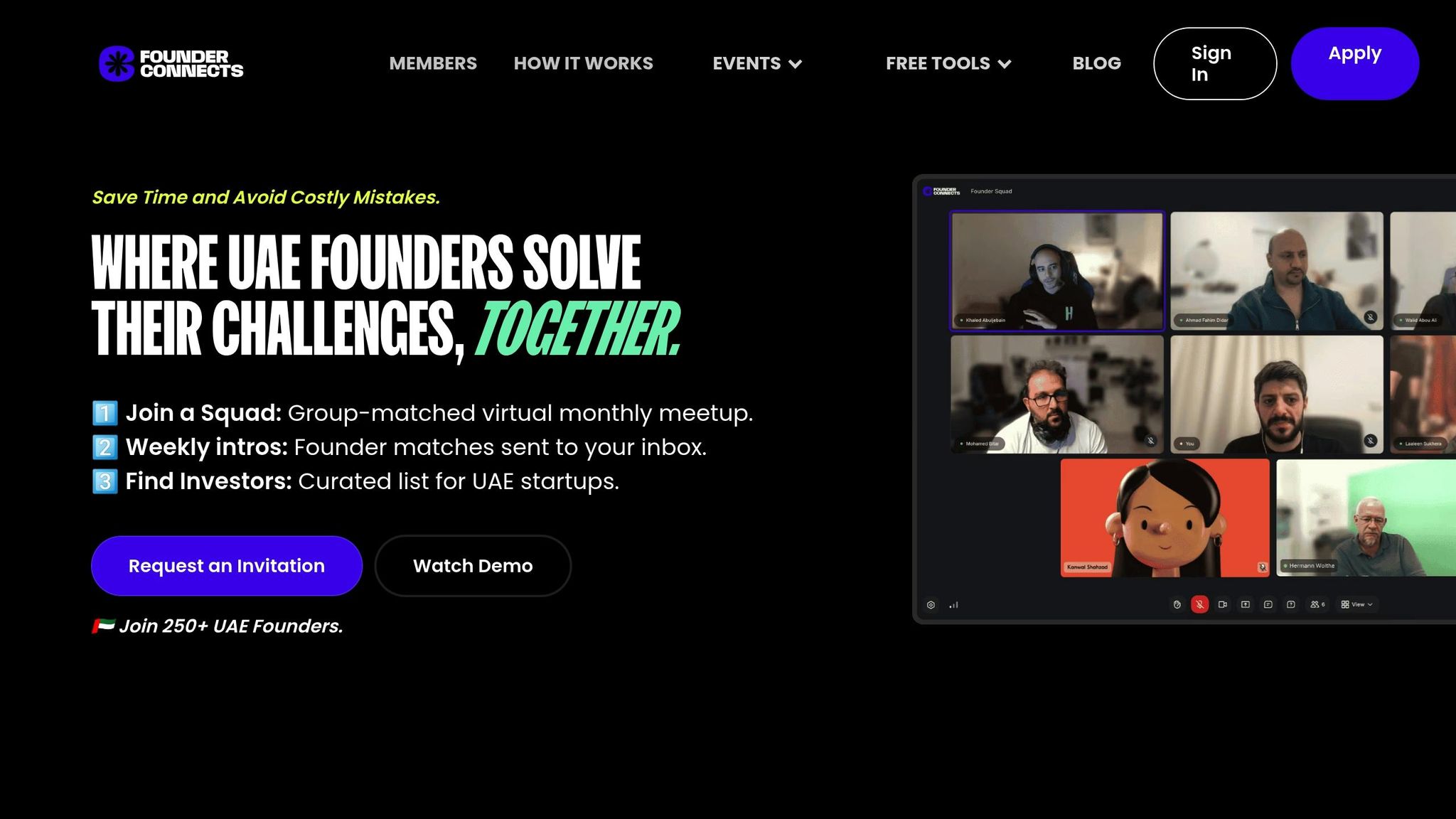
Founder Connects offers a structured approach to networking with investors through virtual masterminds and curated introductions. Their "Founder Squads" - monthly 90-minute virtual meetups - allow members to tackle challenges and share progress. This consistent engagement builds a transparent track record, which is highly appealing to potential investors [14].
sbb-itb-f597d8f
Building Long-Term Relationships with Global Angels
Maintaining Communication and Regular Updates
Set up a 24/1/2/Monthly communication plan to stay connected with investors. Here’s how it works: send a thank-you note within 24 hours, share an achievement after one week, follow up in two weeks if needed, and provide monthly updates to both current and potential investors [2]. This keeps your startup fresh in their minds, especially when you’re gearing up for future funding rounds.
When sharing updates, focus on achievements that demonstrate real progress. Highlight key wins like customer acquisition rates, revenue growth, or partnerships with major UAE players. For instance, in 2022, EdTech founder Noor raised AED 1.29 million ($350,000) from UAE angel investors. The key? Regular updates showcasing the success of her Arabic-first learning system, which was implemented in 43 schools across Dubai and Sharjah. This consistent progress gave investors the confidence to support her expansion into Saudi Arabia and Egypt [2].
To stay organised, maintain an investor CRM - it doesn’t have to be fancy; even a basic spreadsheet can help you track conversations and follow-ups [2].
Transparency is another cornerstone of investor relationships. UAE investors prefer a realistic view of challenges, especially regulatory and market risks. Instead of avoiding these topics, show how you’re addressing them. This builds trust and positions you as a proactive founder. Considering that nearly 29% of startups fail due to running out of funds, maintaining investor confidence is critical for securing follow-on funding [8].
Consistent communication backed by measurable results is the foundation for building long-term trust with investors.
Delivering Results and Adding Value
Hitting your milestones isn’t just good practice - it’s essential for keeping investor trust intact [17]. Regularly report key metrics like Customer Acquisition Cost (CAC), burn rate, and unit economics. However, tailor these metrics to reflect the UAE market. For example, CAC in the UAE might be 30% higher than global averages, but the payoff is a 40% higher lifetime value thanks to stronger customer loyalty [2].
Your investors can offer more than just capital - tap into their expertise and networks. Many UAE angels have C-suite connections and industry insights that can open doors to new opportunities. For example, in January 2026, Jade Autism, a Hub71-based startup, secured the $1 million Zayed Sustainability Prize for Health Innovation. This achievement highlighted how consistent progress within the UAE’s innovation ecosystem builds investor confidence, making it easier to scale solutions [17][18][6].
Additionally, show investors your roadmap for regional growth. UAE investors tend to "invest locally but think regionally", so presenting a plan to expand into Saudi Arabia, Qatar, or Egypt can demonstrate long-term potential [2]. Platforms like Founder Connects can assist by providing curated investor lists and expert consultations to refine your strategy and find the right partners.
Taking these steps ensures your investors see you as a reliable and forward-thinking founder.
Using UAE Resources to Support Investor Relations
In addition to communication and performance, leveraging the UAE’s resources can further solidify investor confidence.
Hub71 offers a fully digital infrastructure to manage investor portfolios, track investments, and even facilitate voting on projects [19]. Their Angel Investor Support Package provides AED 150,000 to cover setup and legal costs, making it easier to formalise relationships with investors [7][19]. Grouping multiple angels into an ADGM SPV (Special Purpose Vehicle) can also simplify cap table management and streamline communication [19][2].
| Resource | Provider | Primary Benefit |
|---|---|---|
| Angel Support Package | Hub71 | AED 150,000 for setup costs [7] |
| Digital Infrastructure | Hub71 | Investment tracking [19] |
| SPV Structures | ADGM / Hub71 | Simplified cap table [19] |
| Market Data Tools | MAGNiTT / Wamda | Regional benchmarks [2] |
The Emirates Angels Investors Association can connect you with potential investors and provide educational resources, although they don’t invest directly [1]. To speed up the funding process, use standardised documents like UAE-adapted SAFE templates. Typically, due diligence for individual angels in the region takes three to six weeks [2].
Mohammed Al-Binali, Value Creation Lead at Hub71, underscores the importance of grouping investors:
"It's better for a startup to have one grouped-up SPV instead of five individual investors providing capital. This makes it much easier and cleaner for startups to work with their funding" [19].
Funding Your Vision: Success Stories from Dubai's Investment Landscape
Conclusion
Earning the trust of global angel investors takes preparation, genuine engagement, and a focus on building long-term connections. Founders in the UAE know that successful investment here relies on both personal relationships and sound financial strategies. It’s essential to maintain detailed documentation, including financial models tailored to the UAE market, reflecting metrics like local CAC (Customer Acquisition Cost) and LTV (Lifetime Value). Additionally, structuring your business through ADGM, DIFC, or mainland jurisdictions ensures legal clarity and compliance [2].
Key strategies to stand out include showcasing your credibility through regional traction. For instance, being accepted into government-backed initiatives like Hub71 or Dubai Future Accelerators signals your startup’s validation [2]. Collaborating with established UAE companies or participating in government-led pilot programs further emphasises your commitment to the region’s economic development rather than pursuing a quick exit [2].
Strong communication is another cornerstone of trust. Maintain a structured approach by sending thank-you notes within 24 hours, sharing updates on achievements after a week, and providing detailed monthly progress reports [2][8].
Take full advantage of the UAE’s ecosystem support. Resources like Hub71’s support package and platforms such as Founder Connects can provide curated investor lists and expert guidance to refine your strategy. These tools help you navigate the regulatory landscape and connect with the right investors [7].
Lastly, global angel investors are drawn to startups with a clear plan for regional expansion into the GCC and MENA markets, home to over 57 million people. Tailor your growth strategy to these markets, adjust your unit economics to fit local realities, and utilise ecosystem resources to build strong, lasting relationships with investors [2]. By aligning with these strategies, grounded in the UAE’s unique startup environment, you can establish trust and secure meaningful partnerships with global investors.
FAQs
What do global angel investors prioritise when evaluating UAE startups?
Global angel investors often focus on fresh ideas, a business model that can grow, and a capable leadership team when assessing startups in the UAE. They’re also drawn to businesses that show a solid grasp of their market, clear growth opportunities, and a well-thought-out plan for sustained success.
Beyond that, having a proven track record, practical financial forecasts, and the ability to navigate the fast-changing UAE startup landscape can greatly boost a founder's chances of attracting funding. Establishing trust and maintaining open, honest communication are equally important for building strong, lasting relationships with international investors.
How can UAE startups showcase market traction to attract global angel investors?
UAE startups can appeal to global angel investors by providing clear and measurable evidence of market traction. This means presenting data like revenue growth, customer acquisition rates, retention metrics, and details of successful partnerships or pilot projects. These metrics signal strong demand and show that your business has the potential to scale - exactly what investors are keen to see.
A well-crafted pitch deck is another must-have. Include data-driven insights such as early sales numbers, customer testimonials, and strategic collaborations. This not only showcases your progress but also builds confidence in your startup's future. Being active in the UAE's startup ecosystem - through incubators, accelerators, or community events - can further strengthen your case. It demonstrates that your business is validated by the local market and actively engaged in the region’s entrepreneurial landscape.
Finally, aligning your startup with the UAE’s booming sectors like fintech, AI, or space tech can make your venture even more appealing. These industries are at the forefront of innovation in the UAE, and positioning your startup within them signals high growth potential to global investors.
How can UAE startups ensure compliance and build trust with global angel investors?
To gain the trust of global angel investors, startups in the UAE should make regulatory compliance and transparency a top priority. Begin by thoroughly understanding and following local laws. Recent changes, like the removal of local sponsor requirements for foreign ownership, have made compliance more straightforward. Staying up-to-date with these evolving regulations is key to building your credibility.
Equally important are strong governance practices and open communication. Investors want clarity, so ensure your financial reporting is accurate and all due diligence is handled properly. Connecting with local investor communities and platforms, such as government-backed programmes or angel networks, can also strengthen your position. By focusing on compliance and fostering relationships, your startup will stand out as a trustworthy and appealing investment option.
Related Blog Posts

Building in MENA? You don't have to do it alone.
Join 300+ founders in the Founder Connects Residency. Monthly squad calls, warm intros, $3M+ in perks, and much more. All for less than your monthly coffee budget.
Popular posts





Founder Connects is a premium MENA tech founder community. Meetups in Dubai and across MENA, Residency Squads of 8–10, and 400+ vetted WhatsApp founders (apply and screened).