

For a founder in the UAE, the phrase "meet expectations" isn't about aiming for average. It's about building a rock-solid reputation for reliability.
It means you actively and consistently deliver on the outcomes you promised. This isn't a "nice-to-have"; it's the bedrock of sustainable growth and the trust you build with investors, customers, and your own team. This guide gives you a simple framework to make it happen.
In the fast-paced MENA startup scene, it’s easy to get caught up in the "growth at all costs" frenzy. But the secret weapon that builds long-term value is consistently meeting expectations. It’s the difference between a flashy launch that fizzles out and a resilient business built to last.
Think of it like building one of Dubai's iconic skyscrapers. Before adding the record-breaking spire, you must prove the foundation meets every single engineering expectation. No shortcuts. For your startup, that foundation looks like this:
Ultimately, meeting expectations is about building trust. Without it, everything else falls apart.
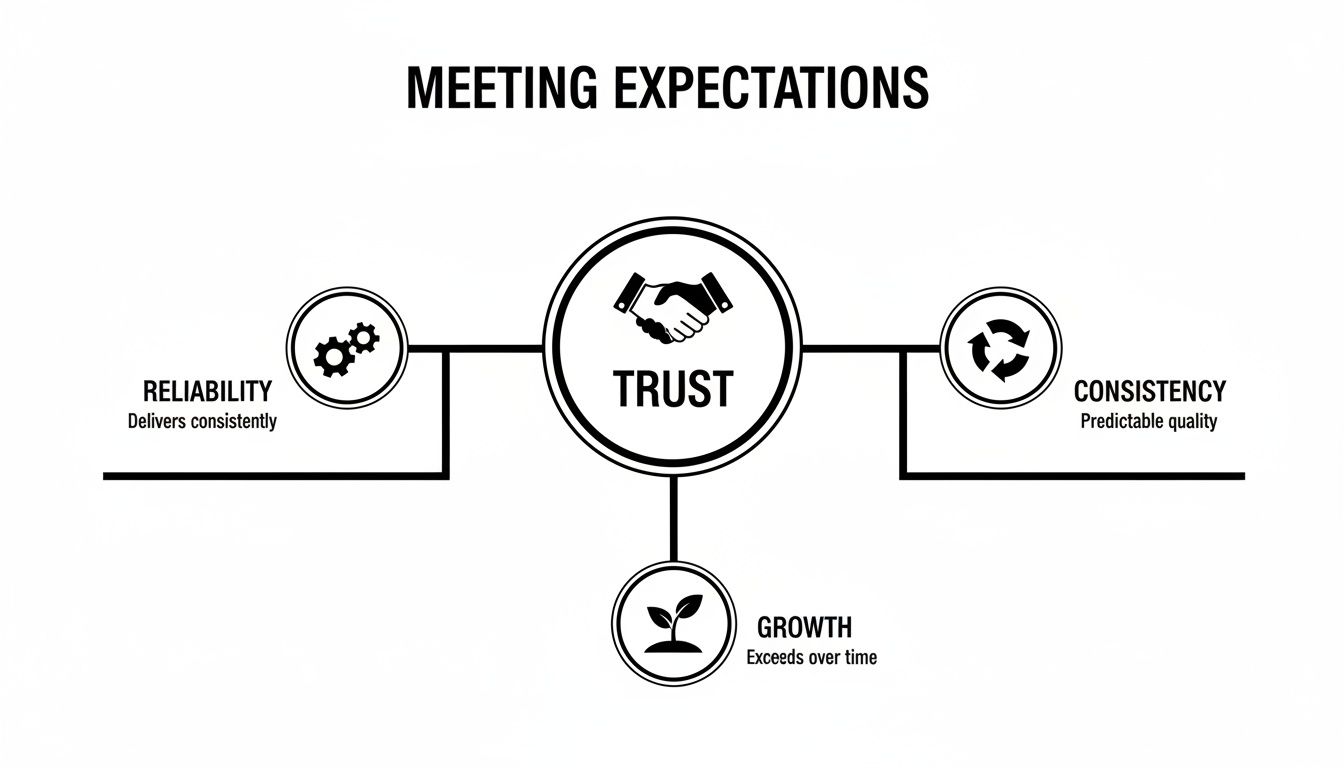
Reliability and consistency are the pillars holding that trust up. This guide is your practical playbook for building it.
In the high-energy startup world of the UAE and greater MENA, it's tempting to chase game-changing moves. But the real competitive advantage isn't found in erratic flashes of brilliance. It’s quieter but far more powerful: consistently meeting expectations. That simple commitment is what separates a fleeting startup from a business built to last.
For investors across the region, a founder who delivers on their promises, quarter after quarter, is a rare find. Follow-on funding conversations shift from a tough pitch to the next logical step. Why? Because dependability proves you can execute a plan and manage capital responsibly. That's how you build the trust needed for long-term backing.

This commitment to reliability does more than impress investors; it transforms your internal culture. When you meet expectations for your team, you create an environment that’s stable, focused, and ready to win.
Local Context: In an ecosystem where so many startups flame out, being the founder who consistently does what they say they will do builds a reputation that outlasts any single funding round. This is your currency.
Navigating the local business culture is crucial. You can dive deeper into the key differences between Middle East vs Western markets in our detailed guide. In the end, your reputation for delivering on your word is your most valuable asset in a market built on relationships.
As a founder, you're constantly juggling the needs of investors, your team, and customers. Each group has its own definition of success. The key to building trust is to stop guessing and start aligning. This isn't about mind-reading—it’s about structured listening.
For investors, meeting expectations is a numbers game. They look for clear, predictable progress against the metrics you agreed upon. This means disciplined cash management, hitting your KPIs, and being painfully honest in your updates, especially when things go wrong.
Your team runs on a different fuel. They need stability and direction. It’s on you to provide a clear strategic vision and create an environment where they can do their best work without chaos.
These competing needs can feel like they’re pulling you in different directions. Use this simple framework to create a unified strategy:
Founder Reality Check: Aligning these expectations is one of your toughest jobs. Success isn't about pleasing everyone all the time. It's about creating a single, cohesive strategy that moves all three groups forward together.
This challenge has intensified. UAE tech companies secured $2.0 billion in funding in the first nine months of the year, a 316% jump from previous lows. All that cash turns up the heat on founders to deliver real results. Dig into the numbers in the full report from Tracxn. Your ability to manage stakeholder expectations is what will set you apart.
Meeting expectations reliably isn't about luck; it's about a system. For busy founders, a simple, repeatable framework turns vague hopes into a clear operational process. This approach helps you stop reacting and puts you back in control.
In any business, but especially in a startup, success often comes down to clear communication, solid collaboration, and sharp expectation management.
This discipline is non-negotiable in the UAE’s competitive scene. Dubai alone has over 1,034 startups, and the country’s ecosystem ranks #21 globally. To stand out, you need operational excellence.

Use this three-step cycle: Define, Communicate, and Review. This rhythm ensures everyone—from your co-founder to your lead investor—is on the same page.
Next Action: Implement this Define-Communicate-Review cycle for one key company goal this month. It transforms "meeting expectations" from a passive outcome into an active process that builds trust.
Sooner or later, every MENA founder faces unrealistic expectations. An investor pushes for an impossible growth target, a key client demands features you can’t build, or you set a personal goal that’s out of reach. Handling these conversations professionally is a core leadership skill.
Ignoring the problem is a recipe for disaster. Chasing an impossible target burns out your team, wastes resources, and shatters trust. When facing constant pressure, it's crucial to know how to avoid burnout at work by hitting the reset button. The goal is to turn a potential conflict into a productive, data-driven conversation.

The key is a calm, proactive, data-backed approach. Don't wait until the end of the quarter to share bad news. The second you spot a misalignment, act.
Here’s a simple framework for the conversation:
What to Say: Instead of making excuses, frame it collaboratively. Try: "Based on our current sales cycle of 60 days, the original revenue target is at risk. Here's our revised forecast and the key assumptions behind it. Let's discuss."
This approach repositions you from someone failing to deliver into a strategic partner who manages reality. That builds far more long-term trust than chasing an impossible target and is the true meet expectations meaning in action.
For founders in the UAE and MENA, knowing what it means to meet expectations isn't enough. The real value comes when you turn that knowledge into a consistent practice—one that builds trust and fuels growth.
Meeting expectations is the bedrock of solid execution. It’s how you signal to investors, your team, and customers that you are a reliable operator. In a region where capital and competition are fierce, this is a core business discipline, not a soft skill.
Don't let this be just another article you read. Put this insight to work this week with one of these high-impact actions:
Getting this right takes practice, just like nailing your KPIs. If you need a refresher, check out our ultimate guide on KPI development for startups.
Let's tackle the real-world questions MENA founders often ask about managing expectations.
While it sounds safe, constantly under-promising can signal a lack of ambition to savvy MENA investors. A smarter strategy is to promise realistically and deliver reliably. Base your goals on solid data. Set targets that are a stretch but still achievable. This builds far more long-term trust than sandbagging targets for an easy win.
Disciplined, proactive communication is your best tool. After every key meeting, document the agreed-upon goals in writing. Use your monthly investor update to reiterate those goals and show progress against them. If you sense a shift, request a formal meeting to nail down the new targets and, crucially, what additional resources you'll need to hit them. The key is to keep expectations anchored.
First, look in the mirror. Were your expectations crystal clear and realistic? Does your team have the tools, skills, and clarity they need to succeed? Once you've confirmed this, give direct, constructive feedback rooted in data, not emotion.
Actionable Feedback: Instead of saying, “You’re not working hard enough,” try this: “We missed our weekly target of 20 new leads. Let’s walk through the process together to find the bottleneck.”
This simple switch transforms a critique into a collaborative problem-solving session—the foundation of a high-performance culture.
At Founder Connects, we believe honest conversations and peer accountability are critical for growth. If you're a founder in the MENA region looking for a private community to share challenges and make real progress, learn more about joining us at https://www.founderconnects.com.


