

Top 5 Reward Crowdfunding Platforms in UAE

Building in MENA? You don't have to do it alone.
Join 300+ founders in the Founder Connects Residency. Monthly squad calls, warm intros, $3M+ in perks, and much more. All for less than your monthly coffee budget.

Reward crowdfunding is gaining traction in the UAE, offering startups a way to secure funding while maintaining full ownership. By providing non-monetary rewards like early product access or exclusive perks, these platforms help entrepreneurs test market demand and build brand visibility. Here's a quick look at the top options:
- Kickstarter: Global platform with an "all-or-nothing" funding model, ideal for launching tangible products.
- Indiegogo: Offers flexible and fixed funding models, plus post-campaign fundraising through its "InDemand" feature.
- GoFundMe: Primarily donation-focused but includes a reward-based option, better suited for social causes.
- Patreon: Subscription-based model for ongoing support, perfect for creators offering continuous value.
- Eureeca: Equity crowdfunding for mature SMEs, with a focus on regional and global investors.
Each platform caters to different needs, from product launches to equity investment. Choosing the right one depends on your business goals, fee structure, and audience. For UAE-based startups, platforms regulated by local authorities like the DFSA and SCA provide added transparency and trust.
Quick Comparison:
| Platform | Funding Model | Fees | Best For | UAE Relevance |
|---|---|---|---|---|
| Kickstarter | All-or-nothing | ~8%-10% | Tangible products (e.g., gadgets) | Validates market demand and builds early community. |
| Indiegogo | Flexible/Fixed | ~8% | Tech, consumer products | Global reach and post-campaign fundraising. |
| GoFundMe | Flexible | ~8% | Social causes, personal projects | Limited for business-oriented campaigns. |
| Patreon | Subscription-based | ~8%-10% | Content creators, ongoing projects | Continuous funding for creators and niche businesses. |
| Eureeca | Equity-based | ~6%-7% | Mature SMEs seeking large investments | Licensed by DFSA, connects startups with global/regional investors. |
Reward-based crowdfunding is an important alternative for UAE entrepreneurs, especially with banks rejecting 50%-70% of SME financing applications. Whether you're launching a product, scaling a business, or building a community, there's a platform tailored to your needs.
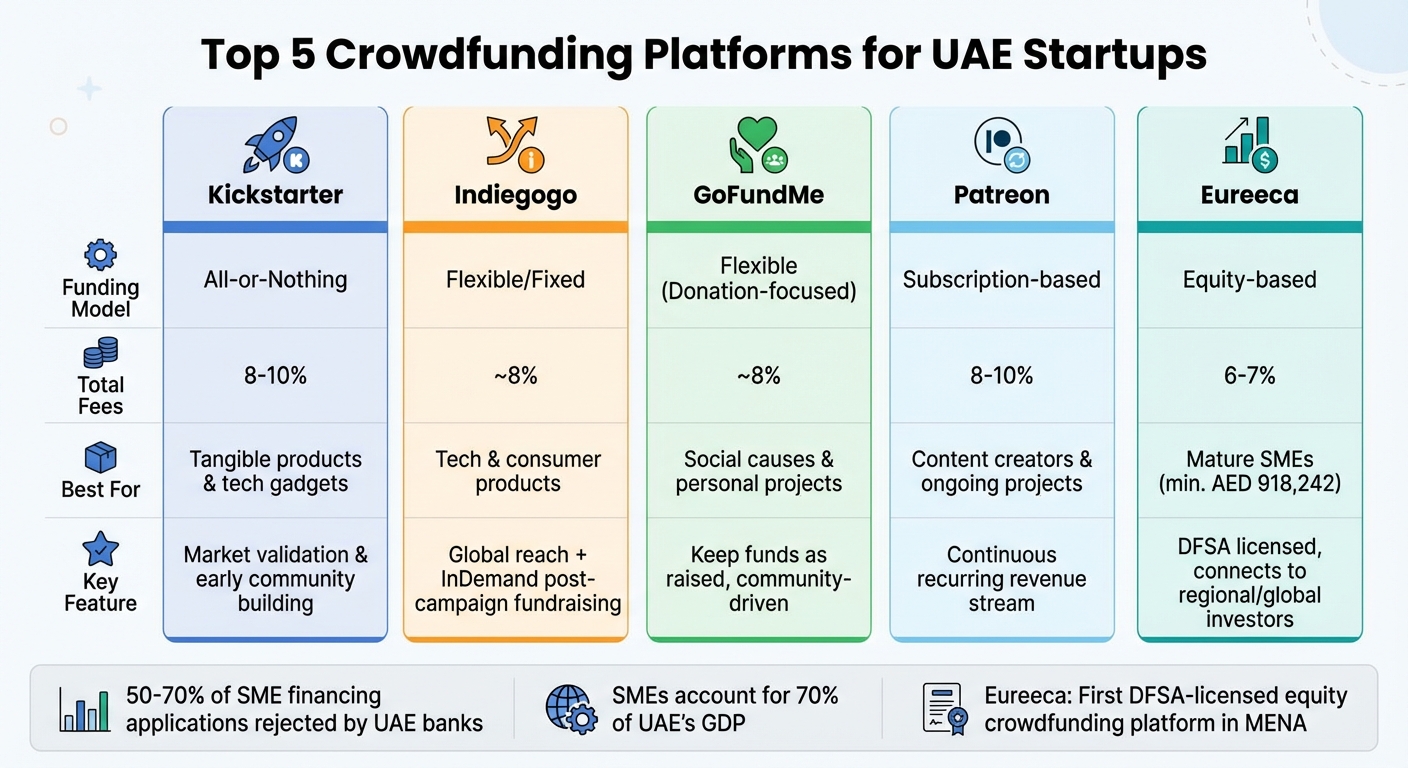
Comparison of Top 5 Crowdfunding Platforms in UAE: Features, Fees, and Best Use Cases
Reward based crowdfunding explained. How does reward crowdfunding work? Kickstarter Seedrs Indiegogo
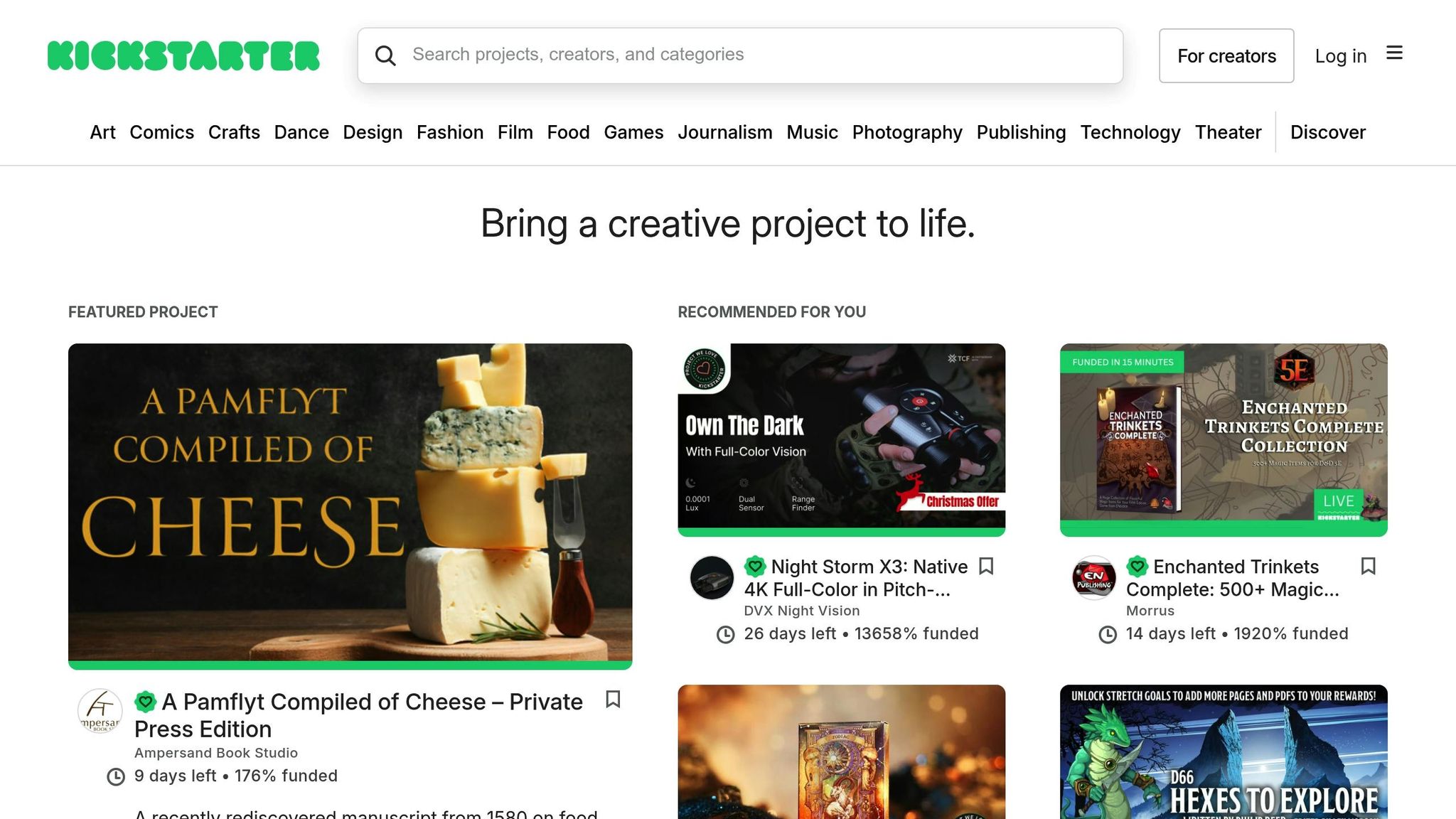
1. Kickstarter
Kickstarter provides non-monetary rewards - like early product access and exclusive perks - which is especially helpful for startups in the UAE, where bank loan approval rates can be challenging[2][10].
Funding Model
Kickstarter uses an all-or-nothing funding model, meaning funds are only released if the campaign meets its full funding goal within the specified time. If the goal isn’t reached, backers either get their money back or aren’t charged at all. This ensures entrepreneurs secure the minimum budget needed to deliver their projects as promised[3][4].
Fee Structure
Kickstarter takes a 5% fee from successfully funded campaigns, along with an additional 3%-5% for payment processing[11]. Since there are no upfront costs to start a campaign, this model is a great option for UAE startups looking to test new ideas without significant initial investment[2].
Primary Use Cases
Kickstarter is ideal for launching tangible products. These include tech gadgets, art projects, music albums, films, and even software development[5]. A notable example is Exploding Kittens, which smashed its $10,000 goal by raising $8.7 million in just 30 days[6].
Relevance to UAE Startups
For UAE startups, Kickstarter offers more than just funding. It’s a way to validate market demand, gather early feedback, and build a loyal community of supporters who can become brand advocates. Additionally, it serves as an effective marketing platform[2][10]. However, founders should ensure their intellectual property - like trademarks or patents - is secured with the Ministry of Economy before launching their campaign[4].
2. Indiegogo
Indiegogo plays a prominent role in the UAE's reward-based crowdfunding landscape, providing startups with a fresh way to secure funding from a global audience. Let’s dive into what makes this platform a standout choice.
Funding Model
Indiegogo offers flexibility that sets it apart from platforms like Kickstarter. Instead of an all-or-nothing model, it provides two options: flexible funding and fixed funding. With flexible funding, you get to keep all the money you raise (after fees), even if you don’t hit your target goal. Plus, with its InDemand feature, you can continue raising funds and accepting pre-orders even after your campaign ends. This makes it an excellent tool for bridging the gap between crowdfunding and long-term e-commerce operations [12].
Fee Structure
When using Indiegogo, expect a 5% platform fee on the total funds collected. On top of that, there’s an additional payment processing fee of about 3%, plus a fixed charge of roughly AED 1.10 per contribution. In total, you’ll need to factor in around 8% of your funds going towards fees [12].
Primary Use Cases
Indiegogo is especially well-suited for tech startups, innovative consumer products, and creative projects [12]. For UAE entrepreneurs, it’s a great way to gauge market interest on a global scale before committing to full production. Since the platform supports campaigns in over 200 countries, you’re not just limited to local backers - you can attract supporters from all over the world [12].
Relevance to UAE Startups
With SMEs accounting for about 70% of the UAE's GDP, Indiegogo offers a valuable avenue for businesses to raise capital [2]. Beyond funding, it allows startups to test public interest in their products, giving them crucial insights into market demand [2]. Additionally, campaigns on Indiegogo often generate marketing buzz, media coverage, and feedback from a global community of backers. These supporters can evolve into long-term advocates for your brand [2].
It’s worth noting that crowdfunding activities in the UAE are regulated by authorities like the DFSA and SCA, ensuring investor protection and compliance with local laws [2][1].
3. GoFundMe
GoFundMe is a well-known global platform, primarily focused on donation-based crowdfunding, with a secondary option for reward-based campaigns offering tangible benefits [6]. However, for UAE startups looking to secure funding through reward-based models, GoFundMe's emphasis on donations makes it less suitable.
Funding Model
GoFundMe uses a flexible funding model, allowing funds to be accessed as they are raised rather than waiting to hit a specific target [6]. While it does provide a reward-based option where backers receive items like products, services, or acknowledgments in return for their pledges, this isn't the platform's main focus. For UAE startups, this flexibility may not align well with the structured funding needs often required for business growth.
Fee Structure
The platform charges a 5% fee on all funds raised, along with payment processing fees of 2.9% plus AED 1.10 per transaction [11].
Primary Use Cases
GoFundMe is most commonly used for donation-focused campaigns, such as funding personal projects, covering medical expenses, or providing emergency relief [6]. Its strength lies in supporting charitable and personal causes rather than business-oriented reward campaigns.
Relevance to UAE Startups
Given its fee structure and donation-centric model, UAE startups might find platforms like DubaiNEXT more aligned with their needs. DubaiNEXT, backed by the government, caters specifically to local innovators and SMEs, offering a better fit for business funding. For startups in tech, fintech, or AI looking for reward-based funding, GoFundMe may not be the most effective choice.
sbb-itb-f597d8f
4. Patreon
Patreon is a membership-based crowdfunding platform that focuses on ongoing support rather than one-time project funding [6]. It’s designed to help creators and businesses establish a steady income by offering exclusive content, products, or services to their supporters through monthly subscriptions.
Funding Model
Patreon’s funding model is built around recurring contributions. Supporters pledge a set amount on a regular basis in exchange for perks like exclusive content or early access [6]. Unlike traditional crowdfunding campaigns, this model ensures a continuous flow of funds. For startups in the UAE, this can be especially beneficial for businesses that thrive on providing ongoing value, such as subscription-based services or regular updates, rather than a single product launch. The recurring nature of this model also allows creators to plan and grow sustainably.
Fee Structure
Patreon takes a platform fee of around 5% from the total funds raised [11]. On top of that, payment processing fees typically range between 3% and 5%, depending on the payment method used [11]. These fees are automatically deducted from each transaction, so UAE-based startups need to account for them when setting their membership pricing. While these fees support the platform's maintenance, startups should carefully structure their tiers to ensure profitability.
Primary Use Cases
Patreon is particularly suited for creative projects, content creators, and startups that provide continuous value to their audience [6]. It has been a game-changer for many entrepreneurs, helping them transform passion projects into full-fledged ventures by cultivating a loyal supporter base. For UAE tech startups, AI developers, and creative entrepreneurs, Patreon can be an excellent way to offer early product access, exclusive updates, or premium services to their backers.
Relevance to UAE Startups
For UAE entrepreneurs, Patreon offers an alternative route to raising capital without the complications of high-interest loans or the approval barriers often faced with traditional financing. This is especially critical in a market where 50% to 70% of SME financing applications are denied by local banks [2]. Patreon allows startups to secure funding without giving up equity or taking on debt [9]. However, founders should ensure their campaigns comply with UAE regulations when promoting and collecting funds [9]. This makes Patreon a compelling option for those looking to grow their business while maintaining control over their operations.
5. Eureeca
Eureeca, a crowdfunding platform based in Dubai, has been making waves since its launch in 2013 as the first to introduce equity crowdfunding to the MENA region [3]. Unlike platforms that focus on rewards or perks, Eureeca offers an equity-based model. This means investors gain ownership stakes in the businesses they back, providing a different avenue for UAE startups to secure funding.
Funding Model
Eureeca operates with a target-based funding system. Startups typically have 90 days to hit their funding goal, which must be at least US$250,000 (around AED 918,242). To initiate a campaign, startups are required to submit a pitch deck, a detailed business plan, and financial projections covering 3–5 years. If the funding target is reached within the 90-day period, the funds are released to the business [3]. This model is more structured compared to flexible crowdfunding platforms, making it ideal for startups aiming for significant, long-term investment.
Fee Structure
Eureeca applies a success fee of 6–7% on the total funds raised, along with investor fees ranging from 0.5% to 2%. These fees are charged only if the campaign successfully meets its funding target [11]. This approach ensures that Eureeca’s success is directly tied to the success of the campaigns hosted on its platform.
Relevance to UAE Startups
As the first equity crowdfunding platform licensed by the Dubai Financial Services Authority (DFSA), Eureeca provides an added layer of trust and security for both entrepreneurs and investors [13]. This regulatory endorsement strengthens its role in the UAE’s startup ecosystem. For instance, the Dubai-based car-sharing service Udrive successfully raised $1.3 million (approximately AED 4.77 million) through Eureeca, showcasing its ability to support large-scale funding efforts for regional businesses [2,7]. With offices in Dubai, London, and Amsterdam, Eureeca also connects UAE startups with a global network of investors [3]. By offering an equity-based alternative, Eureeca complements reward-based crowdfunding platforms and plays a key role in the UAE's growing entrepreneurial landscape.
Platform Comparison
Choosing the right platform depends on your funding model, fee structure, and target audience. Here's how some popular platforms cater to different startup needs:
Kickstarter and Indiegogo both charge approximately 5% on successful campaigns [2]. Kickstarter operates on an "All-or-Nothing" funding model, meaning you only receive funds if your campaign meets its full goal [7]. On the other hand, Indiegogo offers more flexibility with two options: "Fixed" (All-or-Nothing) and "Flexible" (Keep-what-you-raise) funding models [14]. This flexibility can be a game-changer for projects that benefit from partial funding.
GoFundMe, unlike Kickstarter and Indiegogo, focuses on donation-driven campaigns. It allows you to keep all funds raised, making it an excellent choice for community projects and social causes [6].
Patreon uses a subscription-based model, making it ideal for creators seeking ongoing financial support [6]. This approach suits the UAE market, where creators often need steady, recurring backing for their work.
Eureeca, however, is geared towards equity crowdfunding and is designed for more mature SMEs. It has a minimum funding target of US$250,000 (around AED 918,242) [3]. Eureeca stands out by aligning with UAE regulations, making it a great option for established businesses in the region. While Kickstarter, Indiegogo, GoFundMe, and Patreon connect users with a global audience for projects with broader appeal [2], Eureeca focuses on connecting regional entrepreneurs with a network of investors, offering a tailored approach for UAE businesses [2].
This variety of platforms highlights the UAE's growing embrace of diverse crowdfunding models [2].
Choosing the right platform depends on your project's goals. Whether you're launching a product, building a content-driven business, supporting a social initiative, or seeking equity funding, there's a platform that fits. For UAE-based tech and fintech startups, platforms that cater to regional needs and regulations can provide an added advantage [2].
Conclusion
Reward-based crowdfunding offers practical advantages for startups in the UAE. As explored earlier, this funding approach allows businesses to raise capital while maintaining complete ownership. Each platform caters to specific needs: Kickstarter is ideal for launching tech products with global appeal through its All-or-Nothing model, Indiegogo provides flexibility with both fixed and flexible funding options, GoFundMe supports community-driven causes, Patreon helps content creators generate recurring income, and Eureeca focuses on established SMEs seeking equity investment, with minimum targets around AED 918,242[3].
Choosing the right platform is a critical decision for UAE founders. Factors like project type, fee structure, and audience should guide this choice. For initiatives targeting the UAE community, government-backed platforms that align with local regulations may be the best fit. Meanwhile, international platforms can connect startups to a global pool of backers. In an environment where traditional banks often decline SME financing, crowdfunding has become an essential alternative.
"Conventional lenders are sometimes unwilling or unable to support SMEs given their limited assets or lack of a proven record of company operations." – Official UAE Government Portal (u.ae)[8]
Beyond funding, these platforms provide additional benefits such as market validation, media exposure, and instant user feedback. Recent data underscores the growing success of crowdfunding in the UAE[2], reflecting its increasing acceptance. Whether you're launching a tech device, pursuing a creative endeavour, or scaling an established business, there’s a platform tailored to your needs.
For UAE-based tech startups, fintech projects, and AI-driven ventures, crowdfunding platforms not only provide capital but also help build a loyal community - a key factor for long-term success. Select the platform that aligns with your funding goals, craft a strong marketing strategy, and ensure your intellectual property is protected before going live.
FAQs
How do Kickstarter and Indiegogo differ for startups in the UAE?
Kickstarter and Indiegogo stand out as two of the most widely recognised reward-based crowdfunding platforms, but their usability can differ for startups in the UAE. Kickstarter leans heavily towards creative projects and enforces stricter guidelines, while Indiegogo is more flexible and even offers ongoing funding options through its InDemand feature. That said, neither platform currently supports transactions in AED (United Arab Emirates Dirham). This means UAE startups will need to rely on other currencies, such as USD or EUR, for their campaigns.
To choose the right platform, it’s essential to evaluate their terms and features carefully, ensuring they align with your startup’s goals and target audience. For additional support tailored to the UAE market, platforms like Founder Connects can be invaluable. They link startups with local investors, communities, and resources designed specifically for the UAE’s thriving entrepreneurial ecosystem.
What is equity crowdfunding on Eureeca, and how can UAE businesses benefit from it?
Equity crowdfunding on Eureeca gives businesses in the UAE a chance to raise funds by offering shares to individual investors through their platform. In return for their investment, contributors gain equity in the business, effectively becoming part-owners.
This funding approach is especially useful for startups and SMEs in the UAE. It opens doors to a wide network of investors while allowing businesses to retain operational control. Beyond securing capital, it also helps build a sense of community and support around your venture.
What makes Patreon a suitable choice for UAE startups seeking crowdfunding?
Patreon offers a promising avenue for UAE startups centred around creative projects or content-based ventures. It provides a way to cultivate a dedicated community of supporters who contribute regularly in return for access to exclusive content, unique products, or special experiences.
This platform works especially well for startups in areas like art, design, media, or education - industries where maintaining strong audience connections is essential. With its flexible membership options and recurring funding model, Patreon helps startups secure a consistent income while building deeper relationships with their supporters.
Related Blog Posts

Building in MENA? You don't have to do it alone.
Join 300+ founders in the Founder Connects Residency. Monthly squad calls, warm intros, $3M+ in perks, and much more. All for less than your monthly coffee budget.
Popular posts





Founder Connects is a premium MENA tech founder community. Meetups in Dubai and across MENA, Residency Squads of 8–10, and 400+ vetted WhatsApp founders (apply and screened).