

Dubai's startup scene is more than just funding announcements. Behind every success story are specific strategies and hard-won lessons that turned an idea into a market leader. This article dissects the operational DNA of notable startup companies in Dubai to show you how they did it.
This is a practical guide for founders in the UAE and MENA. Instead of generic advice, you'll find a breakdown of each company's model, how they gained traction, and the key decisions that defined their growth. Before you can follow their path, you must learn how to validate a startup idea — a critical first step.
Each profile gives you immediate, actionable insights. You'll see what makes their approach unique, how they navigated the UAE market, and what specific lessons you can apply to your own venture. This is your inside look at the frameworks building the future of the region's economy.
Careem is one of Dubai's most prominent startup success stories, evolving from a ride-hailing app to a comprehensive "super-app." Its journey offers a powerful case study in scaling and diversification. For UAE founders, Careem isn't just a service; it's a potential distribution partner and a benchmark for building a high-frequency consumer brand in the MENA region.
Careem expanded from transport to cover a wide array of daily needs, making it a central part of life for millions.
For other startups, Careem offers a direct path to a massive, engaged audience through its "mini-app" integrations. This allows third-party businesses to build their services directly within the Careem app, leveraging its user base and payment infrastructure without building a standalone app from scratch.
Next Action: Analyze Careem’s verticals to identify partnership gaps. Could your B2C service complement their food, grocery, or mobility offerings? Draft a one-page proposal for their partnerships team on how your mini-app can increase user engagement or add a new revenue stream to their platform.
Pros:
Cons:
Website: https://careemuae.com
Kitopi is a foundational pillar for food and beverage (F&B) brands and one of the most successful startup companies in Dubai. This tech-powered company operates a vast network of cloud kitchens, offering a capital-light path for F&B concepts to launch and scale. For food founders, Kitopi is an operational engine, letting you focus on brand and menu while outsourcing production and logistics.

Kitopi's model is built on centralization and efficiency, allowing food brands to expand their delivery footprint without building physical restaurants.
Partnering with Kitopi lets F&B founders sidestep the huge costs and headaches of setting up commercial kitchens. The model involves licensing your brand to Kitopi, which then manages production and delivery. This is ideal for established brands seeking expansion or new concepts testing the market with minimal risk.
Next Action: Before approaching Kitopi, ensure your brand identity is well-defined and your menu is standardized and scalable. Prepare a business case showing your concept's unique market fit and potential for high-volume orders. Frame it as a new, profitable vertical for their portfolio.
Pros:
Cons:
Website: https://www.kitopi.com
CAFU has redefined vehicle ownership convenience, becoming one of the most recognized homegrown startup companies in Dubai. By delivering fuel and car services directly to a customer's vehicle, it removes a common errand from their to-do list. For founders, CAFU is a powerful logistics network and a potential B2B2C partner for real estate, fleet management, and mobility businesses.

CAFU’s core value is convenience, delivered through a vertically integrated logistics platform that solves a recurring need for vehicle owners.
The primary opportunity for startups is partnering with CAFU to access its established logistics network and customer base. A startup offering specialized car detailing, smart parking, or in-car subscription services could partner with CAFU to reach customers at the exact moment they are thinking about their vehicle.
Next Action: Founders in mobility, real estate tech, or on-demand services should analyze CAFU’s customer journey. Could your product be offered as an add-on during booking? Approach their business development team with a pilot proposal focused on a specific community or corporate fleet to demonstrate clear user demand and revenue potential.
Pros:
Cons:
Website: https://www.cafu.com
Tabby is a leading fintech player among startup companies in Dubai, pioneering the Buy-Now-Pay-Later (BNPL) model in the MENA region. Its rapid adoption by consumers and merchants shows a deep understanding of local purchasing behavior. For e-commerce founders, Tabby is a critical tool for boosting sales, increasing average order value (AOV), and reducing checkout friction.
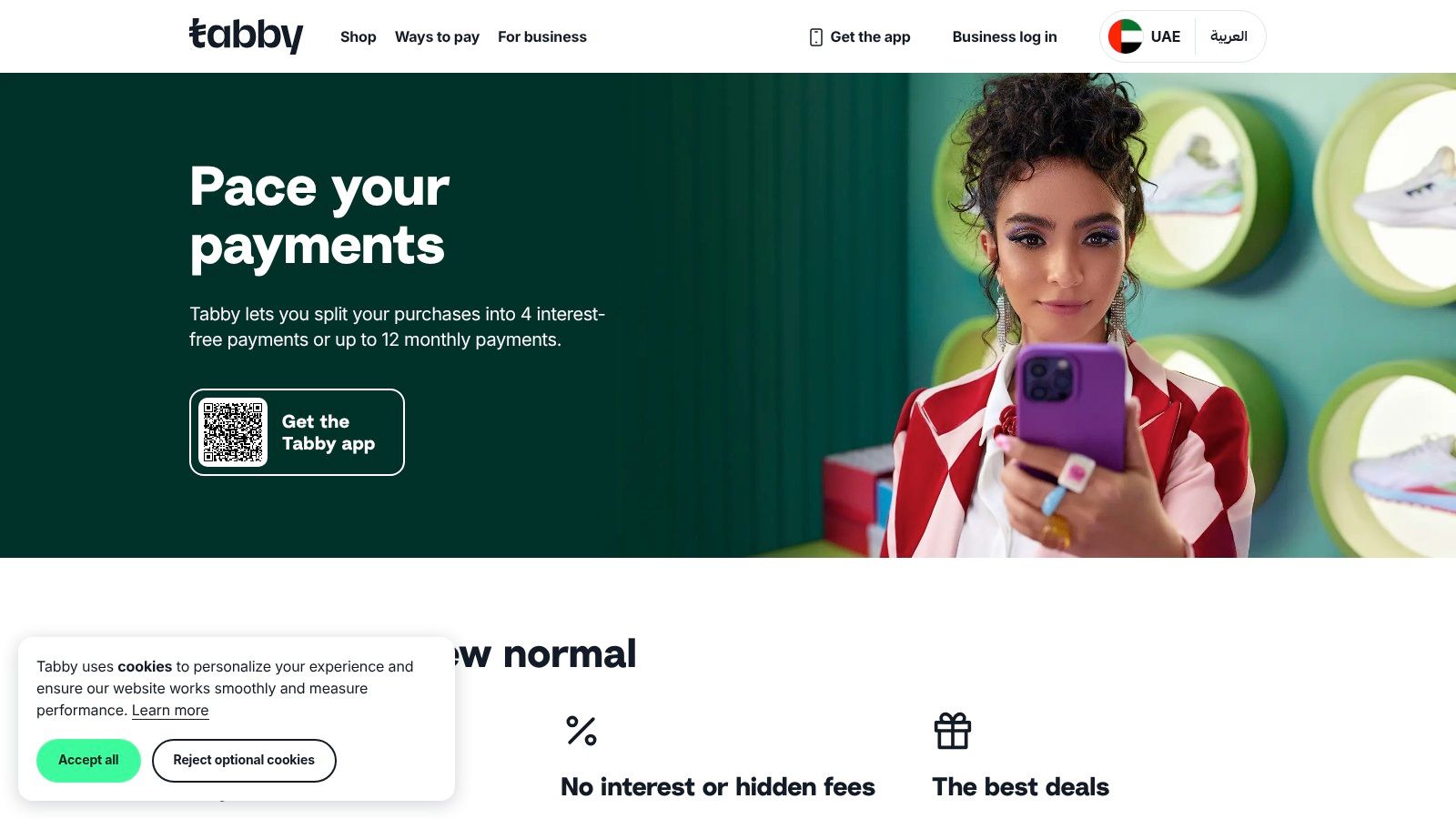
Tabby makes purchases more manageable for customers by splitting payments, which in turn drives higher conversion for businesses.
For founders in e-commerce or retail, integrating Tabby is a direct strategy to improve key performance metrics like conversion rates and AOV. The integration process is straightforward for popular platforms like Shopify, Magento, and WooCommerce, allowing startups to activate the service with minimal technical overhead.
Next Action: If your startup sells online, run an A/B test by integrating Tabby at checkout. Measure the uplift in conversion rate and average order value. Use this data to justify its permanent place in your payment stack and present a clear ROI to your team or investors.
Pros:
Cons:
Website: https://tabby.ai/en-ae
Huspy is a powerful proptech innovator among startup companies in Dubai, tackling the complex process of buying a home. The company has modernized the slow, paper-heavy mortgage process by integrating property discovery with financing. For founders, Huspy shows how to productize a complex service, delivering speed, transparency, and a superior customer experience.

By focusing on the financial choke-point of property transactions, Huspy has become a critical intermediary between buyers, agents, and banks.
Huspy’s position at the intersection of finance and real estate creates distinct partnership opportunities. Its core business generates high-intent leads for property purchases, making its ecosystem valuable for any business targeting new homeowners. Startups in home services, interior design, or insurance could propose collaborations to reach Huspy’s customers.
Next Action: Founders in adjacent industries should view Huspy as a customer acquisition channel. Map the home-buying journey and identify post-purchase needs your startup solves. Approach Huspy with a revenue-share partnership proposal that offers their clients exclusive discounts or an integrated service.
Pros:
Cons:
Website: https://www.huspy.com
Sarwa stands out among startup companies in Dubai as a pioneer in making investing accessible to everyone in the region. By launching one of the first robo-advisories, it broke down barriers to wealth management with a transparent, digital-first alternative. For founders and their employees, Sarwa provides a practical tool for wealth creation and a clear example of how to build trust in a regulated financial sector.

Sarwa’s mission is to democratize investing through technology, catering to both passive and active investors while maintaining local regulatory compliance.
As a founder, the most immediate opportunity is offering Sarwa as a financial wellness benefit to your employees. Companies can partner with Sarwa to provide teams with educational workshops and preferential investing terms, a powerful retention tool in a competitive hiring market.
Next Action: Consider introducing a financial wellness program for your team by partnering with Sarwa. Explore corporate packages that could include free financial literacy seminars or a company contribution match for employee investment accounts. This positions your startup as an employer that cares about its people's long-term financial health.
Pros:
Cons:
Website: https://www.sarwa.co
Pure Harvest Smart Farms addresses one of the region's most critical challenges: food security. As one of the most well-funded startup companies in Dubai, it is pioneering controlled-environment agriculture (CEA) to produce high-quality fresh produce year-round. For founders, Pure Harvest is a prime example of a mission-driven business that successfully aligns with national strategic priorities, securing substantial funding and government support.

By deploying tech-enabled greenhouses, Pure Harvest mitigates the Gulf's extreme climate, offering a sustainable alternative to import dependency.
For founders in logistics, sustainable packaging, or B2B software, Pure Harvest is a potential high-volume client. Its complex operations require solutions for cold-chain logistics, resource management software, and sustainable packaging. This success also provides a powerful blueprint for aligning a business with government initiatives like the UAE's National Food Security Strategy 2051.
Next Action: If you run a B2B startup, study Pure Harvest’s supply chain to identify pain points your product can solve. Could your IoT sensors improve their climate monitoring? Can your packaging reduce their environmental footprint? Approach their operations team with a data-backed proposal on efficiency gains or cost savings.
Pros:
Cons:
Website: https://www.pureharvestfarms.com
The journeys of these leading startup companies in Dubai offer a concrete blueprint for success. They didn't just build great products; they solved pressing local problems and built formidable networks. From Kitopi identifying a gap in food delivery infrastructure to Tabby addressing the local preference for flexible payments, the lesson is clear: success here is born from relevance and connection.
No founder succeeds in isolation. The Dubai ecosystem thrives on collaboration. The challenge isn't a lack of resources but knowing how to access them efficiently. To truly thrive, it's essential to learn how to network effectively and build connections that propel your startup forward.
Translate these insights into progress for your venture. Here’s how you can start building momentum immediately.
The stories of these successful startups underscore a single truth: a brilliant idea is the entry ticket, but your network determines how far you go.
Ready to connect with a curated circle of dedicated founders in the UAE? Founder Connects provides the structured support, peer accountability, and high-signal introductions you need to accelerate your journey. Stop wasting time and start building the meaningful connections that truly matter by joining Founder Connects today.


