
How UAE Free Zones Help Build Brand Presence

Building in MENA? You don't have to do it alone.
Join 300+ founders in the Founder Connects Residency. Monthly squad calls, warm intros, $3M+ in perks, and much more. All for less than your monthly coffee budget.

UAE free zones are a game-changer for startups. They offer 100% foreign ownership, tax advantages, and quick business setup, making them a top choice for entrepreneurs. With over 45 zones tailored to industries like tech, media, and logistics, you can align your business location with your goals. Stay updated with the latest UAE startup news and resources to navigate this landscape effectively. Here's what makes them stand out:
- Full Ownership: No need for a local partner, giving you complete business control.
- Tax Benefits: 0% corporate and personal income tax, plus exemptions on import/export duties.
- Streamlined Setup: Start your business in days with bundled services like licensing and visas.
- Professional Image: Modern facilities like co-working spaces and virtual offices enhance credibility.
- Networking Opportunities: Industry-specific events and platforms connect you with investors and partners.
Whether you're in tech, e-commerce, or manufacturing, UAE free zones provide the infrastructure and flexibility to establish your brand and access global markets.
Main Benefits of UAE Free Zones for Startups
100% Foreign Ownership and Business Control
One of the standout advantages of UAE free zones is the elimination of the need for a local sponsor or partner. Entrepreneurs gain full control over their business operations, from pricing strategies and marketing campaigns to product development and hiring decisions [3]. On top of this, free zones allow 100% repatriation of profits, giving startups the freedom to reinvest earnings into areas like expanding their product line or boosting digital marketing efforts [3]. This level of autonomy not only simplifies decision-making but also creates opportunities for cost efficiencies and tax advantages.
Tax Exemptions and Financial Savings
The UAE free zones also offer substantial tax advantages that can significantly improve your startup's financial health. Businesses operating in these zones enjoy 0% corporate tax on qualifying income and 0% personal income tax [3]. These exemptions are often guaranteed for extended periods, ranging from 15 to 50 years, depending on the free zone [4]. Additionally, startups are exempt from import and export taxes, a benefit that can lower operational costs for companies involved in trading or manufacturing [3]. These savings can be redirected into growth initiatives like hiring specialised talent, participating in international trade shows, or enhancing your digital presence.
As Renu Suresh from Filings.ae explains:
The combination of full ownership, tax benefits, world-class infrastructure, and ease of setup creates an environment where businesses can flourish [3].
These financial perks provide startups with the resources to scale effectively and strengthen their foothold in the UAE market.
Simplified Setup and Market Entry
Free zones also make it incredibly easy for startups to get off the ground. The setup process is quick, often allowing businesses to launch in just a matter of days [3]. This efficiency eliminates the bureaucratic hurdles that can delay market entry elsewhere. With over 45 free zones spread across the UAE [3], entrepreneurs can choose a location that aligns with their industry. For instance, tech startups might find Dubai Internet City ideal, while creative agencies could benefit from Sharjah Media City.
The process is straightforward - choose a zone, register a compliant business name, apply for the right licence, and handle visa processing. Many free zones even offer bundled services like assistance with bank account setup and establishment cards, freeing you to focus on growing your customer base rather than navigating paperwork [3]. This streamlined approach lets startups hit the ground running, making it easier to establish a presence and start building their brand.
sbb-itb-f597d8f
Using Free Zone Infrastructure for Brand Presence
Access to Modern Facilities and Resources
UAE free zones provide infrastructure that can boost a startup's credibility. Operating from a recognised innovation hub instantly communicates professionalism to potential investors, partners, and clients [6].
For digital businesses, free zones offer cost-effective alternatives to expensive office leases. Options like flexi-desk and virtual office setups can reduce office-related expenses by up to 70% compared to mainland requirements [7]. Additionally, startup packages often include essentials like licences, 1–3 visas, and access to co-working spaces, helping entrepreneurs manage their budgets effectively [7].
Free zones also integrate compliance support for requirements like E-Invoicing and Economic Substance Regulations (ESR), ensuring your business is prepared from the start [7]. Masdar City Free Zone highlights this importance:
In a regulated, credibility-driven environment, the way you present who you are, what you do, and why you belong here can shape how quickly trust is built and opportunities open up. [6]
But infrastructure is just one part of the equation. The strategic location of free zones plays a significant role in shaping brand perception.
Prime Locations Across the UAE
Choosing the right free zone can enhance your brand identity, even without direct promotion. Free zones associated with innovation, sustainability, or economic planning - like Masdar City for clean technology - can add a layer of prestige to your business [6]. Being part of a respected ecosystem often carries more weight with stakeholders than operating as an independent entity.
This strategic advantage can simplify business conversations. For example, UAE fintech or space startups based in well-known zones often bypass initial legitimacy concerns during meetings, allowing discussions to focus on collaboration and growth [6]. A strong location can answer unspoken questions about credibility, which is especially valuable for founders seeking investors or engaging with the UAE's startup network.
The key to maximising this benefit lies in aligning your free zone's focus with your brand's message. For instance, a company working on sustainable technology would naturally strengthen its image by operating from a hub like Masdar City. This alignment reinforces your commitment during pitches and discussions, making your brand message more impactful within the UAE startup ecosystem [6]. Contextual branding like this often resonates better than broad, generic claims.
Marketing and Networking Opportunities in Free Zones
Attending Free Zone Events and Expos
Free zones in the UAE host a variety of industry-focused events, offering startups a direct link to investors, partners, and other key stakeholders. For instance, the Dubai Multi Commodities Centre (DMCC) supports over 20,000 companies, opening doors for startups in sectors like commodities, cryptocurrency, and family offices [9]. Similarly, Dubai Internet City connects tech startups with major global players such as Microsoft and Oracle. These hubs also feature R&D facilities and regular networking events designed to foster collaboration [9].
To make the most of these opportunities, it’s essential to follow up promptly. Exchange business cards and connect on LinkedIn the same day to keep the conversation going. Many UAE entrepreneurs also offer discounted services initially, helping to build credibility and establish long-term relationships [8]. Additionally, participating in speaking engagements at business centres can highlight your expertise and attract potential partners, all without significant marketing expenses.
"Being part of a free trade zone opens up networking opportunities with other businesses within the zone. This can lead to collaborations, partnerships, and a supportive business ecosystem."
While in-person events are invaluable for building connections, digital licensing provides an efficient way to extend your reach online.
Digital Licensing and Online Promotion
The benefits of face-to-face networking can now be amplified through digital licensing platforms. Services like the "one-stop window" offered by zones such as UAQ FTZ simplify administrative processes, allowing founders to focus more on marketing their businesses [8]. The UAE’s shift toward digitalisation has been especially evident since 2025, when the country’s non-oil foreign trade hit AED 3.8 trillion - a 27% growth that highlights the increasing role of streamlined digital operations [2].
Once licensed, startups should establish a strong online presence across multiple channels. LinkedIn is an excellent platform for connecting with marketing agencies and other business owners, while Instagram and Facebook are ideal for showcasing portfolio work and engaging with a wider audience [8]. Additionally, creating digital lead magnets, like free industry guides or checklists, can help turn contacts made at events into email subscribers. Platforms such as Founder Connects also provide UAE startups with additional networking opportunities and mastermind groups, further expanding their brand visibility.
Free Zones in UAE Explained (2026) | What Works, What Fails & What Founders Miss?
Top UAE Free Zones for Brand Building
UAE Free Zones Comparison: Meydan vs RAKEZ vs UAQ
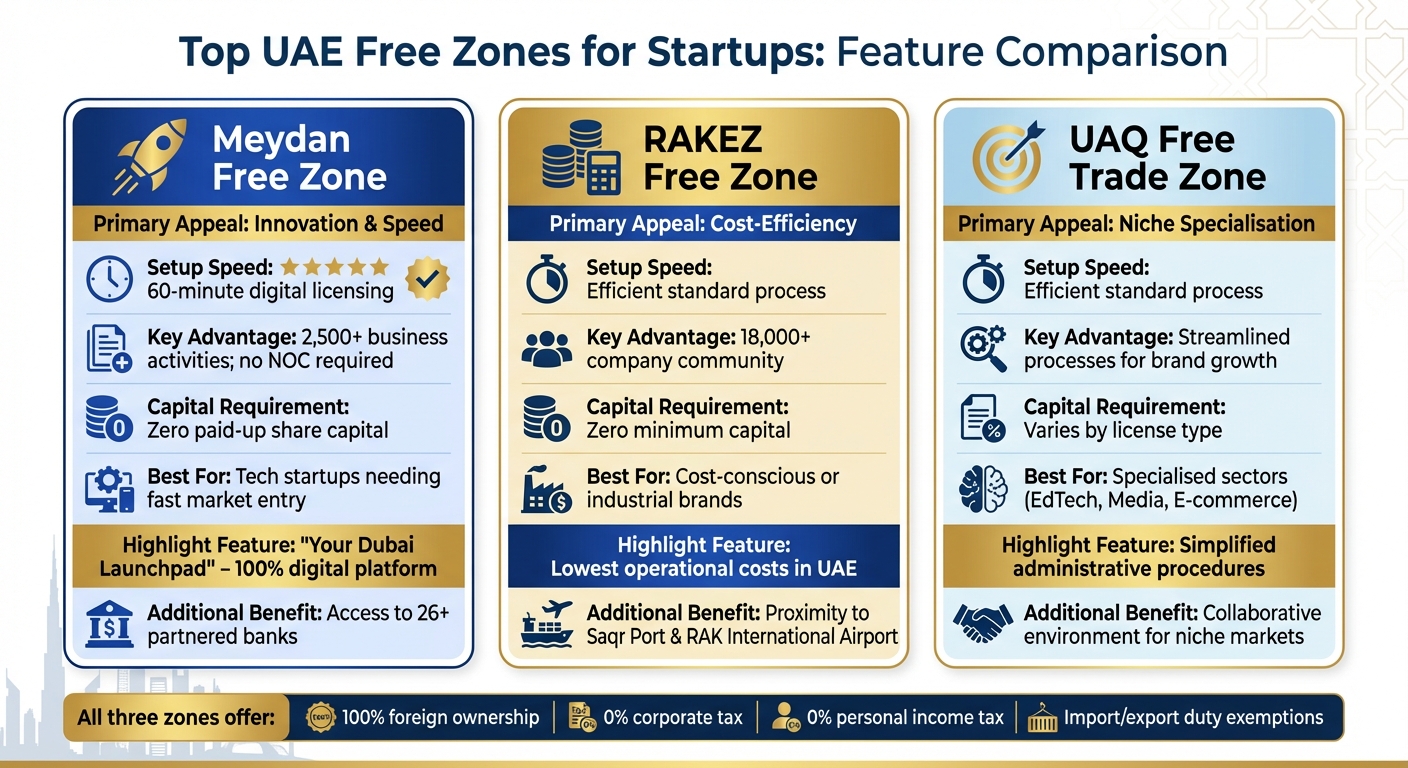
Choosing the right free zone in the UAE can play a major role in strengthening a startup's brand presence. Each free zone caters to different needs, offering specific benefits based on the industry, budget, and growth plans. Here’s a closer look at three standout options for startups looking to establish a strong foothold in the market.
Meydan Free Zone: A Launchpad for Tech Startups

Meydan Free Zone is designed to fast-track tech-focused startups in Dubai. Its 100% digital platform allows entrepreneurs to secure a license in just 60 minutes [10], making it an attractive choice for those eager to hit the ground running. Startups can combine up to three business activity groups - such as technology, trading, and consultancy - under a single license. With over 2,500 business activities available, this flexibility supports evolving business models and branding strategies [10].
"This isn't just a Free Zone. It's your Dubai launchpad." - Meydan Free Zone [10]
The Meydan Plus ecosystem goes beyond licensing by offering access to 26+ partnered banks for corporate account setups, assistance with e-commerce integration, and logistics support. Its pay-as-you-grow model provides a prestigious Dubai address without the high costs, and it eliminates the need for a No Objection Certificate (NOC) from an existing sponsor [10]. This combination of speed, flexibility, and support makes Meydan Free Zone a strong choice for startups looking for swift market entry and scalability.
RAKEZ Free Zone: A Budget-Friendly Option

RAKEZ (Ras Al Khaimah Economic Zone) is an excellent choice for startups looking to stretch their AED further. Formed in 2017 through the merger of RAK Free Trade Zone and RAK Investment Authority, RAKEZ is now home to over 18,000 companies [11]. Its standout appeal lies in its low operational costs compared to other free zones in Dubai, allowing startups to allocate more resources to areas like marketing, product development, or hiring.
With no minimum capital requirements, RAKEZ removes financial hurdles that might delay a brand's launch [11]. The zone offers a variety of infrastructure options, from flexi-desks for lean operations to warehouses and industrial plots for larger-scale businesses. Its proximity to Saqr Port and RAK International Airport further supports efficient trading and logistics [11].
"A highly diversified economic zone offering tailored solutions for startups, SMEs, and large enterprises across a wide range of industries." - Inlex Partners [11]
UAQ Free Trade Zone: Tailored for Niche Markets
UAQ Free Trade Zone is ideal for startups targeting specialised markets. Its simplified administrative procedures allow founders to focus on growing their brand rather than navigating complex paperwork [8]. The free zone fosters a collaborative environment tailored for niche sectors, including education technology, media production, and e-commerce. This targeted approach helps businesses establish credibility and grow within their specific industries [8].
| Feature | Meydan Free Zone | RAKEZ Free Zone | UAQ Free Trade Zone |
|---|---|---|---|
| Primary Appeal | Innovation & Speed | Cost-Efficiency | Niche Specialisation |
| Setup Speed | 60-minute digital licensing [10] | Efficient standard process [11] | Efficient standard process [8] |
| Key Advantage | 2,500+ activities; no NOC required [10] | 18,000+ company community [11] | Streamlined processes for brand growth |
| Capital Requirement | Zero paid-up share capital [10] | Zero minimum capital [11] | Varies by license type |
| Best For | Tech startups needing fast market entry | Cost-conscious or industrial brands | Specialised sectors seeking targeted growth |
Each of these free zones offers distinct advantages, making them invaluable for startups aiming to boost their brand visibility and credibility in the UAE market.
Using Community Support to Boost Brand Growth
Building a brand in a UAE free zone involves more than just acquiring a licence and securing office space. Real growth happens when founders tap into the vibrant startup community around them. Free zones in the UAE are often designed to bring together businesses from specific industries - think Dubai Internet City for tech, Dubai Media City for media, or Dubai Healthcare City for medical services [1]. This setup naturally creates networking opportunities, helping businesses gain visibility, form partnerships, attract clients, and even connect with investors. It’s a mix of physical and digital networking that plays a key role in boosting a brand’s presence.
Networking Through Platforms like Founder Connects
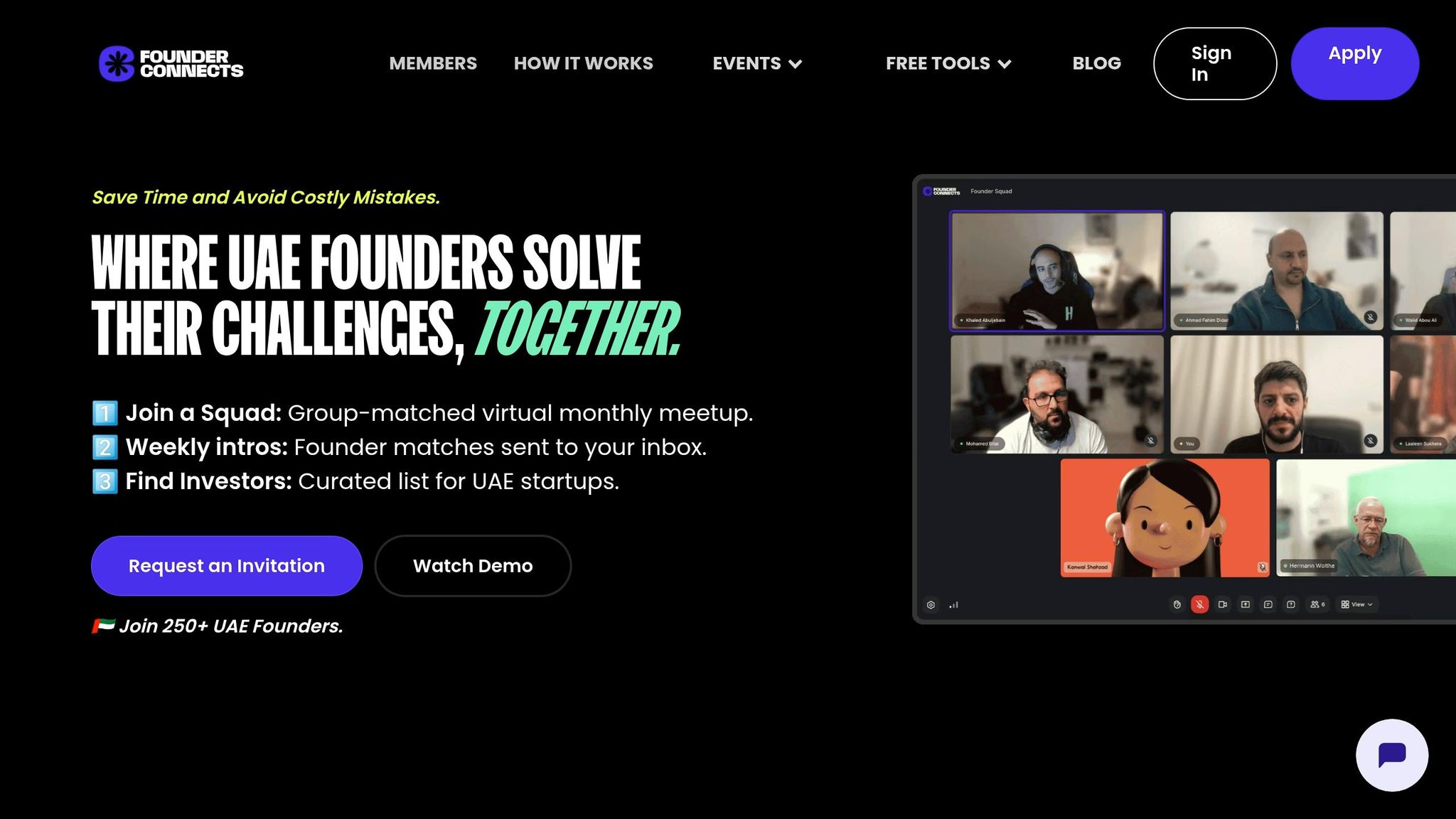
While the physical clustering of businesses in free zones is beneficial, digital platforms expand these connections even further. Platforms like Founder Connects offer UAE startups unique opportunities to network and grow. They include group-matched virtual masterminds, curated networking introductions, exclusive events, and access to investor lists. Additionally, resources like live talks with industry experts and real-time problem-solving sessions provide valuable support to startups. These tools perfectly complement the infrastructure advantages of free zones.
Free zone startups can also use these community resources to fine-tune their brand messaging before venturing onto the mainland. Thanks to the Dubai Executive Council Resolution of 2025, free zone companies can now obtain temporary permits for AED 5,000, allowing them to conduct specific activities on the mainland for up to six months [12]. This opens up a low-risk way to attend networking events, test pilot programmes, or participate in community gatherings.
This approach strengthens both in-person and digital networking opportunities. By engaging with local free zone communities and connecting across industries through digital platforms, startups can tap into the broader UAE startup ecosystem. This dual network is particularly beneficial for businesses in specialised sectors, helping them establish credibility while maintaining visibility across the wider market.
Founders who actively participate in free zone events and online platforms can significantly enhance their brand exposure. Although the AED 10,000 annual branch licence fee may seem like a high cost for early-stage startups [12], the connections made through these communities often lead to cost-sharing opportunities, joint ventures, or referral partnerships. These collaborations can offset expenses and accelerate brand growth in the UAE’s thriving business landscape.
Steps to Establish a Brand Presence in UAE Free Zones
Step-by-Step Guide to Free Zone Setup
To establish your brand in a UAE free zone, you’ll need to follow a straightforward two-stage process: initial approval and registration. This process is typically more streamlined compared to mainland registration.
Initial Approval: Start by submitting key documents, including a business plan, passport copies of all shareholders and directors, and a Registry Identification Code (RIC) form. If your company involves corporate shareholders, you’ll also need to provide two years of audited financial reports [5]. This phase confirms your eligibility and business intentions.
Once initial approval is secured, the next step involves submitting notarised documents such as a Board Resolution, Power of Attorney, and Memorandum and Articles of Association [5]. You’ll also need to demonstrate your share capital and secure office space, which can range from a flexible desk to an executive suite [5]. Following these steps, your trade licence will be issued, and the free zone authority will begin processing residency visas for your team [5].
Choosing a Legal Entity: Decide on the legal structure for your business. For single shareholders, a Free Zone Establishment (FZE) is suitable, while multiple shareholders can opt for a Free Zone Limited Liability Company (FZ LLC). Your trade name must include the legal form (e.g., "FZE" or "LLC") and comply with naming guidelines, avoiding restricted terms like "Abu Dhabi" or "United Arab Emirates" [5]. Depending on your business model, you can apply for licences in areas such as branding, marketing communications, public relations, or digital content production [5].
Share Capital Requirements: These vary widely across free zones. For instance:
- Dubai Airport Free Zone allows businesses to start with as little as AED 1,000.
- DMCC requires AED 50,000 for standard companies and up to AED 1 million for a General Trading Licence [5].
- Some zones, like twofour54, have no minimum capital requirements.
This flexibility enables businesses to align their investment with their operational needs and scale.
Once you’ve completed these steps, it’s time to compare free zones to find the one that best aligns with your business goals.
Comparison of Key Free Zones
| Free Zone | Minimum Capital | Primary Advantage | Best For |
|---|---|---|---|
| RAKEZ | Varies by activity | Cost-effective business packages [13] | Trading, manufacturing, and e-commerce startups |
| UAQ Free Trade Zone | Varies | Simplified regulations and flexible visa allocations | Niche startups, service providers, and consultancies |
| DMCC | AED 50,000 (AED 1M for trading) [5] | Global credibility and commodity hub [13] | Professional services and international brands |
| Dubai Silicon Oasis | Varies by activity | Modern tech infrastructure [13] | Tech startups, IT services, and research firms |
When choosing a free zone, consider the specific industry clusters that align with your business. For instance, Dubai Silicon Oasis is ideal for tech companies, Creative City caters to media businesses, and DMCC specialises in commodities. The popularity of UAE free zones is evident, with a 30% year-over-year increase in the number of companies setting up in these hubs [13]. Selecting the right free zone not only strengthens your brand but also provides a foundation for growth in the UAE’s vibrant business ecosystem.
Measuring Brand Growth in Free Zones
Once your business is up and running in a free zone, it’s essential to measure how well it’s performing. This helps refine your strategies and maximise your brand's potential.
Key Metrics to Monitor
Tracking the right metrics can show how your free zone operations are shaping your brand's growth. Start by separating revenue streams from free zone activities and mainland operations. This isn’t just about compliance with the 2025 Dubai resolution that allows free zone companies to operate on the mainland - it’s also a smart way to see which market segment is driving your success [12].
Export and re-export volumes are key indicators of growth, especially for startups using free zones to expand globally. For instance, UAE re-exports reached AED 830 billion in 2025, marking a nearly 16% increase from the previous year [2]. If your business involves trading or manufacturing, customs data can give you insights into your international reach.
If you’re a startup exploring mainland opportunities, compare the performance of temporary permits with full branch licences. The AED 5,000 temporary permit (valid for six months) is a cost-effective way to test market reception before committing to the AED 10,000 annual cost of a branch licence [12]. During this trial period, track metrics like customer acquisition costs, conversion rates, and revenue, and compare them to your free zone benchmarks.
Digital visibility is another important metric. Free zone directories and unified licensing platforms often provide analytics, such as search appearances and enquiry numbers. These can help you understand how visible your business is within the free zone ecosystem and identify potential partnerships.
These numbers set the foundation for deeper insights drawn from your operational data.
Using Free Zone Data and Insights
Modern free zones offer digitised trade documentation, which can be a goldmine for operational insights [2]. For example, you can evaluate your logistics performance by analysing shipment turnaround times, especially if you’re using a hub like Jebel Ali Port. Comparing these times against industry standards can help pinpoint areas where you have a competitive edge.
Annual audit reports are another valuable resource. While they’re primarily required for corporate tax compliance, these reports provide a detailed view of your financial health [1]. Look at changes in profit margins, cost structures, and revenue streams to confirm whether your free zone setup is delivering the expected benefits.
The UAE's growing Comprehensive Economic Partnership Agreements (CEPAs) open new opportunities to evaluate your brand’s international performance. For example, UAE-India non-oil trade hit approximately USD 38 billion in 2025, reflecting a 34% year-on-year increase. Similar agreements with Vietnam and Jordan also offer new possibilities [2]. Track metrics like tariff savings, market entry rates, and customer acquisition in CEPA partner countries to measure your brand’s global reach.
Don’t overlook the value of networking events and community platforms hosted by free zones. These offer a chance to gather qualitative feedback on your brand. You’ll get insights into how your peers perceive your business, discover collaboration opportunities, and identify areas for improvement [8]. Document these findings in case studies to showcase your brand’s impact, complete with measurable outcomes.
Conclusion
UAE free zones offer startups a powerful foundation to establish their brand, thanks to regulatory flexibility and well-thought-out infrastructure. But it’s not just about rules and cost savings - the collaborative environment plays a big role in driving growth too.
With 100% foreign ownership, startups maintain complete control over their business strategies. Financial perks, such as customs duty exemptions and potential corporate tax breaks, free up funds that can be reinvested into marketing and scaling. Recent updates, like Dubai's Resolution No. 11 of 2025, add even more value by allowing free zone companies to explore mainland markets through temporary permits costing AED 5,000 for six months[12].
Community support is equally important. Resources like Founder Connects enhance the free zone experience by linking entrepreneurs with other UAE founders through virtual masterminds, networking events, and curated investor lists. This combination of regulatory advantages and a supportive network creates the perfect setting for startups to test ideas, fine-tune their branding, and grow efficiently.
Industry-specific free zones further boost credibility, offering access to specialised networks and resources that help businesses establish authority in their sectors. Plus, modern facilities and prime locations across the UAE strengthen your professional image while keeping operations smooth.
Whether you're venturing into AI, fintech, or manufacturing, UAE free zones provide the tools and flexibility to build your brand and eventually expand into mainland markets. With these benefits, startups in the UAE are well-equipped to grow and thrive.
FAQs
Which UAE free zone best fits my startup’s industry and budget?
Selecting the best free zone in the UAE for your startup boils down to your industry and budget. For tech, media, or biotech ventures, Dubai Silicon Oasis and Dubai Media City provide specialised infrastructure to support your needs.
If your focus is on commodities or manufacturing, DMCC (Dubai Multi Commodities Centre) or Jebel Ali Free Zone are excellent choices, offering facilities designed for these sectors.
For entrepreneurs working with tighter budgets, Ras Al Khaimah Economic Zone (RAKEZ) or Ajman Free Zone are cost-effective alternatives with attractive packages.
The key is to match the free zone’s offerings with your industry requirements and long-term growth plans.
Can a free zone company sell to mainland UAE, and what permits apply?
Yes, a free zone company in the UAE can sell goods or services to the mainland. However, it must obtain the required permits to do so legally. These include a commercial license and approvals from the appropriate authorities, ensuring compliance with mainland market regulations.
What KPIs should I track to measure brand growth from a free zone base?
To gauge how your brand is growing from a free zone base, focus on key performance indicators (KPIs) such as brand recognition, customer engagement, market reach, customer loyalty, and brand perception. These metrics can help you understand how well your brand is making its mark within the UAE's startup ecosystem.
Related Blog Posts

Building in MENA? You don't have to do it alone.
Join 300+ founders in the Founder Connects Residency. Monthly squad calls, warm intros, $3M+ in perks, and much more. All for less than your monthly coffee budget.
Popular posts





Founder Connects is a premium MENA tech founder community. Meetups in Dubai and across MENA, Residency Squads of 8–10, and 400+ vetted WhatsApp founders (apply and screened).