
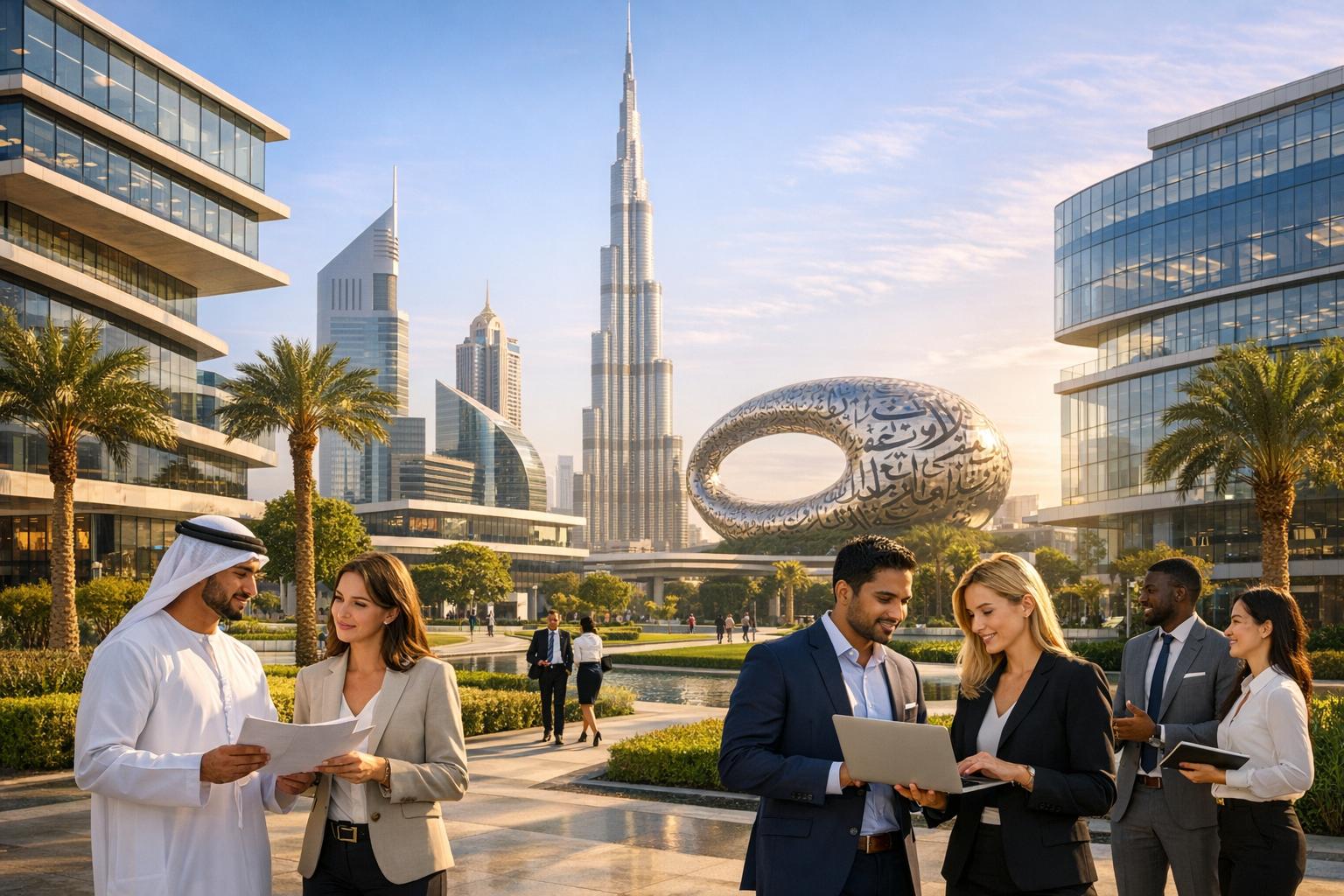
Top 10 UAE Free Zones For Startups
Building in MENA? You don't have to do it alone.
Join 300+ founders in the Founder Connects Residency. Monthly squad calls, warm intros, $3M+ in perks, and much more. All for less than your monthly coffee budget.

Looking to launch a startup in the UAE? Free zones offer unmatched benefits like 100% foreign ownership, 0% corporate tax (for eligible entities), and no personal income tax. With over 40 specialized zones, each caters to specific industries such as tech, fintech, AI, healthcare, and creative sectors. Here’s a quick look at the top 10 free zones, their focus areas, and entry costs:
- Dubai Internet City (DIC): Tech hub for AI, SaaS, and cybersecurity. Setup starts at AED 50,000.
- Dubai Silicon Oasis (DSO): Focus on AI, fintech, and robotics. Packages from AED 12,000.
- DMCC: Global leader in trade, crypto, and commodities. Entry from AED 35,484.
- DIFC: Financial hub for fintech and capital markets. Costs start at AED 22,000.
- Sharjah Publishing City (SPC): Affordable entry for media and e-commerce. Start at AED 5,750.
- ADGM: Financial and fintech focus with English Common Law. Licenses from AED 2,570.
- Dubai Design District (d3): Ideal for design and luxury tech startups. Setup begins at AED 40,000.
- Dubai Healthcare City (DHCC): HealthTech and AI diagnostics. Costs from AED 30,000.
- JAFZA: Trade and logistics hub. Office packages start at AED 52,636.
- RAKEZ: Budget-friendly for SMEs and manufacturing. Licenses from AED 7,500.
Why UAE Free Zones?
- Quick setup: Most zones process licenses in 1–4 weeks.
- Visa flexibility: Options vary by zone, with some offering up to 20 visas.
- Industry-specific support: Tailored resources for your business needs.
Quick Comparison
| Free Zone | Primary Focus | Setup Cost (AED) | Processing Time | Visa Quota |
|---|---|---|---|---|
| Dubai Internet City | Tech, AI, SaaS | 50,000–57,000 | 2–4 weeks | Up to 2 |
| Dubai Silicon Oasis | AI, Fintech, Robotics | 12,000 | ~2 weeks | 2 |
| DMCC | Trade, Crypto, Tech | 35,484 | 2–4 weeks | 1–3 |
| DIFC | Finance, Fintech | 22,000 | 7–10 days | ~1 |
| Sharjah Publishing City | Media, E-commerce | 5,750 | 1–2 days | Up to 20 |
| ADGM | Financial Services | 2,570+ | 7–10 days | Varies |
| Dubai Design District | Design, Luxury Tech | 40,000 | ~1 week | Varies |
| Dubai Healthcare City | HealthTech, AI | 30,000 | 4–6 weeks | Varies |
| JAFZA | Logistics, Manufacturing | 52,636 | ~2 weeks | Varies |
| RAKEZ | Manufacturing, SMEs | 7,500 | 3–5 days | 1 |
Each zone offers unique advantages, so choose based on your industry, budget, and growth goals.
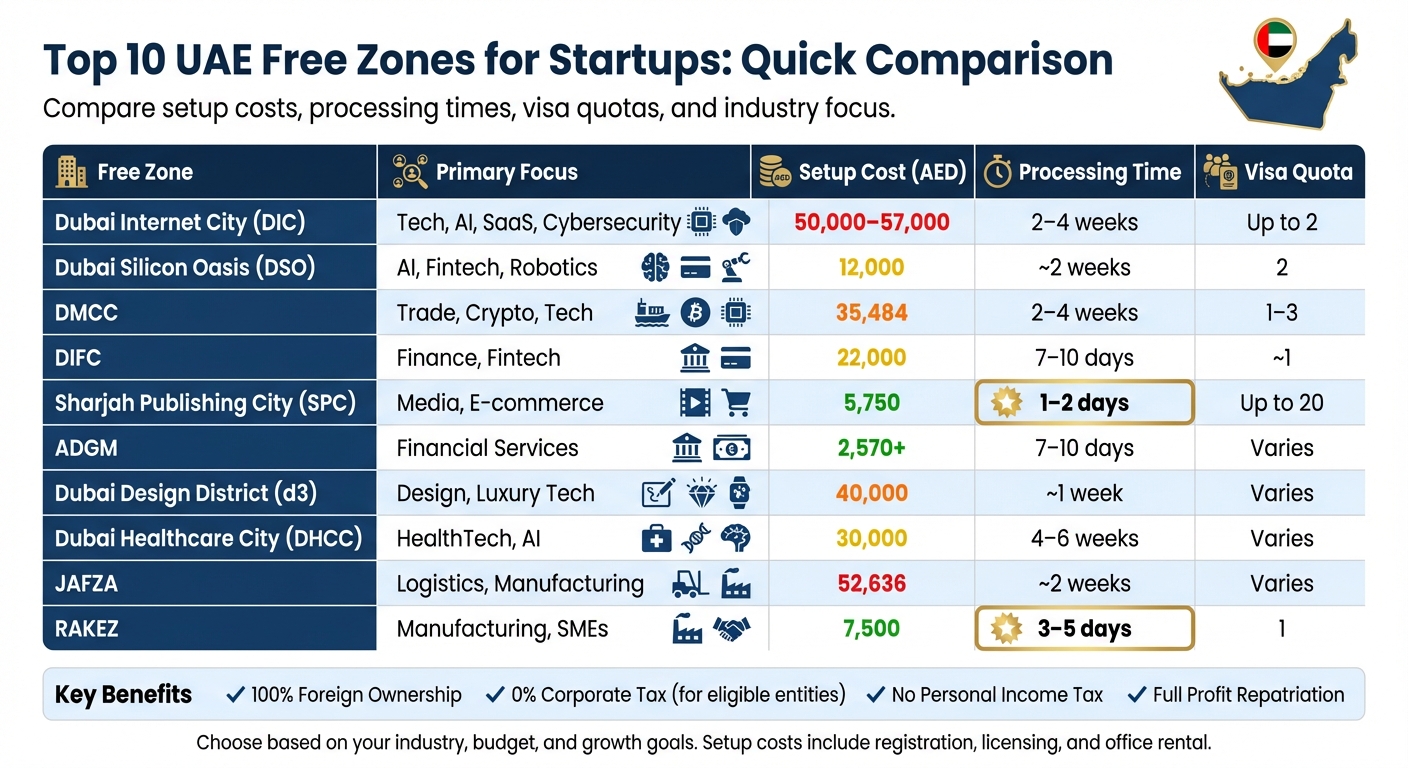
UAE Free Zones Comparison: Costs, Processing Times & Visa Quotas for Startups
1. Dubai Internet City (DIC)
Industry Focus and Specialisation
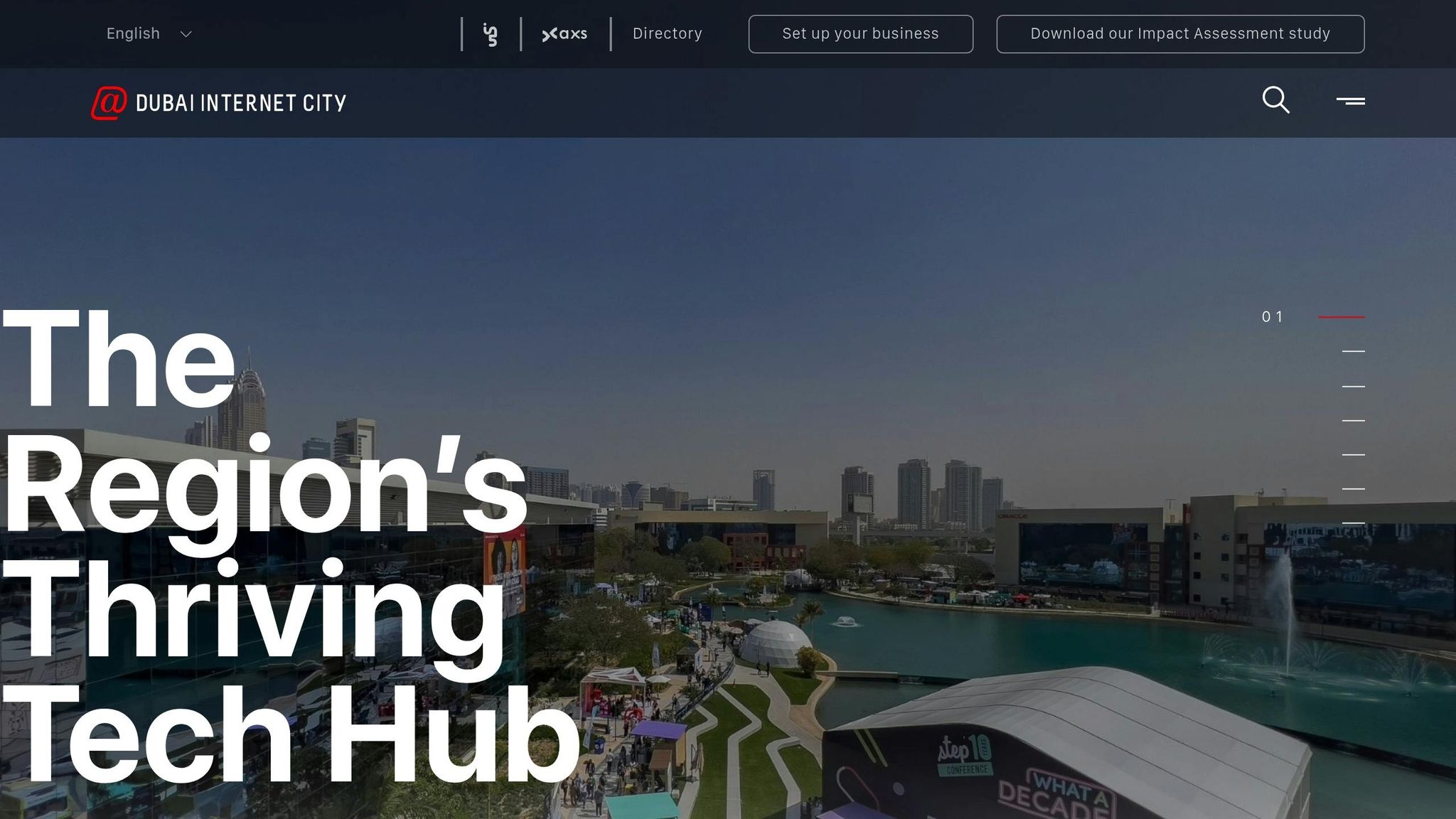
Dubai Internet City (DIC) stands as the Middle East's largest ICT hub, focusing on areas like software development, telecommunications, online products, and IT services. It supports a wide range of tech startups, including those in AI, SaaS, PropTech, Gaming, Metaverse/Web3, FinTech, Cybersecurity, HealthTech, and EdTech [5][6][2].
The zone is home to 1,100 offices, hosting global giants such as Google, Microsoft, Oracle, IBM, HP, Dell, Samsung, and Sony. It supports activities like mobile app development, IT consultancy, blockchain, cloud services, and e-commerce [7]. With the UAE's ICT market projected to reach USD 52.2 billion by 2025 and IT outsourcing expected to grow to USD 1.5 billion in the same period [7], DIC places startups at the heart of a rapidly growing industry.
This thriving ecosystem is further enhanced by clear and competitive cost structures tailored to startups.
Setup Costs and Visa Packages
DIC simplifies the entry process for startups with flexible and straightforward options. Entrepreneurs can choose between the Freelancer Desk package at AED 50,000 or the Company Desk package at AED 57,000 [2]. Both packages include two visas, with the setup process taking approximately 2–6 weeks [2]. For startups looking to explore the market without significant initial costs, the "Firststeps@dic" facility provides an affordable entry point for collaboration and market research [5].
Additionally, DIC offers a host of financial incentives, including a 50-year exemption from personal, income, and corporate taxes, 100% foreign ownership, and full repatriation of capital and profits [5][6].
Regulatory and Compliance Support
Navigating regulatory requirements is made easier with DIC's 'One-stop shop' approach, which streamlines registration, licensing, and visa processing. This is further supported by fast-track visa services and simplified customs procedures [6][9].
For startups seeking guidance, the in5 Tech incubator provides valuable resources, including advisory clinics, workshops, and mentorship programmes. Entrepreneurs also gain access to specialised facilities like prototyping labs, gaming labs, and investor office hours - key assets for understanding and operating within the UAE's business environment [2].
Opportunities for Startups
Startups in DIC benefit from advanced infrastructure, including Metro Ethernet and high-speed digital voice and data services [5]. Combined with facilities offered by in5 Tech - such as gaming and prototyping labs and direct access to investors - DIC helps startups accelerate their journey from idea to market [2].
With an estimated 5,600 tech startups operating across the UAE by 2025 and the technology services market expected to generate an additional USD 3.8 billion in revenue by the same year [8], DIC offers the tools and connections needed for rapid growth.
These advantages highlight DIC’s pivotal role in the UAE's vibrant tech ecosystem, making it an attractive hub for ambitious startups.
The 6 BEST Free Zones to Start a Business in Dubai (2025)
2. Dubai Silicon Oasis (DSO)
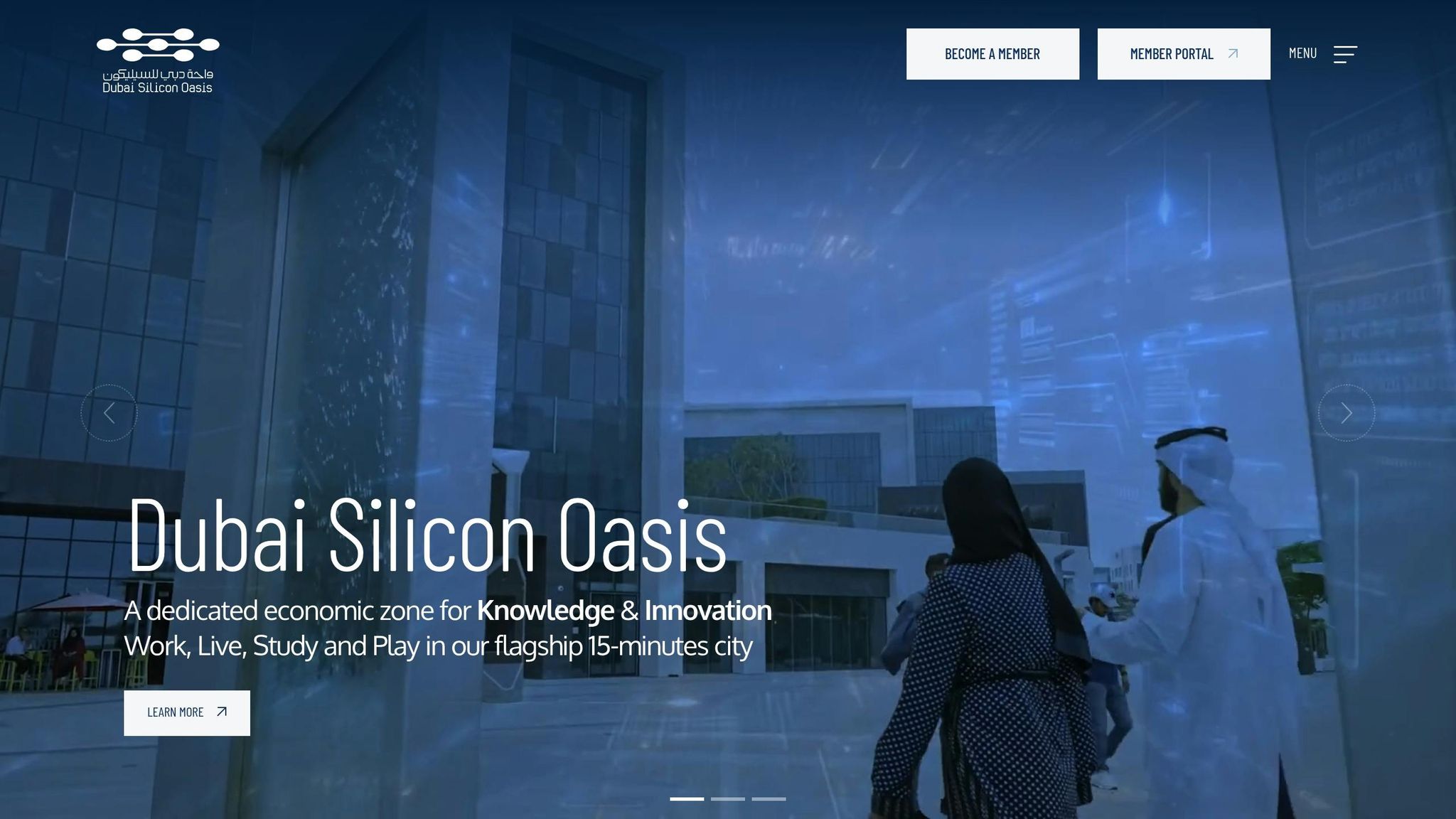
Dubai Silicon Oasis (DSO) stands out as a hub where innovation meets efficiency, offering tech startups and future-focused industries a nurturing environment to thrive.
Industry Focus and Specialisation
DSO focuses on driving progress in 11 key sectors, including Future Mobility, Artificial Intelligence, Quantum Computing, Robotics, and Cybersecurity [12]. Spanning 7 square kilometres, this integrated community is home to over 28,000 companies and more than 15 institutions dedicated to learning and research [12]. What sets DSO apart is its role as a "living lab" for cutting-edge technologies.
For instance, in May 2023, Fakeeh University Hospital tested the MENA region's first medical drone delivery within DSO, delivering medication directly to patients' homes. Earlier, in February 2023, the zone introduced "talabots", autonomous robots that provide food delivery services within the Cedre Villas gated community. These initiatives showcase how startups in the UAE can trial advancements in autonomous vehicles, drone technology, and AI-powered smart city solutions within a controlled and supportive environment [12].
To complement its focus on innovation, DSO offers businesses cost-efficient setup options.
Setup Costs and Visa Packages
At the heart of DSO's business-friendly offerings is the Dubai Technology Entrepreneur Campus (Dtec). Entrepreneurs can opt for a Flexi Desk package priced at AED 12,000, which includes two visas and can be set up in just two weeks [2]. For those requiring more space, private offices start at AED 54,000, with a minimum startup capital of AED 100,000 for FZE or FZCO entities. Additionally, the Entrepreneurial Business Licence (EBL) is tailored to meet the needs of emerging startups [2][10][11].
DSO also ensures key benefits like 100% foreign ownership, zero corporate tax on qualifying income, and complete profit repatriation, making it an attractive destination for entrepreneurs [11][13].
Regulatory and Compliance Support
DSO simplifies business setup through its association with the Dubai Integrated Economic Zones Authority (DIEZ). Entrepreneurs benefit from a one-stop-shop for registration, licensing, and visa processing [13][14]. The free zone also provides strong intellectual property protection and a Business Operation Permit, which allows companies with a Dubai Department of Economy and Tourism (DET) licence to operate within DSO without needing a separate free zone licence [10][11].
In February 2024, DSO hosted 12 sustainability-focused startups as part of a pilot accelerator programme by the MITDesignX Dubai Accelerator, a collaboration with the Massachusetts Institute of Technology. This initiative highlights DSO's commitment to linking UAE founders with global expertise while offering simplified regulatory pathways to test new technologies [12]. These features make it easier for tech startups to enter and succeed in the market.
Opportunities for Startups
Startups in AI, fintech, and other tech sectors gain access to a Tier 3 data centre, specialised TechnoHub labs, and dedicated zones for robotics and 3D printing [2][11]. The Dtec Sandbox programme further supports entrepreneurs with advisory clinics and direct connections to investors [2].
Recognised as the #1 Global Zone for SMEs and R&D by fDi Insights (Financial Times), DSO continues to enhance its appeal. The upcoming Dubai Metro Blue Line expansion, which includes a dedicated station at DSO, will improve connectivity for the zone's 90,000 residents and its vibrant business ecosystem [12].
3. Dubai Multi Commodities Centre (DMCC)
The Dubai Multi Commodities Centre (DMCC) has evolved far beyond its initial role as a commodities hub. Situated in Jumeirah Lakes Towers, this free zone now serves as a thriving ecosystem for trade and technology. With over 26,000 registered companies, DMCC accounts for 15% of Dubai's annual Foreign Direct Investment (FDI) [15]. Its growth highlights a blend of traditional trade expertise with cutting-edge fintech and tech advancements.
Industry Focus and Specialisation
DMCC remains a global leader in gold and diamond trading, with Dubai handling an impressive 25% of the world's gold trade. Beyond these traditional strengths, DMCC has expanded into emerging sectors such as AI, crypto, gaming, and technology, establishing itself as a hub for innovation [2][16].
In 2024, DMCC partnered with Crypto.com to promote commodities tokenisation and digital trade infrastructure. This collaboration supports fintech startups exploring blockchain-based trade finance. Additionally, the launch of "DMCC FinX" created a platform to connect institutional capital with trade and technology, specifically for fintech and trade-tech startups [15]. That same year, DMCC hosted its third "Web3 Unleashed Hackathon" in partnership with Bybit, offering a prize pool of USD 140,000 to encourage blockchain development [15].
Setup Costs and Visa Packages
DMCC offers competitive options for businesses across various sectors. The basic "Biz" entry package is priced at AED 35,484, placing it in the mid-range cost bracket [2]. For standard companies, a minimum authorised capital of AED 50,000 is required, which can be withdrawn after obtaining the licence [3]. However, General Trading Licences demand a higher capital of AED 1 million [3][17].
Flexi-desk packages are available, providing a set number of visas depending on the desk type chosen [2]. The company setup process is efficient, typically taking between 5 to 10 working days [15].
Regulatory and Compliance Support
DMCC operates under its own regulatory framework, managed by the DMCC Authority, which simplifies licensing procedures [1]. Businesses enjoy benefits such as 0% corporate tax for Qualifying Free Zone Persons and full repatriation of capital [16].
However, companies must comply with Economic Substance Regulations, Ultimate Beneficial Ownership reporting, and VAT obligations for turnovers exceeding AED 375,000 [1]. Additionally, all member companies are required to undergo an annual audit [16]. DMCC's strong regulatory framework contributes to its impressive company retention rate of 94% [18].
Opportunities for Startups
Startups focused on tech, AI, and fintech find a supportive environment in DMCC. The free zone hosts "Knowledge Series" events, industry clubs, and offers subsidised tech licences through partnerships with accelerators like AstroLabs and Brinc [2]. DMCC supports over 600 business activities across more than 20 sectors, including AI, SaaS, FinTech, PropTech, Digital Assets, and AgriTech [3].
This commitment to fostering innovation has earned DMCC the "Global Free Zone of the Year" award from fDi Magazine for nine consecutive years [15].
4. Dubai International Financial Centre (DIFC)
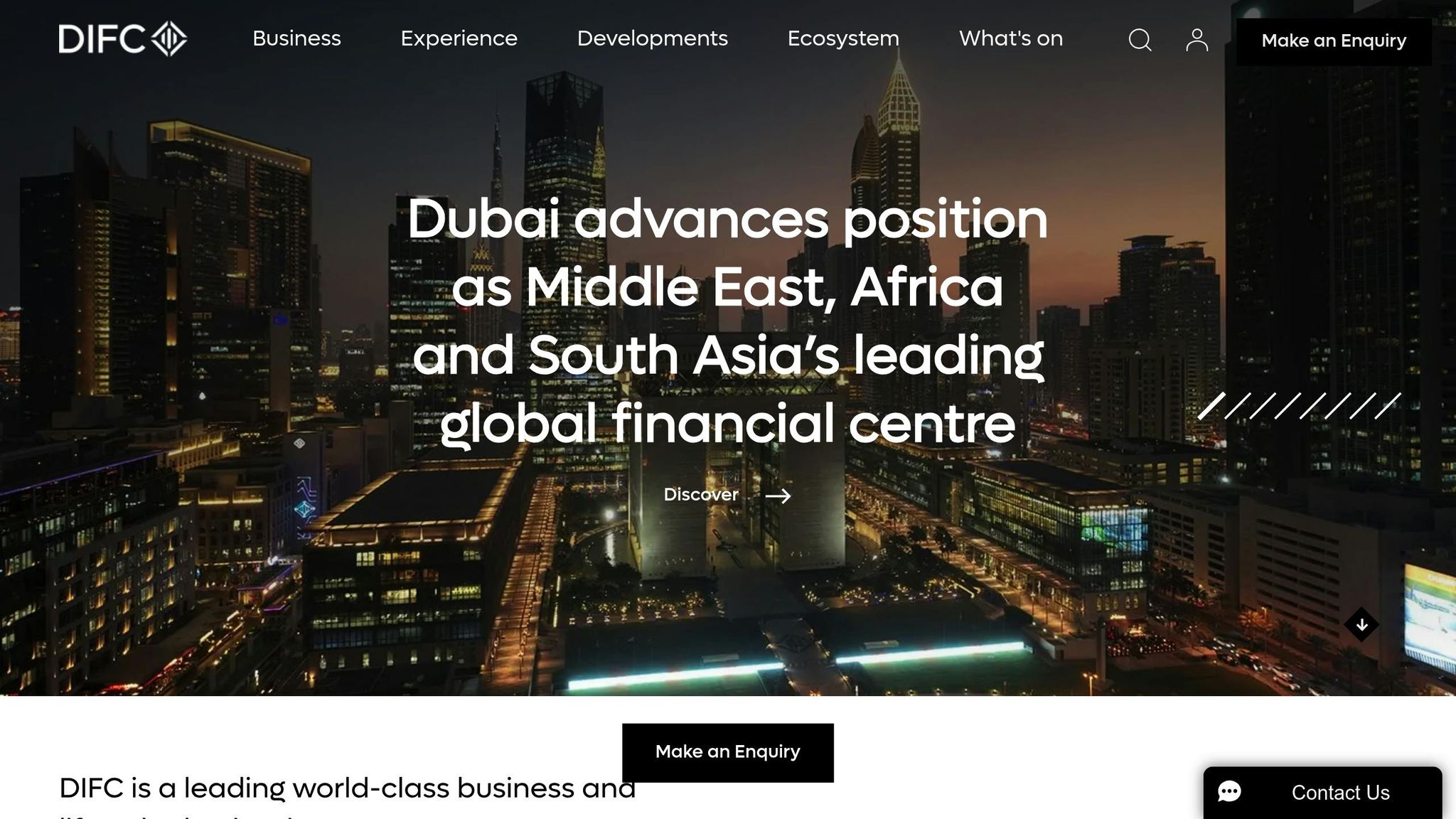
DIFC, covering 110 acres, stands as the leading financial hub for the MEASA region. It’s a focal point for banking, asset management, Islamic finance, reinsurance, and capital markets [19][20][21]. Beyond these traditional areas, DIFC has carved a niche in tech-driven fields such as fintech, artificial intelligence, SaaS, digital assets, and cybersecurity [2].
Industry Focus and Specialisation
DIFC operates under its own independent legal system, inspired by English Common Law, and is overseen by the Dubai Financial Services Authority (DFSA), with its own dedicated courts [19][21][2]. It houses specialised hubs like the FinTech Hive, AI Campus, and a PropTech hub, which complement its traditional financial services. Additionally, Nasdaq Dubai plays a central role in facilitating capital raising [2][19]. With a well-defined legal framework and innovation-focused environment, DIFC offers competitive packages to attract new businesses.
Setup Costs and Visa Packages
DIFC provides flexible options for businesses. Packages begin at AED 22,000 for a flexi-desk, AED 25,680 for a dedicated desk, and AED 45,500 for private offices ranging from 100 to 1,500 square feet. Each desk package includes one visa [2].
Regulatory and Compliance Support
DIFC offers a range of benefits, including 100% foreign ownership, a 0% tax rate on qualifying income, and full profit repatriation. Operating in a dollar-based environment, it also provides strong registrar support [19][21][22][4]. These features have made DIFC home to the largest network of financially regulated firms in the region [21].
Opportunities for Startups
Startups find a supportive ecosystem at DIFC, thanks to its strong regulatory framework and extensive venture capital network. Initiatives like demo days and the LEAP accelerator cater to early-stage ventures [2]. Additional offerings include ancillary service licences and high-level operational and data security, making DIFC particularly attractive for fintech and AI startups [19][2].
5. Sharjah Publishing City (SPC)
Launched in 2017 under the visionary leadership of His Highness Sheikh Dr. Sultan Bin Mohammed AlQasimi, Sharjah Publishing City (SPC) became the world’s first free zone specifically designed for the global print and publishing industry [23]. Over time, SPC has evolved significantly, now offering licences for more than 2,000 business activities. These range from trading and services to e-commerce, media, and digital ventures, making it a compelling choice for startups in the UAE looking for cost-effective ways to enter the market. This transformation has established SPC as a key player in the UAE's thriving free zone ecosystem.
Industry Focus and Specialisation
Though publishing remains at the heart of SPC's mission, the free zone now caters to startups across a variety of industries. Strategically located in Sharjah's Al Zahia Area, between Dubai and the Northern Emirates, SPC offers excellent logistical support. Its specialised customs codes simplify import and export processes for businesses dealing with physical goods, further enhancing its appeal [23].
Setup Costs and Visa Packages
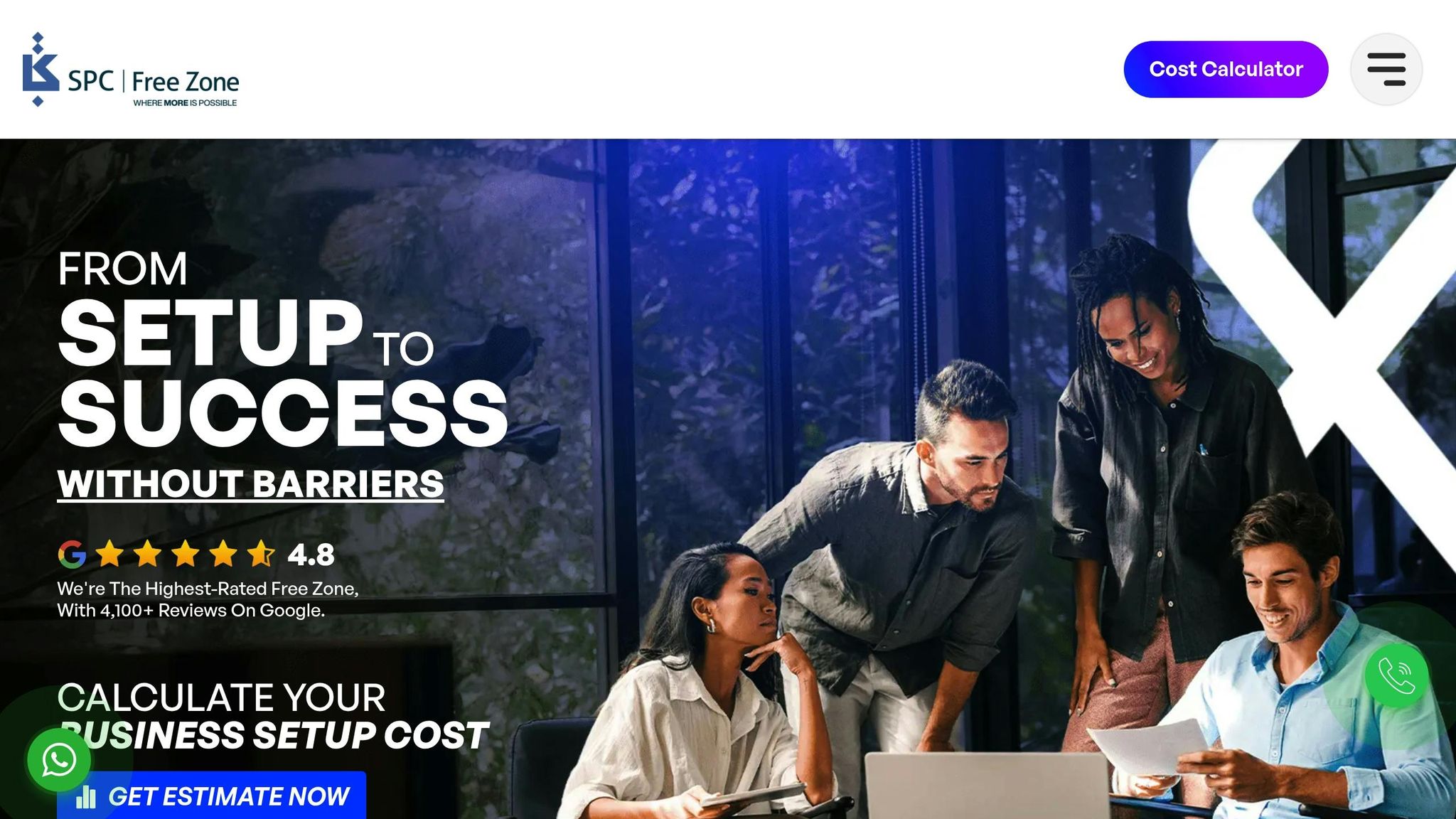
SPC is known for its affordability and straightforward setup process. Business setup packages start at just AED 5,750, while zero-visa trade licences are available from AED 6,876. The "Instant Licence" service ensures that licences are issued within 45 minutes, and UAE residency visas are processed in just five working days. Startups can also take advantage of unlimited visa quotas under a single business licence. With a 4.8/5-star rating from over 4,100 reviews, SPC is highly regarded for its professional service and efficient operations [24].
Regulatory and Compliance Support
SPC provides 100% foreign ownership with no paid-up capital requirements, along with full repatriation of profits and capital [24]. The free zone simplifies the company formation process with fast-track approvals and minimal red tape, making it easier for entrepreneurs to get started. On-site services include immigration assistance, corporate banking support, Emirates ID processing, and even VIP medical services. SPC also guarantees the opening of corporate bank accounts for new businesses and offers over 40 additional support services, such as virtual receptionist options and document translation [24].
Opportunities for Startups
SPC is particularly appealing to tech, fintech, and creative startups that want to keep initial costs low. Flexible office solutions and co-working spaces are available, making it easier for early-stage businesses to manage their expenses. One entrepreneur shared their experience:
"SPC Free Zone's world-class infrastructure and strategic location have provided us with the perfect starting point to connect with a global audience."
– Arlene Gomez, Storm N Skye Marketplace FZC LLC [24]
The free zone also fosters a sense of community among its members. Existing businesses can earn referral bonuses of up to AED 1,500 for introducing new entrepreneurs, creating a collaborative and supportive environment for startups [24].
6. Abu Dhabi Global Market (ADGM)
Abu Dhabi Global Market (ADGM) has established itself as a leading International Financial Centre (IFC), standing out for its innovative approach to financial services and its unique legal framework. What sets ADGM apart is its direct application of English Common Law in full, providing international investors with a legal system they know and trust [26]. Spanning key areas on Al Maryah and Al Reem Islands, ADGM is among the largest financial districts globally. In 2024, it reported a staggering 245% increase in Assets Under Management (AUM), highlighting its rapid ascent and growing appeal to businesses worldwide [26].
Industry Focus and Specialisation
ADGM plays a pivotal role in the UAE's startup ecosystem, offering tailored support for ventures in fintech, artificial intelligence, and digital assets. While it excels in traditional financial services, it also leads the way in fintech and blockchain regulation. Notably, ADGM was the first in the region to introduce a comprehensive regulatory framework for virtual assets, cryptocurrency, and blockchain [26].
Adding to its appeal, ADGM provides a sector-agnostic Tech Startup Licence for startups leveraging technology to address customer needs. Since July 2024, startups applying for this licence must secure an eligibility letter from Hub71, Abu Dhabi's global tech ecosystem. This step ensures startups gain access to crucial resources like funding, mentorship, and market connections [25].
Setup Costs and Visa Packages
ADGM offers a flexible cost structure designed to grow with startups. The Seed Stage Tech Licence is priced at USD 700 (around AED 2,570) annually for the first two years and is aimed at startups with 1–10 full-time UAE-based employees. As startups expand, the Emergent Stage Tech Licence costs USD 4,000 (around AED 14,700) per year for the next three years, catering to businesses with 11–50 employees for up to five years [28].
In terms of visas, startups can secure three visas for each dedicated desk space. Physical office requirements can be met through incubators or co-working spaces within ADGM. Additionally, the Hub71 Incentive Programme offers up to 100% subsidies on housing, office space, and health insurance for up to 25 employees over three years, significantly reducing early-stage operational costs [25][28].
Regulatory and Compliance Support
ADGM provides a strong regulatory framework to support businesses, including a dedicated IT Risk Management system [29][25]. It also operates the world's first e-courts for digital dispute resolution, simplifying legal processes for companies [29][25]. Startups benefit from a dual licensing regime, enabling ADGM-registered entities to gain recognition from the Abu Dhabi Department of Economic Development (ADDED) for conducting business on the mainland [28][25].
Further bolstering its support, the Abu Dhabi government has allocated AED 1 billion through the Ghadan 21 programme to empower startups and entrepreneurs working on technology-driven solutions [25]. These streamlined regulatory measures offer startups a significant edge in navigating the business landscape.
Opportunities for Startups
ADGM is a magnet for startups in fintech, AI, and digital assets. Its combination of a globally recognised legal framework, top-tier infrastructure, and integration with the Hub71 ecosystem fosters a nurturing environment for innovation. To obtain the Tech Startup Licence, startups must first secure a Hub71 eligibility letter [27]. With its focus on financial services and emerging technologies, ADGM provides an ideal launchpad for entrepreneurs aiming to build scalable, globally competitive businesses within the UAE's dynamic startup scene.
sbb-itb-f597d8f
7. Dubai Design District (d3)
Dubai Design District, or d3, is a dedicated free zone that seamlessly blends design and technology, offering a hub for creative entrepreneurs. This district brings together industries like fashion, luxury, interior design, art, and digital media, creating a collaborative environment. With over 10,000 professionals and more than 550 business partners, d3 has become a thriving ecosystem where local talent works alongside global brands such as Nike, Adidas, and IBM [30]. It also provides tailored services to support tech-focused design initiatives.
Industry Focus and Specialisation
Aligned with the UAE's push for innovation, d3 strengthens the startup ecosystem by focusing on creative technologies. The district is particularly attractive to startups offering software and SaaS solutions tailored for the design, fashion, and luxury sectors [2]. Through its in5 Design incubation centre, d3 offers advanced resources like prototyping labs, 3D printing facilities, and expert mentoring. Flexible workspaces are available, ranging from co-working areas to customisable fashion studios [4, 46]. Approved activities include architectural design, luxury manufacturing, image consultancy, e-commerce, and event management [30].
Setup Costs and Visa Packages
Launching a business in d3 starts at AED 40,000 for a flexi or shared desk setup [2]. The process is efficient, with business licences typically issued within about a week [2]. After incorporation, businesses can apply for visas for both owners and employees. TECOM Group also offers fast-track medical exams for an additional fee [32]. For individual artists and designers, freelance permits are available, allowing them to operate under their own name within the fashion and design fields [30]. Investor visas are valid for three years, with a requirement of approximately 80 sq ft of office space per person [30].
This streamlined setup process, combined with flexible visa options, makes d3 a practical choice for creative professionals.
Regulatory and Compliance Support
d3 offers several incentives, including 100% foreign ownership, zero personal income tax, and a 50-year corporate tax exemption [30]. Its strategic location near Downtown Dubai, Business Bay, and the Burj Khalifa ensures excellent visibility and accessibility, with transport options like road access, buses, and riverboat taxis making it easy to reach [30]. For businesses looking to expand, dual licensing options allow operations within both the free zone and the UAE mainland [31].
Opportunities for Startups
Startups in the tech space have a unique chance to cater to the creative industries at d3. The short, one-week setup time is especially appealing for entrepreneurs eager to hit the ground running. Businesses specialising in design software, fashion technology, or SaaS platforms for luxury brands can tap into d3's extensive network of creative professionals and international partners, making it an ideal launchpad for innovation in these sectors.
8. Dubai Healthcare City (DHCC)
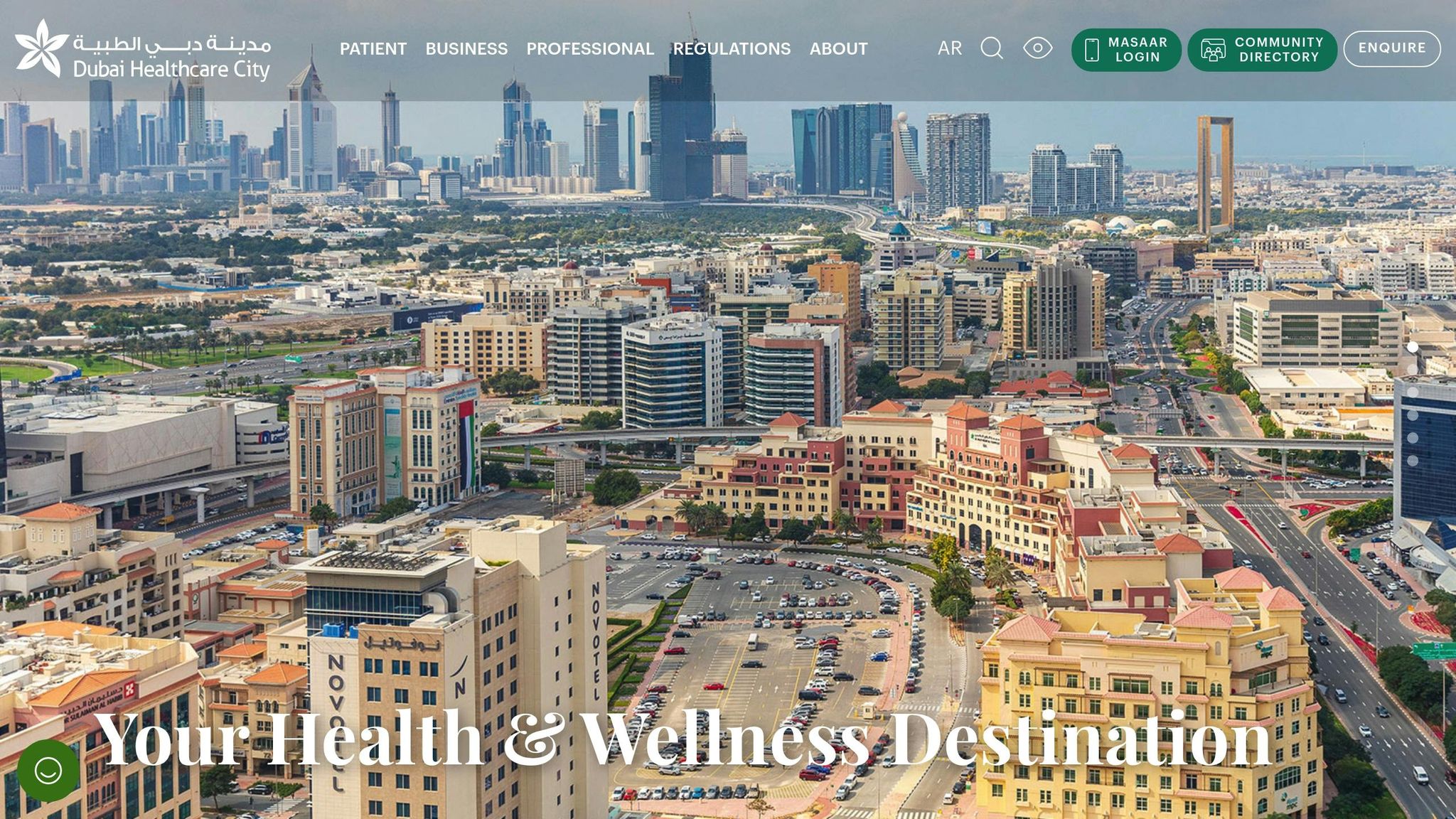
Dubai Healthcare City (DHCC) stands as the region's largest health and wellness free zone, covering an impressive 4 million square feet. It is home to over 3,000 healthcare professionals and more than 120 medical centres [33]. Managed by the Dubai Healthcare City Authority (DHCA), DHCC benefits from an independent regulatory framework that simplifies licensing and compliance for healthcare businesses [2]. This specialised approach makes DHCC an ideal hub for health and wellness ventures.
Industry Focus and Specialisation
DHCC is tailored to support healthcare and wellness businesses, with a strong emphasis on cutting-edge sectors like HealthTech, AI diagnostics, 3D medical printing, and SaaS solutions for medical providers [2]. Startups operating in DHCC gain access to state-of-the-art facilities, including telemedicine suites, 3D-printing labs, clinical trial centres, and prototyping spaces [2]. Beyond healthcare, DHCC also supports wellness hotel operations, property management, and consultancy services [33].
In October 2025, DHCA revealed an AED 1.3 billion expansion plan for Phase 1. This ambitious project includes a 13,000-square-metre LEED platinum-certified office building and a 5,800-square-metre medical complex designed with adaptable spaces for surgeries, laboratories, and diagnostics. Construction is set to begin in December 2025, with completion expected by November 2027 [36]. These developments further highlight DHCC's dedication to advancing healthcare innovation.
Setup Costs and Visa Packages
DHCC offers competitive setup packages designed to attract businesses. The entry-level Executive Desk package starts at AED 30,000 [2]. For mid-size offices, which range between 120–500 square feet, costs are approximately AED 60,000. General registration fees fall between AED 1,000 and AED 3,000 [2][35]. The setup process typically takes 4–6 weeks, and businesses can register as a Free Zone Limited Liability Company (FZ-LLC) or as a branch of an existing company [2][33]. Visa allocation is calculated at about one visa per 100–150 square metres of leased space [2].
Regulatory and Compliance Support
Businesses in DHCC benefit from 100% foreign ownership, 0% corporate tax on qualifying income, and exemption from customs duties [33][34]. Fast-track licensing ensures quicker approvals, aligning with the Dubai Economic Agenda (D33) to attract foreign direct investment (FDI) [2][36]. The newly planned medical complex features a flexible shell-and-core design, allowing spaces to adapt to changing clinical requirements [36].
Opportunities for Startups
Startups in HealthTech and AI gain a significant edge through DHCC's Accelerator Programme, immediate access to clinical trials, and a robust network of healthcare professionals [2]. The infrastructure also incorporates sustainability-focused features like integrated parking and EV charging stations, supporting the UAE's Net Zero Strategy 2050 [36].
9. Jebel Ali Free Zone (JAFZA)
Jebel Ali Free Zone (JAFZA) is one of the UAE's standout trade and logistics hubs, hosting over 11,000 businesses from more than 100 countries [37]. In 2024, it generated an impressive AED 697 billion in trade value, contributing around 23% of the UAE's total Foreign Direct Investment (FDI) [37][40]. While traditionally focused on logistics, automotive, and manufacturing, JAFZA has broadened its horizons to support tech startups in areas like 3D printing, SaaS, FinTech, digital assets, and cybersecurity [2].
Industry Focus and Specialisation
JAFZA supports a wide variety of industries, including petrochemicals, food and agriculture, e-commerce, and advanced manufacturing [37]. Its logistics sector alone boasts over 650 companies from 60+ countries, while the automotive industry is home to more than 629 businesses [37]. In December 2025, Legend Holding Group invested AED 500 million to establish a major automotive hub, and in August 2025, Omega Seiki Mobility allocated $25 million to build an electric vehicle assembly plant - highlighting the zone's appeal for green-tech initiatives [37]. Additionally, JAFZA has launched a 3D-printing pilot zone to encourage additive manufacturing ventures [2].
A notable milestone was reached in October 2025 when JAFZA partnered with the Dubai International Financial Centre (DIFC) to explore a dual-zone framework. This collaboration allows companies to leverage DIFC's financial regulatory framework while benefiting from JAFZA's world-class logistics and industrial infrastructure [37]. This setup is especially advantageous for tech and FinTech startups, providing them with access to financial services, Jebel Ali Port, and Al Maktoum International Airport [2].
Setup Costs and Visa Packages
JAFZA offers flexible and cost-effective setup options tailored to startups and businesses. Office packages start at approximately AED 52,636 for a 26.88 m² space, while pre-built warehouses are available at around AED 400 per square metre [2][37]. Workstation packages include 2 visas, and physical office spaces allow for 1 visa per 10 m² [2]. Setting up a company typically takes about two weeks, with options like Free Zone Establishments (FZE) for single shareholders and Free Zone Companies (FZCO) for 2–5 shareholders [2][39]. To streamline planning, JAFZA provides online tools to help businesses estimate costs for licences and facilities [37].
Regulatory and Compliance Support
JAFZA simplifies administrative processes through a One-Stop Shop model, accessible via the Dubai Trade Portal [38]. This integrated system connects businesses with key government agencies, including Dubai Customs, the General Directorate of Residency and Foreigners Affairs (GDRFA), and the Dubai Chamber [38]. Companies operating within JAFZA enjoy 100% foreign ownership, zero corporate and personal income tax, and the ability to repatriate all capital and profits - benefits comparable to those offered by zones like DIFC and DMCC [39][41]. Additionally, JAFZA provides over 156 administrative services through mobile platforms, covering tasks such as visa renewals and lease management [38].
Opportunities for Startups
JAFZA offers startups unique advantages, such as on-dock logistics with direct port access, ideal for e-commerce and supply chain businesses [2]. The 3D-printing pilot zone supports research, development, and prototyping for manufacturing startups [2]. In October 2025, Eaton began building a sustainable, advanced manufacturing and engineering centre within JAFZA, underscoring the zone's focus on technological growth [37]. For larger businesses scaling up, JAFZA also provides tailored development solutions to align with specific operational and workplace requirements [37].
10. Ras Al Khaimah Economic Zone (RAKEZ)
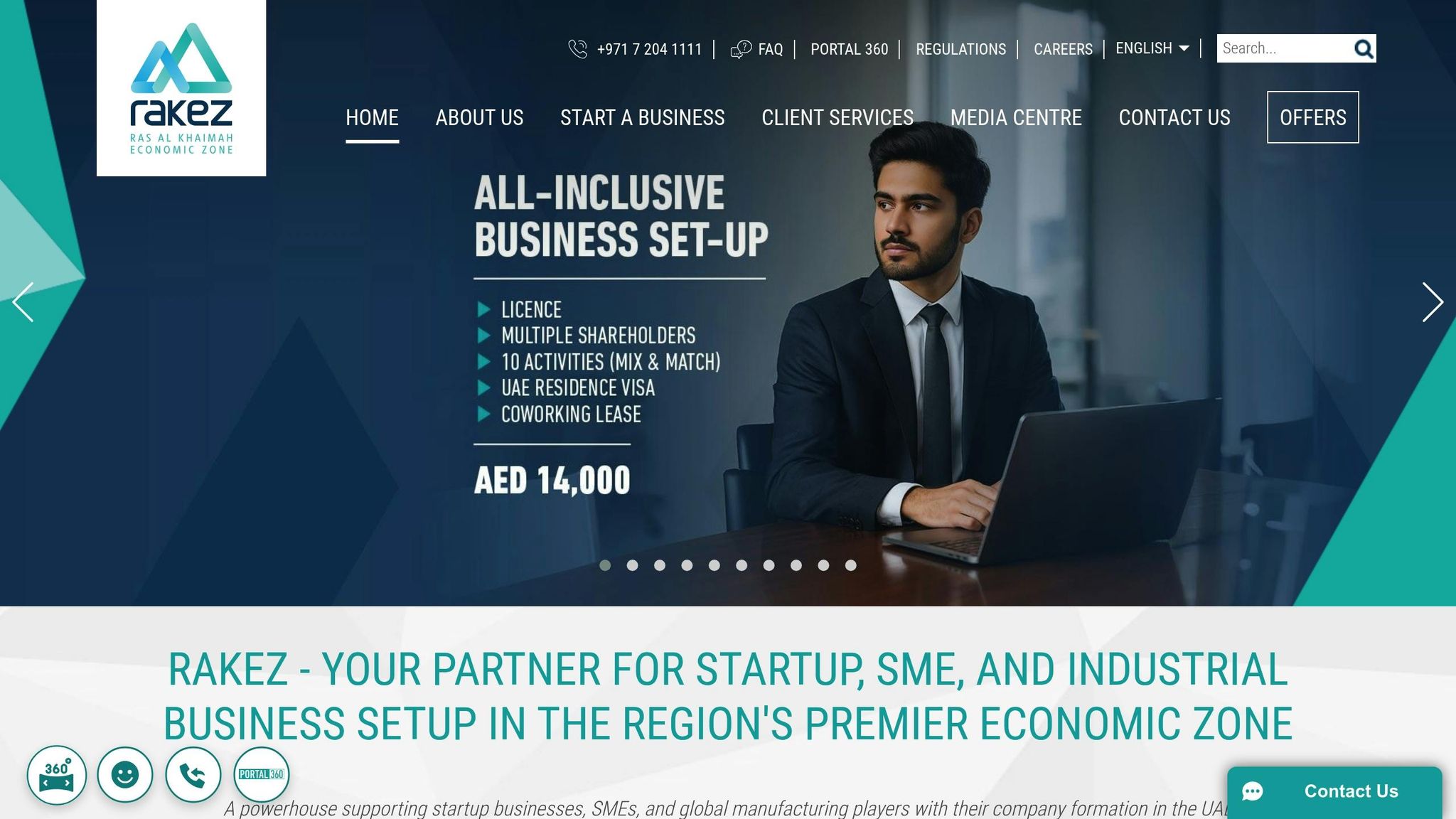
Ras Al Khaimah Economic Zone (RAKEZ) has made a name for itself as one of the UAE's most budget-friendly and efficient free zones for startups. As of 2025, it is home to 30,000 companies, with 13,000 new businesses joining in 2024 and an impressive 132% growth rate between April and June 2023 [45]. Business setup is a breeze, taking just 3–5 days - much faster than many Dubai-based zones [1]. RAKEZ also offers key benefits like 100% foreign ownership, no corporate or personal income tax, and full profit repatriation, making it an appealing choice for entrepreneurs looking to manage costs effectively [42][43].
Industry Focus and Specialisation
RAKEZ is designed to support a wide variety of industries, catering to over 50 sectors across six specialised zones. These include manufacturing, trading, services, media, and education [42][43]. Notable zones include the Al Nakheel Business Zone, which is ideal for SMEs and freelancers, the RAKEZ Media Zone for creative professionals, and three industrial zones - Al Hamra, Al Ghail, and Al Hulaila - dedicated to light and heavy manufacturing [43][44].
The zone has seen significant growth in areas like robotic solutions for solar energy, green hydrogen, and food processing [45]. For instance, in September 2024, RAKEZ signed a US$360 million lease agreement with the Shandong Timber and Wood Products Association to establish a specialised industrial park. Additionally, new food processing facilities are set to produce 3,000 tonnes of processed food monthly [45]. For ventures in digital assets and AI, the adjacent RAK Digital Assets Oasis offers tailored infrastructure [3].
Setup Costs and Visa Packages
RAKEZ provides comprehensive packages that cover registration, licensing, leasing, and visa processing. Visa packages start at AED 16,500 for one visa (valid for one year), AED 20,000 for two visas annually, and AED 29,000 for four visas annually. Serviced offices with two visas are priced at AED 25,000, while standard offices with four visas cost AED 38,000. Licensing fees begin at approximately AED 7,500 [42][1]. For those planning longer-term commitments, a three-year package with one visa is available for AED 39,600 [42]. The zone also offers a Freelancer Permit for professionals in media, education, and IT, along with specialised licences for e-commerce and IT businesses [42][43].
Regulatory and Compliance Support
RAKEZ simplifies business operations with its one-stop shop for government services. From licensing and renewals to visa processing, everything is managed in a single location [43]. The setup process is streamlined into three simple steps - Customise, Submit, Receive - and a user-friendly client portal allows businesses to handle their requirements online [42][43]. Through its Mazeed Services, RAKEZ provides additional support, including legal translations, document attestation, recruitment assistance, corporate bank account setup, and tax filing via the Department of Economic Development [43][45]. The dual licence option further enhances flexibility, allowing businesses to operate in both the free zone and the UAE mainland [45].
Opportunities for Startups
RAKEZ goes beyond cost savings and regulatory ease to offer facilities like the Compass Co-working Centre and Flexi Facilities, which help startups minimise overheads. The zone has attracted innovative businesses, such as the San Group's green hydrogen and farming subsidiary in February 2022 and firms specialising in robotic solar energy solutions in August 2024 [45]. Its strategic location, with access to major logistical hubs and multi-lane highways, ensures seamless connectivity to markets across MENA, Europe, and Asia [43].
Free Zone Comparison Table
Selecting the right free zone for your startup involves weighing factors like setup costs, processing times, visa allocations, and industry focus. The table below offers a side-by-side comparison of ten free zones, highlighting these critical aspects. Note: Setup costs include registration fees, licence fees, and office rental.
Processing times can vary significantly, from as little as 1–2 days at Sharjah Publishing City (SPC) to up to 4–6 weeks at Dubai Healthcare City (DHCC), due to differences in regulatory processes [47][2][48]. Visa quotas, on the other hand, are often tied to the type of physical space leased. For instance, SPC provides up to 20 visas even with a shared desk licence [47][2].
Here’s a quick summary of the key metrics for comparison:
"Cheaper is not always better, and expensive doesn't always mean right for you." - Mohammed Shuheb, CSPZone [48]
| Free Zone | Primary Industry Focus | Setup Cost (AED) | Processing Time | Visa Quota (Entry Level) |
|---|---|---|---|---|
| Dubai Internet City (DIC) | Tech, AI, SaaS, Gaming, Cybersecurity | 50,000–57,000 | 2–4 Weeks | Up to 2 (Dedicated Desk) |
| Dubai Silicon Oasis (DSO) | IT, AI, Fintech, 3D Printing | 11,900–12,000 | ~2 Weeks | 2 (Flexi-Desk) |
| DMCC | Commodities, Crypto, Trade, Tech | 11,000–35,484 | 2–4 Weeks | 1–3 (Flexi-Desk) |
| DIFC | Finance, Fintech, Legal, Consulting | 10,000–22,000 | 7–10 Days | ~1 per Desk |
| Sharjah Publishing City (SPC) | Publishing, Media, Trade | 5,750 | 1–2 Days | Up to 20 (Shared Desk) |
| ADGM | Financial Services, Asset Management | 9,000+ | 7–10 Days | Varies by Office Size |
| Dubai Design District (d3) | Creative-Tech, Software, Design | 40,000 | ~1 Week | Varies by Desk Type |
| Dubai Healthcare City (DHCC) | HealthTech, AI, Clinical Services | 14,900–30,000 | 4–6 Weeks | Varies by Office Size |
| Jebel Ali Free Zone (JAFZA) | Logistics, Manufacturing, SaaS | 15,000–52,636 | ~2 Weeks | Varies by Office Size |
| Ras Al Khaimah Economic Zone (RAKEZ) | Manufacturing, Trading, Services, Media | 6,000–7,500 | 3–5 Days | 1 (Entry Package) |
For tech and AI startups, Dubai Internet City and Dubai Silicon Oasis stand out with their tailored infrastructure and regulatory frameworks, albeit at higher costs [2][48]. Fintech companies might find DIFC and ADGM particularly appealing due to their financial expertise and relatively quick processing times [1][2]. If budget constraints are a concern, Sharjah Publishing City and RAKEZ offer some of the most economical entry points, with packages starting at AED 5,750 and AED 6,000 respectively, while still providing reliable regulatory support and visa flexibility [46][2][1].
Conclusion
Choosing the right free zone for your startup in the UAE is all about aligning your business goals with the specific advantages each zone offers. For instance, tech and AI startups often excel in Dubai Internet City and Dubai Silicon Oasis, while fintech ventures benefit from the English Common Law frameworks and regulatory independence offered by DIFC and ADGM.
Free zones also cater to different operational needs. If your business relies heavily on logistics, JAFZA provides unmatched access to Jebel Ali Port. On the other hand, creative industries may find a perfect fit in the Dubai Design District, which offers tailored support for artistic and design-focused ventures.
Budget is another crucial factor. The UAE offers a spectrum of options, from more affordable zones like Sharjah Publishing City and RAKEZ, to high-end zones such as DIFC and DMCC, which provide access to global investor networks and enhanced market visibility. Across the board, the UAE’s free zones entice entrepreneurs with benefits like 100% foreign ownership, zero corporate tax for qualifying businesses, and streamlined administrative processes.
When evaluating free zones, it’s essential to consider factors like visa quotas, processing timelines, mainland access restrictions, and the range of permitted business activities. These aspects can significantly influence how well a free zone aligns with your business model and long-term objectives.
With over 40 free zones catering to various industries - from DMCC’s Crypto Centre for blockchain startups to Dubai Healthcare City for specialised clinical businesses - your decision should reflect your target audience, infrastructure needs, and growth trajectory.
To make the best choice, consider tapping into the UAE’s vibrant startup ecosystem. Platforms like Founder Connects provide valuable resources, including networking opportunities, expert advice, and connections to investors, helping you navigate the complexities of free zone selection and integration into the local business environment.
FAQs
What are the main advantages of starting a business in a UAE free zone?
Setting up a startup in a UAE free zone comes with a host of advantages that make it a popular choice for entrepreneurs. For starters, there’s zero tax liability - no corporate or personal income tax, plus no customs duties on imports or exports within the free zone. On top of that, foreign investors can retain 100% ownership of their businesses without needing a local partner. And when it comes to profits, there are no restrictions on repatriating capital and earnings back home.
The UAE’s prime location - a crossroads linking Asia, Europe, and Africa - paired with its cutting-edge infrastructure, gives startups a head start. From state-of-the-art logistics centres to modern office facilities and high-speed communication networks, everything is designed to support business growth. The quick and efficient licensing and registration processes mean your business can be up and running in just a matter of weeks, allowing you to focus your energy on scaling and innovating.
What’s more, each free zone caters to specific industries such as technology, media, energy, or space, creating focused ecosystems that provide tailored support. These zones connect startups with a network of local and international investors, accelerators, and incubators, offering mentorship, funding opportunities, and access to testing facilities. With reduced costs, industry-specific resources, and invaluable networking opportunities, UAE free zones provide the perfect environment for startups looking to grow rapidly and make a mark.
How can I choose the best UAE free zone for my startup's industry and budget?
To pick the right UAE free zone for your business, start by identifying those that align with your industry. For example, DMCC is a strong choice for commodities, trading, and crypto-focused businesses, while DIFC and ADGM cater specifically to finance, fintech, and legal services. Across the UAE, there are around 44 free zones, each designed to support specific industries with tailored infrastructure, networking opportunities, and regulatory frameworks. Choosing a zone with an established ecosystem that matches your business needs can make all the difference.
Next, think about your budget. Free zones offer a range of pricing options. For instance, RAKEZ provides cost-effective flexi-desk packages, while premium office spaces in JLT under DMCC come at a higher price point. Licensing fees typically range from AED 15,000 to AED 30,000, and annual office space costs can vary between AED 20,000 and AED 80,000. Weigh these expenses against the additional benefits offered, such as visa processing, tax advantages, and streamlined administrative support.
Lastly, consider the location and regulatory environment. For example, DIFC operates under an English common-law system, which is particularly advantageous for fintech companies. Assess each zone’s industry focus, costs, and strategic positioning to find the one that best supports your business goals while staying within budget.
What are the costs and processing times for starting a business in UAE free zones?
Setting up a business in one of the UAE's free zones can be relatively affordable, with basic licences starting at AED 9,000. However, initial fees typically range from AED 15,000 to AED 50,000, depending on the package and services included. If you're looking for premium options, such as larger office spaces or additional visas, the cost can go beyond AED 100,000.
The time it takes to set up your business will depend on the free zone you choose and your specific business activity. Generally, the process is quite streamlined, often taking just a few days to a couple of weeks. For the most accurate timelines and guidance tailored to your needs, it's a good idea to reach out directly to the free zone authority.
Related Blog Posts

Building in MENA? You don't have to do it alone.
Join 300+ founders in the Founder Connects Residency. Monthly squad calls, warm intros, $3M+ in perks, and much more. All for less than your monthly coffee budget.
Popular posts





Founder Connects is a premium MENA tech founder community. Meetups in Dubai and across MENA, Residency Squads of 8–10, and 400+ vetted WhatsApp founders (apply and screened).