

7 Great Internet Businesses: A Founder's Guide for 2026

Building in MENA? You don't have to do it alone.
Join 300+ founders in the Founder Connects Residency. Monthly squad calls, warm intros, $3M+ in perks, and much more. All for less than your monthly coffee budget.

Why do some internet businesses keep compounding while others stall the moment ad costs rise or the founder gets stretched too thin?
That question matters more in the UAE and wider MENA than generic startup advice admits. The region is growing fast, but growth on its own does not create a durable company. Founders here still have to handle fragmented payments, different customer expectations across markets, logistics constraints, and smaller talent pools in specialist roles. A model that works in the US often needs adjustment before it works in Dubai, Riyadh, or Cairo.
The businesses that hold up under pressure tend to share a few traits. They solve an expensive problem, deliver the solution through a repeatable system, and build an advantage that gets stronger with usage. Sometimes that advantage comes from software. Sometimes it comes from distribution, retained data, or a trusted community that keeps bringing the right people back.
That is the lens for this list. It is not a roundup of famous tech companies. It is a practical analysis for founders building in this region: what these businesses got right, which parts of their playbook transfer to MENA, and where the local market changes the decision. If you are still deciding on your stack, this guide to e-commerce platforms for online retail startups in the UAE is a useful companion.
You will see infrastructure businesses like Stripe and AWS next to operating tools like HubSpot, Webflow, and Brevo. You will also see Founder Connects, because in MENA, community can be a real distribution advantage, not a side project. That distinction gets missed by founders who only study Silicon Valley examples.
The goal is practical use. Borrow the mechanics, not the branding. If you are building a commerce business, study Shopify web development as an execution discipline, not just a design task. If you are building software, study retention, implementation, and expansion revenue. If you are building a network-driven business in the region, pay close attention to trust, curation, and consistency, because those are often the assets that compound first.
1. Shopify
What should a UAE founder build from scratch, and what should they buy off the shelf? Shopify is one of the clearest answers to that question. It gives product companies a working commerce engine fast, so the team can focus on merchandising, fulfilment, customer service, and repeat purchase behavior instead of rebuilding checkout, hosting, and inventory logic.
That speed matters in MENA because early winners usually learn faster, test faster, and fix operational mistakes sooner. For many founders in the region, Shopify is the right default unless the business depends on unusual pricing rules, custom backend workflows, or marketplace-style logic from day one.
Where Shopify works best
Shopify works well for brands selling physical products, subscriptions, bundles, and straightforward B2B catalogs. It is especially useful for small teams that need to get live without hiring a full product and engineering function first.
- Fast launch cycle: A non-technical team can go from concept to live store quickly.
- One core system: Storefront, checkout, product management, and basic operational workflows sit in one place.
- Room to grow: Founders can start with native tools, then add apps, channels, and custom development as the business earns that complexity.
A practical starting point for regional founders is to compare options before committing. This UAE e-commerce platform breakdown for online retail startups is useful if you are weighing Shopify against more localized alternatives.
The upside is clear. The trade-off is easy to underestimate.
Shopify rarely breaks the budget on subscription price alone. However, the actual cost shows up later in app sprawl, custom themes, agency retainers, and edge-case fixes that stack up month after month. I have seen founders choose Shopify for simplicity, then recreate a messy system through too many plugins and workarounds.
The better approach is boring and effective. Start with native features. Add apps only when they solve a proven bottleneck. Keep the stack tight until order volume, support load, or merchandising complexity gives you a real reason to expand. For operators studying how stronger stores handle structure, merchandising, and conversion paths, 7 Shopify Store Example Breakdowns is a useful reference.
For MENA founders, the local adaptation matters as much as the platform choice. A polished storefront does not fix weak delivery operations, COD friction, or poor payment recovery. If those issues are central to your model, it is worth studying adjacent infrastructure too, including this analysis of leading MENA fintech startups and payment infrastructure trends.
Practical rule: Choose Shopify when your advantage is product, brand, or customer experience. Choose a custom build only when your advantage depends on business logic Shopify cannot handle cleanly.
2. Stripe (UAE)

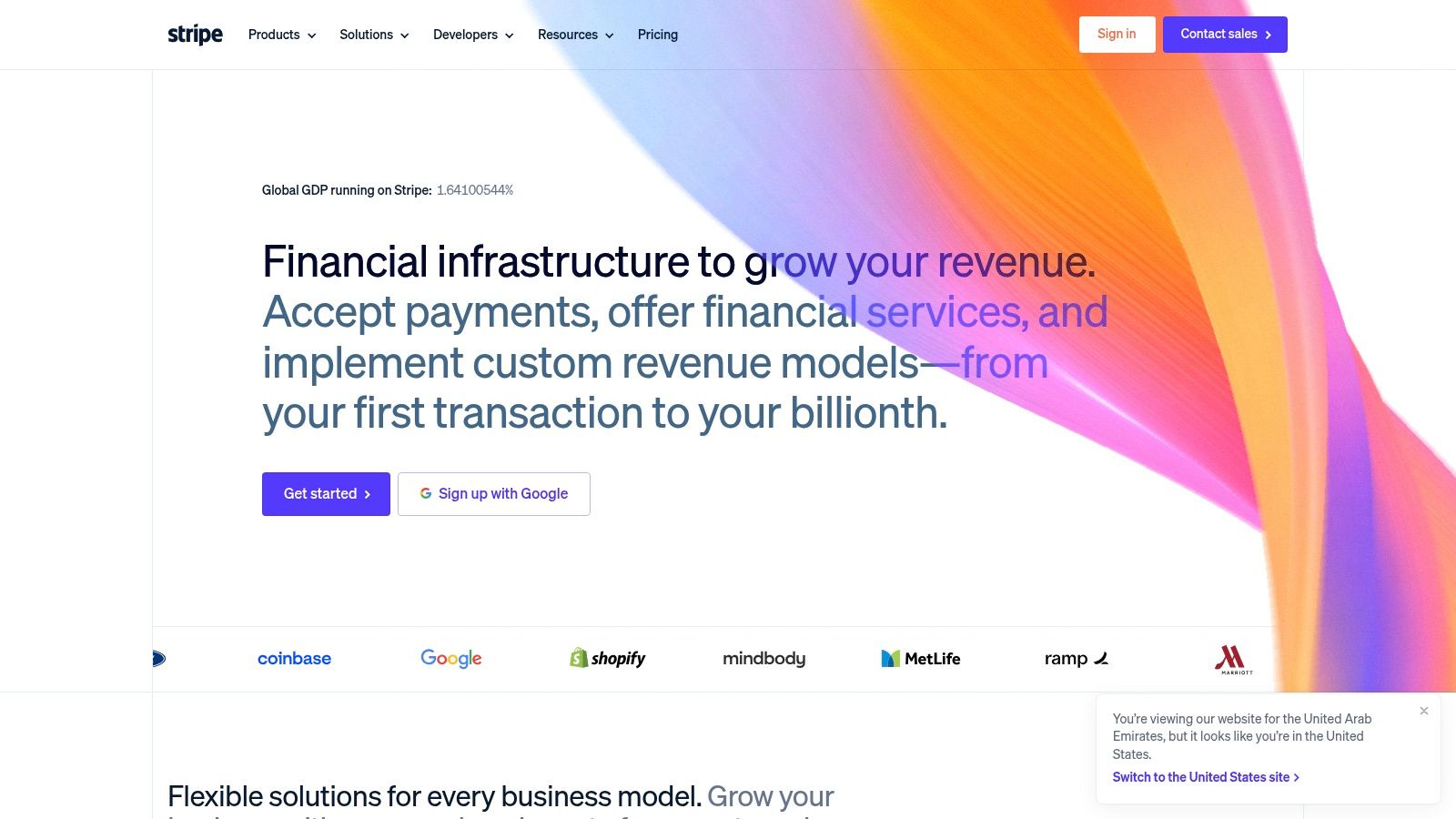
A lot of founders treat payments like plumbing. That’s a mistake. Payments shape conversion, cash flow, refunds, subscriptions, and trust. Stripe UAE is a great internet business because it turns a painful infrastructure problem into a developer-friendly platform that can support very different business models.
If you’re building SaaS, a marketplace, a service business, or a digital product company, Stripe is often the cleanest route to taking money online without creating a finance headache for your team.
Why founders pick Stripe early
Stripe is usually a good fit when you need more than a basic payment button. It handles recurring billing, invoicing, links, reporting, and integrations well.
- Developer-friendly setup: APIs and webhooks make it easier to fit Stripe into a custom product.
- Recurring revenue support: Useful for SaaS, memberships, retainers, and usage-based models.
- Operational visibility: Reporting and dispute workflows are much stronger than many lightweight gateways.
For fintech founders who want a wider view of the regional market they’re entering, this MENA fintech landscape analysis gives useful context on where the ecosystem is moving.
What doesn’t work
Stripe is not “set and forget”. Founders still need to verify country-specific method availability, payout flows, dispute handling, and how cross-border fees affect customer economics. That’s especially important if you’re selling across multiple MENA markets with different buyer behaviour.
Payments friction kills otherwise good businesses. If checkout feels uncertain, buyers leave before your product gets a chance.
The second trap is overengineering too early. Stripe gives technical teams a lot of flexibility, but many early startups don’t need a complex billing architecture on day one. Start with the simplest version that supports how you sell now.
If your business is store-first rather than product-first, it can also help to look at how payment experience fits into the broader storefront journey. These Shopify store example breakdowns are relevant because payment performance is usually downstream of store clarity.
Stripe is a good example of what great internet businesses do well. They abstract complexity without hiding the operational consequences. That’s useful, but only if the founder stays close to the numbers and the customer journey.
3. Amazon Web Services (AWS)
What do great internet businesses have in common once customer demand starts to show up? Their infrastructure stops being an afterthought.
AWS is one of the clearest examples. It gives founders a way to ship quickly at the start, then add more capability without ripping out the stack every six months. That matters in the UAE and wider MENA market, where teams often need to test new products, enter adjacent countries, and handle uneven traffic patterns without hiring a large DevOps team too early.
The appeal is range. Compute, storage, databases, serverless functions, networking, analytics, and content delivery sit in one environment. For a technical founder, that means fewer forced platform changes as the product matures. For a non-technical founder, it means one early architecture decision can either save time later or create a monthly cost problem you do not notice until cash is tighter.
Where AWS actually helps
AWS is strongest when the product has real technical complexity. Custom apps, internal tools, API businesses, marketplaces, AI features, and data-heavy products usually benefit more than a simple brochure site or a basic ecommerce setup.
A practical approach looks like this:
- Start with managed services. S3, RDS, CloudFront, and Lambda reduce the amount of infrastructure your team has to maintain directly.
- Design for the next stage, not the final stage. Build enough reliability for current usage and expected near-term growth.
- Put cost controls in place from week one. Budget alerts, tagging, and basic usage reviews prevent avoidable cloud waste.
- Match architecture to team skill. A small startup with no strong engineering owner can create expensive complexity very fast on AWS.
This is the trade-off. AWS gives you room to grow, but it also exposes weak technical judgment. I have seen founders choose enterprise-style architecture before they have repeatable demand, then spend money solving problems they do not yet have.
What MENA founders should translate from the AWS playbook
The lesson is not "use AWS because big companies use AWS." The lesson is to copy the operating model behind it. Great internet businesses build systems that let them release faster, recover from failures, and support growth without a full rebuild.
That is especially relevant in MENA. Products often expand across markets with different logistics realities, language requirements, payment methods, and compliance expectations. Infrastructure choices affect all of that. If your team expects to support multiple storefronts, region-specific APIs, or heavier backend logic, AWS can be a strong fit. If you are still validating a narrow use case, simpler hosting may be the smarter choice.
The commercial side matters too. Founders who are still figuring out how marketing and sales should work together should get clear on how marketing and sales alignment actually works before they overspend on technical systems that do not fix a go-to-market problem.
And once the business grows past pure infrastructure decisions, the operating stack starts to matter just as much as the backend. This HubSpot vs Marketo comparison is useful if you're thinking ahead about how customer data, automation, and internal workflows should connect.
Build the smallest reliable stack that supports the next stage of growth.
That discipline is harder than it sounds. Founders in the region are often pulled between speed, credibility, and the pressure to look bigger than they are. AWS is a good tool for serious internet businesses, but only when the architecture follows the business model, the team’s actual capability, and the economics of the next 12 to 18 months.
4. HubSpot (CRM, Marketing/Sales/Service Hubs)
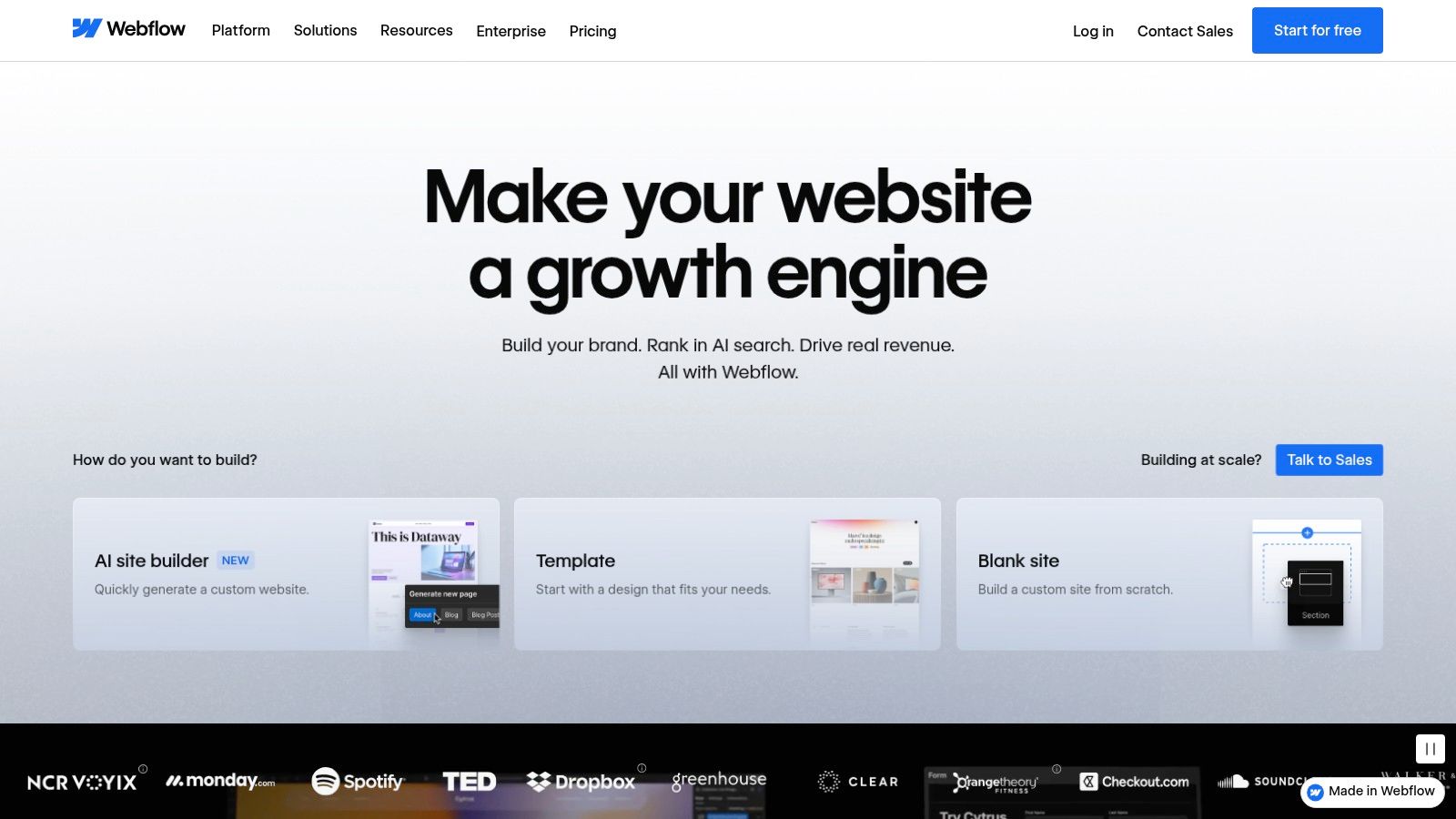
HubSpot is a great internet business because it sits in the operating layer of growth. It’s not glamorous, but it solves one of the most common startup problems. Leads arrive from different places, sales conversations live in inboxes, support issues sit in chat, and nobody has a clean view of the customer journey.
HubSpot works best when the business has crossed the point where ad hoc tools start creating hidden friction. That usually happens sooner than founders expect.
Why HubSpot becomes valuable
The appeal is unification. CRM, forms, email, automation, pipelines, reporting, and customer service tooling can sit in one system instead of five disconnected ones.
That matters if you’re trying to answer basic questions like these:
- Which channel creates qualified leads
- Which follow-up sequence converts
- Where prospects stall in the pipeline
- Which customers are asking for the same support fix
If your team is still fuzzy on how marketing and sales should work together, this clear explanation of marketing and sales alignment is worth reviewing before you buy more software.
The part founders resist
HubSpot doesn’t create process for you. It exposes whether you have one. If lead stages are unclear, ownership is vague, or your team doesn’t follow up consistently, the platform will mirror that confusion.
That’s why some founders feel disappointed after implementation. The issue usually isn’t the tool. It’s that the business wanted automation before it had discipline.
A CRM won’t fix a broken sales habit. It will just document it more clearly.
Costs can also rise as contacts grow and as you move into more advanced hubs and automations. So the right move is to define one lifecycle first. Lead capture, qualification, handoff, close, onboarding. Then build only the automation that supports it.
For founders comparing enterprise marketing stacks, this HubSpot vs Marketo comparison is useful, especially if your team is deciding between simplicity and depth.
5. Webflow
How much time does your team lose every time a landing page edit needs a developer?
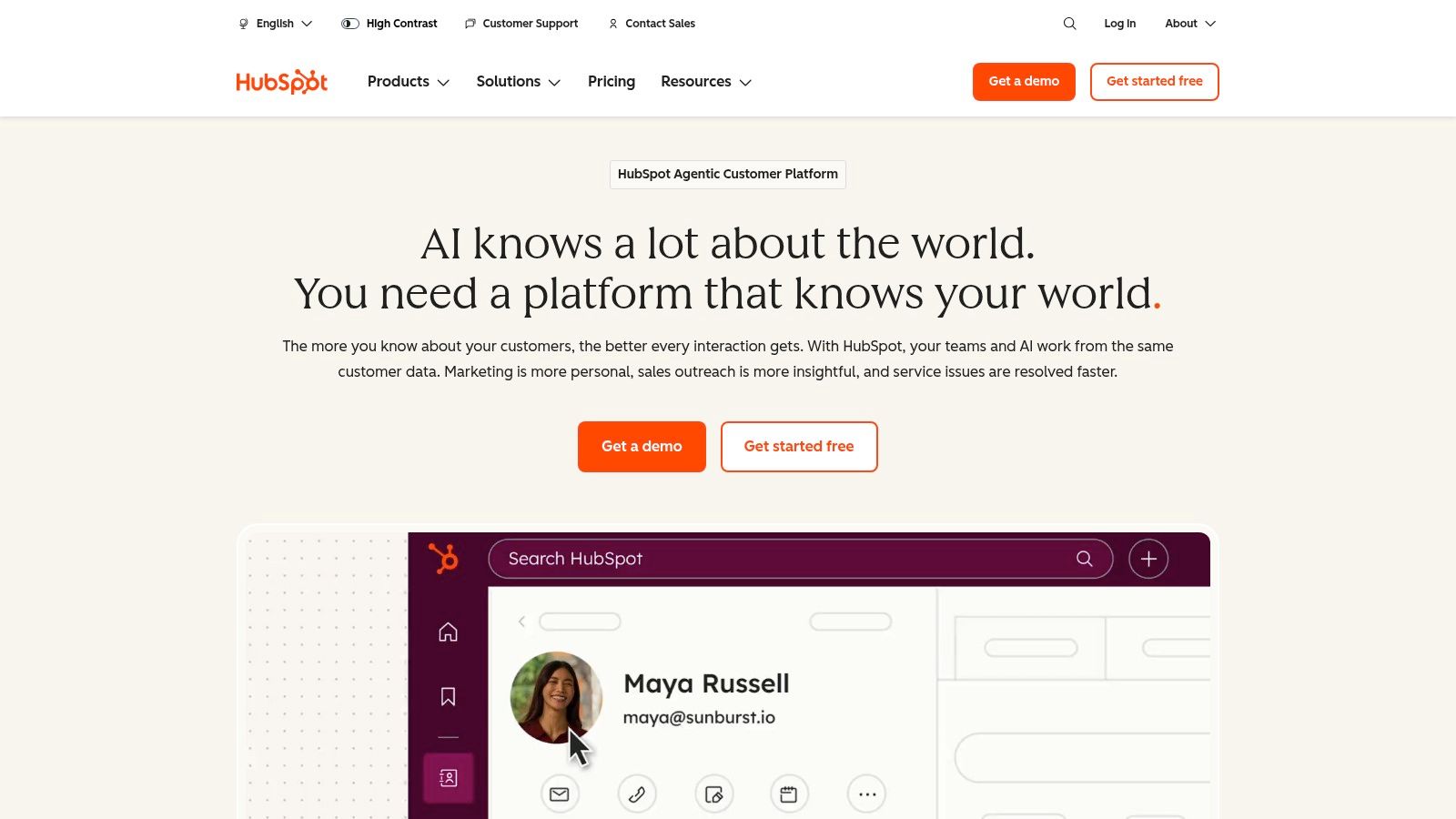
Webflow matters because it fixes a specific bottleneck. Founders need to ship pages, test messaging, publish case studies, and update offers without turning simple website work into an engineering queue. For UAE and MENA startups, that speed is practical, not cosmetic. Many teams are still balancing small product squads, outsourced development, and aggressive go-to-market targets.
Webflow works well when the website is a sales asset. You get stronger design control than basic site builders, a flexible CMS, and enough structure for marketers to operate independently without breaking the front end.
Three use cases usually justify it:
- Marketing sites: Homepages, solution pages, landing pages, and content hubs that need brand control and fast edits.
- Validation pages: Quick tests for new segments, offers, or positioning before spending on full product builds.
- Content operations: Publishing articles, case studies, team pages, and SEO pages without waiting on developers.
I’ve seen this pattern repeatedly. A startup says it wants to test demand fast, but every page change sits in backlog behind product work. Weeks pass. The team learns less than it should. Webflow removes that drag and gives marketing real operating speed.
That said, the trade-off is clear.
Webflow is excellent for presentation, content, and conversion paths. It starts to strain when founders try to turn it into the product itself. Complex application logic, deep backend workflows, unusual permissions, or heavy user-state handling usually belong elsewhere. The better setup for many companies is simpler: keep Webflow for the public-facing site and build the core product on a stack designed for application logic.
That distinction matters in MENA. A lot of founders still treat the website as a branding exercise, then wonder why lead flow is inconsistent. The stronger approach is to treat the site as commercial infrastructure. It should explain the offer fast, capture intent cleanly, and let your team update pages as the market changes.
Webflow is one of the better internet business models for that reason. It sells speed, control, and reduced dependency on developers. For regional founders, the lesson is straightforward. If your growth depends on fast iteration, your website stack should help you publish and test, not slow you down.
6. Brevo (formerly Sendinblue)
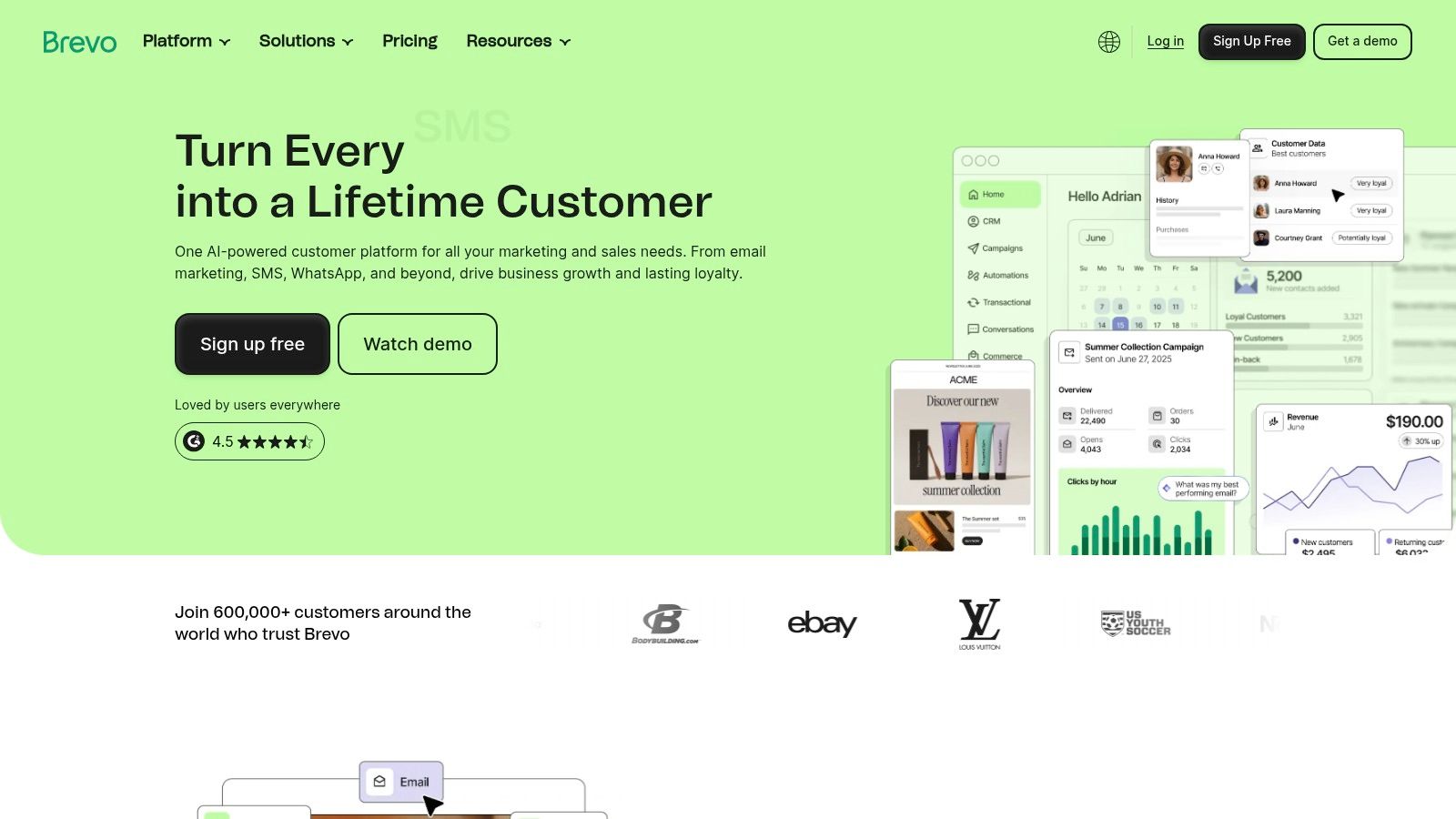
Brevo earns a place on this list for one simple reason. A lot of MENA startups need practical messaging across email, SMS, and WhatsApp before they need a heavyweight enterprise suite.
That’s where Brevo is useful. It gives smaller teams a multichannel communication stack without the same contact-based pricing pressure many founders run into elsewhere.
A realistic use case for MENA founders
In this region, customers often respond differently depending on the channel, product category, and urgency. Service businesses, healthcare startups, e-commerce brands, and booking-led products often need more than email alone.
Brevo suits teams that want to run:
- Email campaigns for onboarding, offers, and lifecycle flows
- SMS messages for reminders and urgent customer actions
- WhatsApp communication where the customer journey naturally supports it
- Basic CRM workflows without buying a separate platform immediately
This is less about sophistication and more about fit. If your buyers live in messaging apps, a pure email stack can be too narrow.
What to watch closely
Brevo is strong on value, but it’s not the deepest tool in every category. More advanced reporting, landing page needs, or highly customised attribution models may push you toward a more complex setup later.
The second issue is operational, not technical. Country-specific messaging policies matter. Sending windows matter. Consent matters. Founders need to confirm local sending realities in the UAE before building aggressive campaign plans.
A good rule is to keep channel strategy simple. Start with one lifecycle flow that clearly matches customer behaviour. For example, email for education, SMS for reminders, WhatsApp for service follow-up. Don’t launch every channel at once just because the tool allows it.
Brevo reflects a pattern common to great internet businesses. It wins not by replacing every system, but by solving a narrow operational problem well enough for a large group of growing companies.
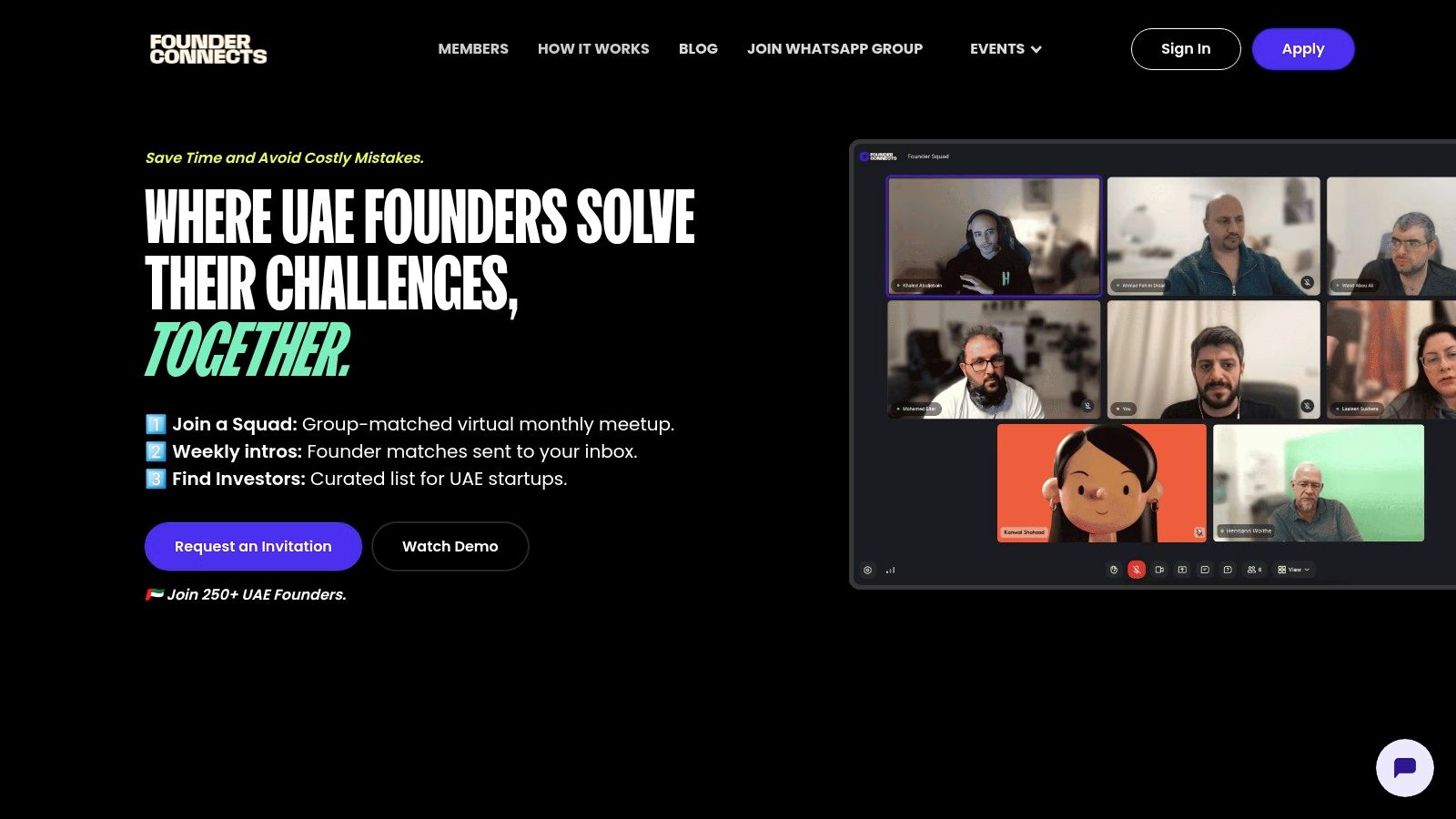
7. Founder Connects
What if one of the most impactful internet businesses in MENA is not software at all, but a system that helps founders make fewer bad decisions?
That is the case for community-led businesses such as Founder Connects. In the UAE, founder isolation is not just emotional drag. It slows decisions, reduces accountability, and makes it harder to get trusted introductions. Earlier source material in this article also pointed to founder isolation as a persistent problem across the region, which is why community infrastructure deserves a place beside software, payments, and cloud tools.
This matters more in MENA than many imported startup playbooks suggest. In Silicon Valley, founders can often find dense peer networks by default. In the UAE, access usually comes through trust, curation, and repeated interaction. Open networking events create reach. Structured communities create useful relationships.
Founder Connects appears to understand that difference. The model is built around curated peer groups, moderated accountability, weekly one-to-one introductions, and a mix of virtual and in-person sessions. For an early-stage founder, that can improve speed on hiring, pricing, fundraising preparation, and market feedback. For a scaling founder, it can reduce the cost of solving the same problems alone.
The operating logic is practical:
- Small peer groups create room for honest discussion
- Moderated sessions keep conversations focused and useful
- Curated introductions improve relevance and follow-through
- Ongoing participation turns networking into a repeatable system, not a one-off event
That structure is the product.
A regional example in the source set supports the broader model. The Dubai Future District case linked peer-group participation with faster progress to market and lower founder churn inside the cohort, based on reported programme outcomes from Businesses Grow. The exact numbers matter less than the pattern. Good founder communities improve execution because they shorten feedback loops and raise the quality of decisions.
I have seen this play out repeatedly in the region. Founders rarely fail because they lacked one more webinar or one more generic meetup. They get stuck because they make a hiring mistake too late, chase the wrong segment for six months, or raise from weak-fit investors. A strong peer group helps catch those errors earlier.
What to Consider
This model has clear limits. It only works if members show up prepared, share openly, and follow through. Founders looking for passive access or a broad contact list will get less value than founders who treat the group like part of their operating cadence.
There is also a regional concentration effect. A UAE and MENA-focused network is highly useful if your customers, investors, or operator circle are here. It is less useful if your company is building for another geography and needs deep local context elsewhere.
Pricing is another practical question. Public pricing is not listed, so founders need to evaluate fit through direct enquiry and weigh the cost against tangible outcomes such as better introductions, faster decisions, or avoided mistakes.
For UAE founders, this is the main lesson. Great internet businesses are not limited to software platforms. Some build trusted environments where founders get better judgment, better access, and better execution. In MENA, that is a business model worth studying closely.
Top 7 Internet Businesses: Side-by-Side Comparison
| Solution | Implementation complexity (🔄) | Resource requirements (⚡) | Expected outcomes (📊) | Ideal use cases (💡) | Key advantages (⭐) |
|---|---|---|---|---|---|
| Shopify | Low, turnkey store + moderate for headless/custom apps | Moderate, subscription, apps, design/developer costs | Strong e‑commerce conversion and scale from SMB to enterprise | Product stores, omnichannel retail, fast market entry | All‑in‑one commerce, large app ecosystem, fast to launch |
| Stripe (UAE) | Low–Medium, developer integration for payments/APIs | Low, pay‑as‑you‑go fees; developer time for integrations | Reliable payments, subscription billing, localized payouts in UAE | SaaS, marketplaces, subscriptions, cross‑border payments | Developer‑friendly APIs, broad payment methods, Radar fraud tools |
| AWS | High, architecture and ops expertise required for optimal use | Variable, pay‑as‑you‑go; can be cost‑efficient or expensive without governance | Highly scalable, global performance, compliance and flexibility | MVP→enterprise backends, ML, multi‑region/high‑traffic apps | Deep service catalog, elasticity, mature ecosystem |
| HubSpot (CRM/Hubs) | Low–Medium, straightforward CRM; complex at enterprise scale | Medium, subscription grows with contacts/features; onboarding effort | Unified customer data, automated lifecycle workflows, better attribution | Growth marketing, sales automation, service orchestration | All‑in‑one CRM + automation, rich marketplace and integrations |
| Webflow | Low, visual builder; complex interactions may need workarounds | Low–Medium, hosting/plan + design resources | Fast delivery of pixel‑perfect marketing sites and simple apps | Marketing sites, landing pages, brand control, rapid iterations | Designer-first no‑code, CMS + hosting, rapid iteration without dev cycles |
| Brevo (Sendinblue) | Low, simple setup for email/SMS/WhatsApp campaigns | Low, budget‑friendly pricing by volume; minimal tech overhead | Cost‑effective multichannel messaging for small/medium lists | Startups needing email + SMS/WhatsApp in MENA and budget constraints | Strong value for mixed channels, easy for non‑technical teams |
| Founder Connects | Low, membership onboarding; consistent time commitment required | Medium, membership fee (private) + recurring time for peer sessions | High‑signal relationships, accountability, faster founder progress | UAE/MENA founders seeking curated peer cohorts and introductions | Curated small peer groups, moderated sessions, ongoing curated intros |
Your Next Step Turn Insight Into Action
Studying great internet businesses shows a clear pattern. The durable ones aren’t built on one clever campaign or one lucky launch. They’re built on systems that keep working when the founder is tired, the market shifts, or growth gets messy.
Shopify shows the power of reducing commerce friction. Stripe shows that infrastructure can become a strategic advantage. AWS shows why scalable systems matter, but also why founders shouldn’t overbuild. HubSpot and Webflow prove that operational clarity and speed can be major competitive edges. Brevo is a reminder that practical communication often beats bloated complexity.
Founder Connects adds a lesson that matters especially in the UAE and MENA. A strong founder business isn’t only shaped by tools. It’s shaped by the quality of decisions around those tools, and those decisions improve when founders have honest peers, relevant introductions, and a structure for accountability.
That’s the part many founders miss. They treat isolation like a personal feeling when it often becomes a business problem. It slows decisions, weakens execution, and makes avoidable mistakes harder to catch early. In a fast-moving regional market, that cost adds up quickly.
So don’t try to apply everything from this article at once. Pick the one bottleneck that is holding your business back right now.
Maybe your issue is:
- Store setup friction and you need a simpler commerce stack
- Payment complexity and you need cleaner billing operations
- Website bottlenecks and marketing can’t ship fast enough
- Lead chaos and nobody trusts the CRM
- Founder isolation and hard decisions are happening in a vacuum
Then run one small experiment in the next seven days.
- If sales are the issue: map your customer journey from first click to paid conversion.
- If operations are the issue: remove one tool from your stack and simplify the process around it.
- If clarity is the issue: take your current strategy question into a peer discussion and force a decision.
- If momentum is the issue: book one founder conversation that is designed for accountability, not networking theatre.
That’s how insight becomes execution. And that’s how good internet businesses become great ones.
If you're building in the UAE or wider MENA and want more than surface-level networking, Founder Connects is worth a serious look. It’s built for founders who want curated peer groups, practical accountability, relevant introductions, and real progress. If your next bottleneck isn’t a lack of information but a lack of trusted founder context, this is the kind of community that can help you move faster and make better decisions.

Building in MENA? You don't have to do it alone.
Join 300+ founders in the Founder Connects Residency. Monthly squad calls, warm intros, $3M+ in perks, and much more. All for less than your monthly coffee budget.
Popular posts





Founder Connects is a premium MENA tech founder community. Meetups in Dubai and across MENA, Residency Squads of 8–10, and 400+ vetted WhatsApp founders (apply and screened).