
Mike Hesson is Pakistan's current white-ball head coach, appointed on 13 May 2025 and due to join from 26 May 2025. For the Test team, Sarfaraz Ahmed has been named head coach, with Umar Gul as bowling coach and Asad Shafiq as batting coach.
If you're a founder in Dubai, Abu Dhabi, Riyadh, or Doha, this is the kind of detail that sounds minor until it comes up in a room full of South Asian clients, partners, investors, or operators. Pakistan cricket sits inside the Gulf's wider business and social conversation. Knowing the current Pakistan coach name isn't trivia. It's cultural fluency.
A lot of people searching Pakistan coach name just want the answer fast, especially if they're heading into a lunch, majlis, sponsorship meeting, or WhatsApp conversation where cricket will almost certainly surface.
Here's the clean version:
That split matters. Pakistan's men's side isn't being discussed through one simple all-format coaching label right now. If you use the wrong name in conversation, you'll sound half-updated.
Practical rule: When someone asks for the Pakistan coach name, clarify the format first. In cricket, “coach” often means different people depending on whether the discussion is about white-ball or Test cricket.
For MENA founders, the useful takeaway is simple. Pakistan cricket has a huge audience footprint across the Gulf, and leadership changes around the team often drive fan attention, media talk, and sponsor interest.
If you need a quick reference, use this.
| Format | Role | Name |
|---|---|---|
| White-ball | Head Coach | Mike Hesson |
| Test | Head Coach | Sarfaraz Ahmed |
| Test | Bowling Coach | Umar Gul |
| Test | Batting Coach | Asad Shafiq |
The practical issue isn't just remembering names. It's remembering which name belongs to which format.
That's usually enough to move from casual chatter into a more credible conversation.
A UAE founder sitting in a majlis, boardroom, or hospitality box during a Pakistan match does not need a full coaching chart. They need the right name, fast. For ODI and T20 discussions, that name is Mike Hesson.
The Pakistan Cricket Board appointed Hesson on 13 May 2025, with his role starting from 26 May 2025, according to ESPNcricinfo's report on Mike Hesson's appointment.
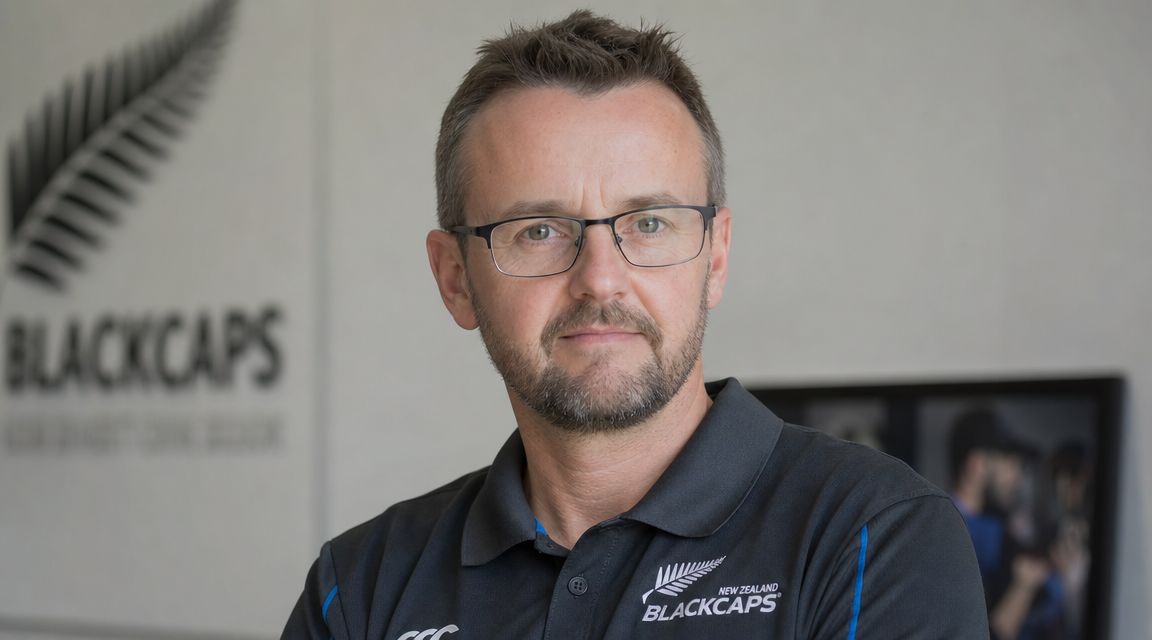
The more useful read is what his appointment signals. Pakistan changed white-ball coaches again after a short interim spell under Aqib Javed and an earlier exit by Gary Kirsten. That pattern matters because it shapes how fans, media, and commercial partners read the team. Stability is still a live question.
Hesson brings one practical advantage. He already knows the Pakistan cricket environment through Islamabad United in the PSL, so he is not starting from zero on player relationships, league dynamics, or public expectations.
For Gulf-based executives, that matters for cultural fluency as much as sport. Pakistan cricket is part of the wider UAE and MENA conversation through diaspora audiences, broadcast interest, sponsorship chatter, and everyday business networking. If you know Hesson is the white-ball coach, you sound informed. If you also know his appointment sits inside another reset cycle, you understand the mood around the team, which is often the more valuable insight.
A Dubai founder at a majlis, sponsorship dinner, or client meeting does not need every scorecard detail. They do need to know why Pakistan split its leadership by format, because that is how cricket conversations in the Gulf often move from small talk to sharper reads on public mood.
For the Test side, Sarfaraz Ahmed was appointed head coach, with Umar Gul as bowling coach and Asad Shafiq as batting coach, according to The Times of India report on Pakistan's Test coaching changes. The choice says a lot about what the PCB wanted from the red-ball setup. Familiar voices, local credibility, and quicker alignment inside a pressure-heavy environment.
Test cricket asks for patience, selection discipline, and session-by-session control. Sarfaraz's value is less about novelty and more about context. He knows the dressing-room culture, the scrutiny around Pakistan cricket, and the expectations attached to a long format that still carries prestige across South Asia and the Gulf.
That matters in MENA business circles too. Pakistan cricket is part of everyday conversation across UAE offices, investor groups, and diaspora communities. Knowing the broader commercial and cultural evolution of cricket helps explain why a red-ball appointment can still carry brand and reputational weight beyond the boundary.
This was a role design decision tied to performance pressure.
Three points stand out:
That is the useful takeaway. If Mike Hesson represents one side of Pakistan's coaching logic, Sarfaraz represents the other. Import external expertise where needed, then use local authority where trust and cultural fit matter more.
Pakistan's coaching story only makes sense if you accept one basic reality. This has rarely been a stable chair.
Wisden's historical overview shows repeated turnover, including five different head coaches between 1995 and 1999 alone, with names such as Intikhab Alam, Mushtaq Mohammad, Haroon Rasheed, Javed Miandad, and Wasim Raja appearing across short spans in that period, according to Wisden's list of Pakistan men's head coaches.
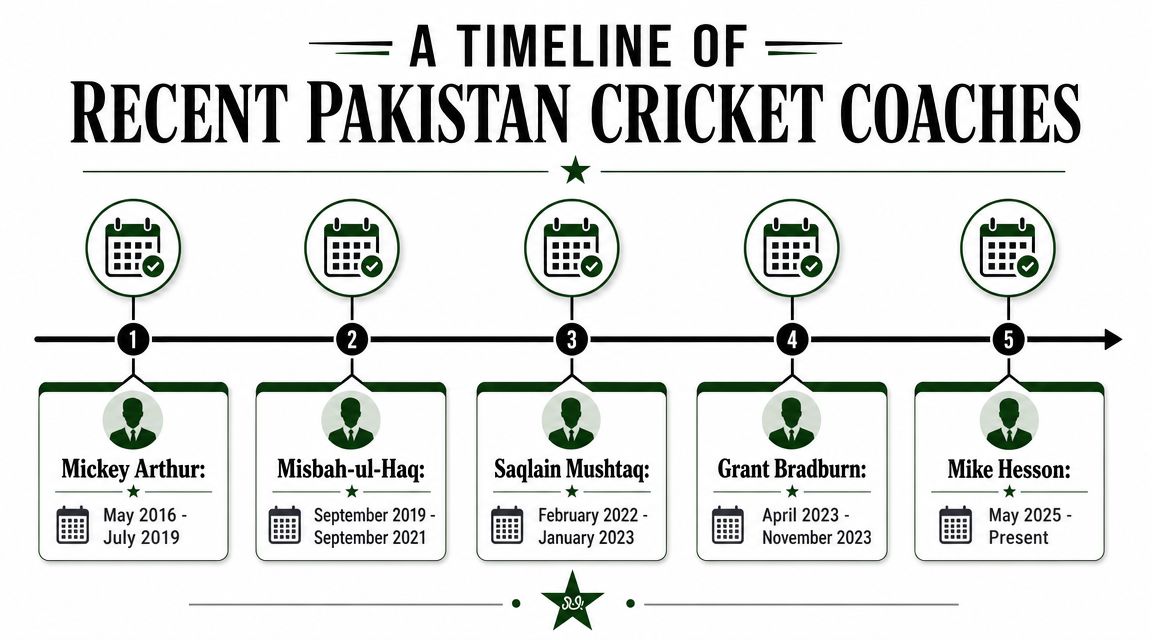
Wisden's list also shows how the role has continued to move between local and overseas names, including Mickey Arthur, Grant Bradburn, and Mike Hesson. That matters more than any single appointment because it tells you Pakistan has treated coaching as an adjustable lever, not a settled long-term institution.
For a broader regional context on how cricket leadership and formats have evolved commercially and culturally, this short read on the evolution of cricket is useful.
When I look at this as an operator, I don't see random churn. I see an organisation under constant stakeholder pressure, changing inputs in search of faster output.
That doesn't always work.
A revolving leadership role usually tells you more about the organisation than about the individual hired into it.
Pakistan's coach role attracts a level of scrutiny that most business leaders in the Gulf will recognise immediately. Large audience, high emotion, constant commentary, and results that are judged in public.
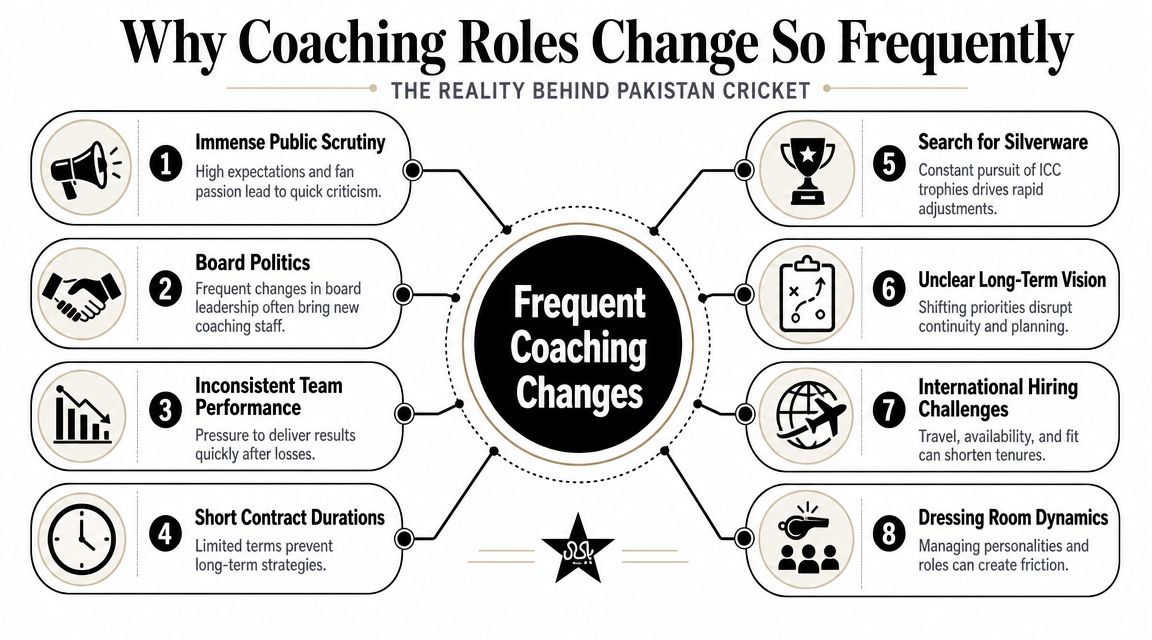
No single public source in the material above gives a neat numbered formula, so the most accurate way to frame it is qualitatively.
There's also a useful leadership parallel for founders in this guide on mentorship vs coaching for founders. Boards and operators often use “coach” as a catch-all term, when the actual need may be strategic guidance, specialist execution, or a reset in accountability.
The common mistake is treating the coach as the whole system.
In practice, frequent changes rarely solve deeper issues unless the organisation also aligns selection, communication, leadership authority, and expectations. Sport isn't different from business there. If the board changes faster than the operating model, churn becomes the strategy.
If you need the latest Pakistan coach name after another change, don't rely on recycled social posts or old search snippets. Go straight to current reporting and official channels.
Check the Pakistan Cricket Board news page
Start with the PCB's official website and news announcements. Board statements usually confirm titles, formats, and start dates.
Cross-check with ESPNcricinfo
ESPNcricinfo is often the quickest place to confirm whether a role is white-ball, Test, interim, or permanent.
Check whether the role is format-specific
A common pitfall is that Pakistan may use different coaching structures across formats, so “current coach” can be incomplete without that distinction.
If you run content, sponsorship, or client engagement in the Gulf, ask one simple question before publishing or speaking:
“Are we referring to Pakistan's white-ball coach or Test coach?”
That extra line prevents avoidable mistakes, especially in decks, event notes, and social captions.
Mike Hesson.
Sarfaraz Ahmed is the Test head coach, with Umar Gul and Asad Shafiq in bowling and batting roles respectively.
Because the role has changed often over time, and Pakistan has used different coaching arrangements across periods and formats. That makes older articles go stale quickly.
Pakistan has had a mix of local and overseas coaches, including names such as Mickey Arthur, Grant Bradburn, and Mike Hesson, while Wisden's longer historical list shows repeated changes across earlier eras as well. For founders, that's a reminder that high-visibility leadership roles often reflect system pressure, not just individual performance. If that theme interests you, this primer on principles of leadership is a useful companion read.
There's no verified salary data in the source material provided here, so it's better not to guess. If you need that specifically, wait for an official disclosure or a directly reported figure from a reliable outlet.
If you're building in the UAE or wider MENA and want sharper conversations, better founder judgment, and a trusted peer circle that helps you move faster, take a look at Founder Connects. It's built for founders who want meaningful connections, practical support, and real progress without the noise of generic networking.


