

செழித்தோங்கு (Sezhithongu) is the clearest Tamil translation of “thrive”, and it carries a stronger sense than simple growth. It points to vigorous growth, rising well, and prospering, which is why it's a useful word for founders who want their teams to build, not just survive.
If you're leading a startup in the UAE, you've probably had this moment. You're in a team huddle, an investor call, or a partner meeting, and the usual words like “grow”, “scale”, and “perform” feel flat. They describe movement, but not ambition.
That's where understanding thrive meaning in tamil becomes practical. For Tamil-speaking colleagues, the right word can make your message feel more human, more respectful, and much more memorable.
Founders rarely need a dictionary answer alone. They need a word that works in the room.
When you say a company should “thrive”, you're not talking about basic continuity. You're saying the business should grow with strength, people should do meaningful work, customers should get value, and the team should feel momentum. In Tamil, செழித்தோங்கு captures that better than a literal, stripped-down translation.
The UAE startup environment is multicultural by default. That means leadership language matters more than many founders realise. A phrase that lands well in English can sound cold, vague, or overly corporate when translated loosely.
Tamil-speaking team members often hear the difference immediately between:
The second has emotional range. It suggests health, confidence, and long-term progress.
Practical rule: If you're communicating vision across cultures, choose words that carry meaning beyond metrics.
That matters in hiring, internal culture, and founder-led communication. If you want stronger language for ambition, it helps to learn how terms like this sit inside a broader motivation vocabulary. A useful companion read is this collection of business motivation quotes, especially if you're shaping team language that has to work across different backgrounds.
What works
What doesn't
செழித்தோங்கு is powerful because it suggests more than movement. It implies flourishing.
A useful way to understand it is to look at the parts behind the expression. Tamil usage around this word family connects to the idea of செழிப்பு, meaning prosperity or richness, and ஓங்கு, meaning to rise or grow upward. Put together, the sense isn't just “become bigger”. It's closer to rise into prosperity.
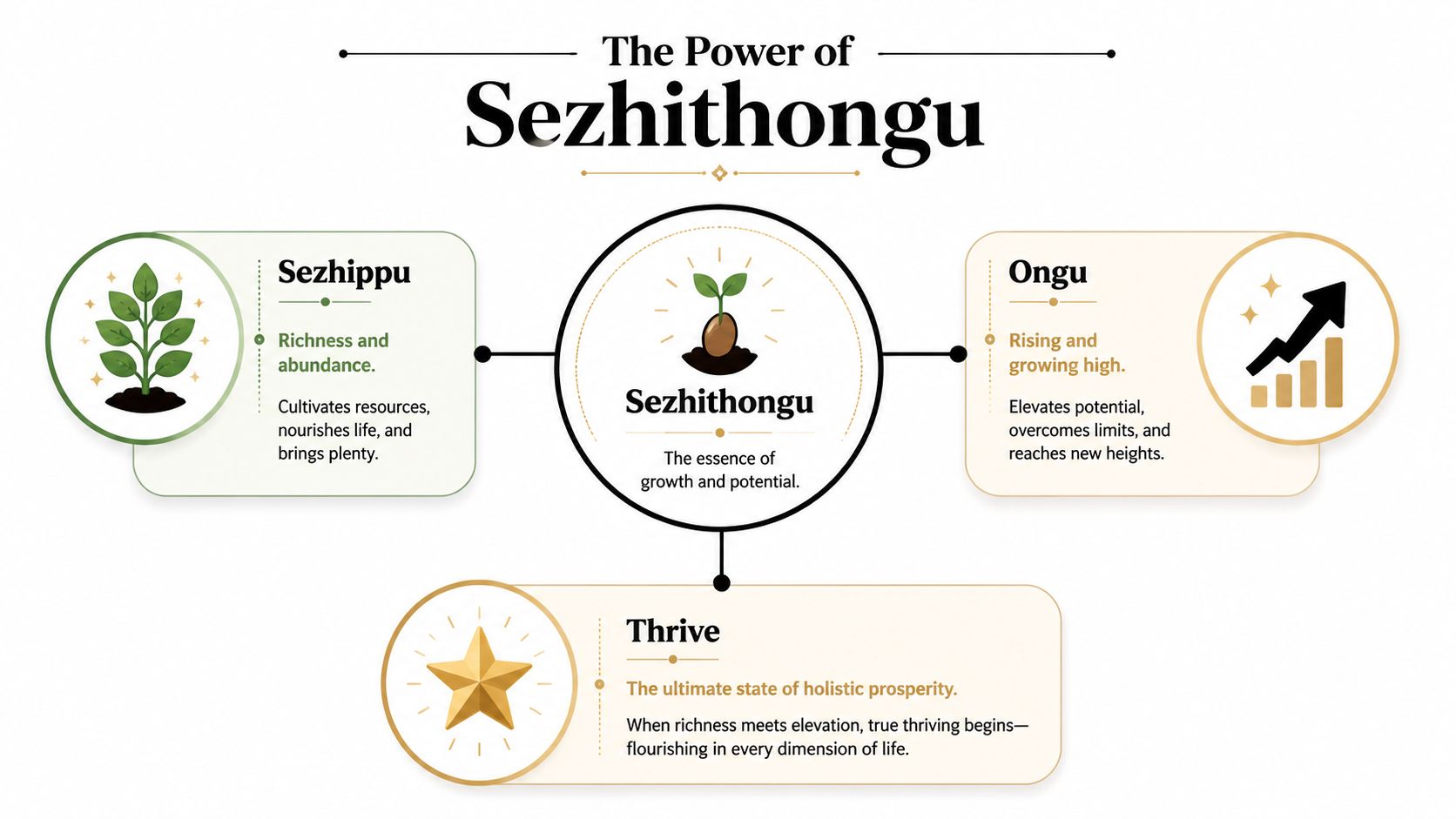
Founders often use “growth” when they really mean “thriving”. The two aren't the same.
A plant can grow because it gets taller. A business can grow because revenue rises, headcount expands, or a new market opens. But thriving suggests a healthier system. The roots are stronger. The environment supports the next stage. The growth is durable.
That's the difference between:
For a founder, that distinction matters. If you tell your team the goal is growth, they may hear pressure. If you tell them the goal is to செழித்தோங்கு, they're more likely to hear healthy progress, shared success, and upward momentum.
Use செழித்தோங்கு when you want to express:
The word works best when your message includes people, progress, and purpose together.
That's why it's stronger than a plain “develop” or “increase”. In founder language, it's closer to what you mean when you say, “I want this company to become stronger in every direction.”
You don't need perfect Tamil pronunciation to build rapport. You need care, a decent attempt, and the confidence not to mumble the word.
For most non-Tamil speakers, செழித்தோங்கு can be said as Seh-zhi-thon-gu.

Here's the practical version:
| Tamil term | Romanised | Say it like | Meaning |
|---|---|---|---|
| செழித்தோங்கு | Sezhithongu | Seh-zhi-thon-gu | Thrive, flourish upward |
| வளர | Valar | Vuh-lar | Grow |
| பலமாக வளர் | Balamaaga valar | Buh-la-maa-ga vuh-lar | Grow strongly |
| செழித்து வளருங்கள் | Sezhiththu valarungal | Seh-zhith-thu vuh-luh-run-gal | Thrive and grow |
The “zhi” sound is the tricky part. It's softer and more textured than a plain English “z”. If you need a practical shortcut, say something close to the “s” sound in “measure”, then move on. Native speakers will usually appreciate the effort if the rest of the word is clear.
That makes Seh-zhi-thon-gu a workable founder-level pronunciation. It's respectful, understandable, and good enough for conversation.
Don't wait for perfect accent control. Clear effort builds more trust than avoiding the word completely.
If you want a broader base for business-related Tamil vocabulary, this guide to entrepreneur meaning in Tamil is a useful next step.
Use this in under a minute:
That last step does more than fix pronunciation. It opens a conversation.
Translation becomes useful when it changes how you speak in real business situations.
Recent trends show a 15% year-over-year rise in Tamil content consumption in the UAE, and polls indicate MENA founders are using bilingual glossaries 40% more for networking, which makes this kind of language awareness more commercially relevant than it used to be, as noted by WordHippo's Tamil “thrive” page.

English: “I don't want us to just finish tasks. I want this team to thrive.”
Tamil: “நாம் வேலைகளை முடிப்பதற்காக மட்டும் இல்லை. இந்த அணி செழித்தோங்க வேண்டும்.”
This works because செழித்தோங்க வேண்டும் raises the ambition without sounding theatrical. It keeps the sentence direct. In a product, operations, or engineering huddle, that tone matters. You want clarity, not poetry.
A weaker version would use a plain word for “grow”. That can sound mechanical. “Thrive” communicates health and strength together.
English: “We believe this segment can thrive if distribution and trust are built together.”
Tamil: “விநியோகம் மற்றும் நம்பிக்கை ஒன்றாக உருவானால், இந்த பிரிவு செழித்தோங்க முடியும் என்று நாங்கள் நம்புகிறோம்.”
Restraint matters here. In investor language, over-translation can hurt credibility. Keep the sentence structured, formal, and close to the business logic.
Use the Tamil version only if you're speaking to an audience that will value it. In mixed-language investor updates, it's often better to keep the main document in English and use Tamil verbally in relationship-building moments.
English: “We're not looking for a short-term deal. We want both sides to thrive.”
Tamil: “குறுகிய கால ஒப்பந்தம் மட்டும் எங்களுக்கு வேண்டாம். இரு தரப்பும் செழித்தோங்க வேண்டும்.”
This is a strong line for channel partners, local operators, and long-term suppliers. The phrase இரு தரப்பும் makes the message mutual. That matters in the Gulf, where relationships often outlast individual transactions.
In cross-cultural business, the best translation isn't the fanciest one. It's the one that keeps trust, intent, and tone intact.
A short pronunciation reference can help before you try these aloud:
Use செழித்தோங்கு in three situations:
Avoid it in legal agreements, compliance documents, or financial reporting. There, plain business English is usually the better tool.
Once you understand செழித்தோங்கு, you don't need to use it every time. Good communication depends on range.
Some situations call for “grow”. Others call for “prosper”, “flourish”, or even a negative contrast such as “decline” or “fail”. Founders who can switch between these terms sound sharper and think more clearly.
| English Term | Tamil Equivalent (Script) | Romanized Pronunciation | Usage Context |
|---|---|---|---|
| Thrive | செழித்தோங்கு | Sezhithongu | Best for healthy, upward, prosperous growth |
| Grow | வளர | Valar | General growth, neutral and broad |
| Grow strongly | பலமாக வளர் | Balamaaga valar | Useful when emphasising strength or resilience |
| Flourish | செழித்து வளர | Sezhiththu valar | Good for teams, communities, brands |
| Prosper | செழிப்பு அடை | Sezhippu adai | Better for business success and prosperity |
| Boom | சிறப்பாக வளர | Sirappaaga valar | Use carefully, more energetic and market-driven |
| Decline | நலிவடை | Nalivadai | Useful for discussing weak performance or erosion |
| Languish | சோர்ந்து நிலைதடுமாறு | Sorndhu nilai-thadumaaru | Better for stalled teams or neglected initiatives |
| Fail | தோல்வியடை | Tholviyadai | Direct term for failure, use with care |
| Struggle | கஷ்டப்படு | Kashtappadu | Best for effort under pressure, not collapse |
A few distinctions help in practice:
If you want people to act, choose precise words. If you want them to care, choose words with emotional weight.
That's the benefit of learning synonyms and antonyms. You don't just speak better. You diagnose better.
Knowing thrive meaning in tamil is useful. Using it well is what changes team culture.
There's no neat dataset showing how Tamil-speaking founders or operators perform inside UAE startup hubs. But the scale of the opportunity is obvious. As noted by Shabdkosh's Tamil “thrive” page, the Tamil diaspora sits within Dubai's 3.5 million Indian expats, which means founders who communicate well across cultures have a larger relationship advantage than many assume.
Try this in your next team meeting.
Say: “I don't want us to just deliver. I want us to செழித்தோங்கு.”
Then ask one follow-up question: “What would thriving look like for this team over the next quarter?”
That does three useful things at once:
If you want a stronger conversation, ask this directly:
“What's another Tamil word you feel captures ambitious growth better than a basic translation?”
That question works because it isn't performative. You're not showing off vocabulary. You're asking someone to teach you how meaning travels in their language.
If you're building in the UAE, this is part of the job. Culture isn't only values on a Notion page or slogans in a slide deck. It's the words people hear in moments that matter.
For founders serious about building stronger multicultural teams, this guide to how UAE startups build innovative cultures is a practical next read.
The simple version is this. செழித்தோங்கு is more than a translation for “thrive”. It's a leadership word. Use it carefully, pronounce it respectfully, and attach it to real behaviours your team can see.
If you want more practical founder guidance like this, Founder Connects is built for UAE and MENA founders who want meaningful conversations, sharper decisions, and a trusted peer network that helps them make real progress.


