

தொழில் முனைவோர் (Thozhil Munaivor) is the clearest Tamil term for entrepreneur. It means a person who starts and builds a business, takes risk, and drives it forward through initiative.
If you're a Tamil-speaking founder in the UAE, this usually stops being a dictionary question very quickly. It becomes a positioning question. You need one term that works in a pitch, on LinkedIn, in a bio, in community events, and in conversations with family, customers, and investors. That is where most simple translations fall short.
You introduce yourself at a startup event in Abu Dhabi or Dubai. In English, saying “I’m a founder” is easy. In Tamil, the choice gets less obvious. Do you use a traditional business term, a modern startup term, or something that sounds formal but misses the point?
For most founders, தொழில் முனைவோர் is the safest and strongest answer. It carries the idea of someone who initiates, builds, and accepts uncertainty. That fits startup life much better than older labels built around ownership alone.
The UAE is a multilingual business environment. You may pitch in English, message customers in Arabic or English, and explain your work to family or community contacts in Tamil. If your self-description changes every time, your positioning gets fuzzy.
That hurts in practical ways:
A founder in this region needs language discipline, not just language knowledge.
Use one primary term for identity, then adapt the explanation for the audience.
In most cases, that means using தொழில் முனைவோர் in Tamil, then adding context in English when needed. If you're building in the regional ecosystem, it also helps to understand how startup identity is discussed in the wider Middle East startup landscape.
The most practical Tamil translation for entrepreneur meaning in tamil is தொழில் முனைவோர்.

Pronunciation is simple enough once you break it up: Tho-zhil Mu-nai-vor.
This term is easier to remember when you understand the parts:
Put together, தொழில் முனைவோர் describes someone who doesn't just hold a business asset. They actively start, pursue, and build an enterprise.
An entrepreneur is not just someone who owns a business. It is someone who initiates a venture, accepts risk, and works to create value through action.
That distinction matters. In startup circles, you are usually talking about movement, experimentation, and responsibility. The term should reflect that.
You may also hear தொழிலதிபர். That term is often closer to “industrialist” or a more traditional business proprietor image. It can sound established, asset-heavy, and old-economy.
For a factory owner or a long-standing business family context, that might still fit. For a SaaS founder, marketplace builder, consumer app operator, or early-stage operator in Sharjah, Dubai, or Abu Dhabi, it usually does not.
A simple working distinction helps:
| Tamil term | Best fit | Where it falls short |
|---|---|---|
| தொழில் முனைவோர் | Startup founder, builder, innovator | Less familiar to some older audiences |
| தொழிலதிபர் | Traditional business owner, industrialist | Can sound outdated for startup identity |
A lot of founders get stuck because they choose the term their family recognises, not the term the market understands.
Here is a short explainer if you want to hear the term and related concepts used in context:
Use தொழில் முனைவோர் when you want to signal initiative, modernity, and founder mindset.
Don't overcomplicate it with multiple Tamil labels across your profiles. One clean term beats three half-correct ones.
A lot of confusion around entrepreneur meaning in tamil comes from mixing three different roles. In practice, entrepreneur, business owner, and founder overlap, but they are not the same.

| Role | Core idea | Typical focus | Best Tamil framing |
|---|---|---|---|
| Entrepreneur | Creates and pursues opportunity | Innovation, risk, growth | தொழில் முனைவோர் |
| Business owner | Runs a business | Stability, operations, profit | Context dependent |
| Founder | Starts an organisation | Creation, early decisions, vision | Often paired with English in startup use |
Some people say “founder” when they mean “I legally started the company”.
That is accurate, but incomplete.
Some say “business owner” because it sounds safe and respectable. That works for local trading, retail, services, or family business contexts. But if you're building a product, testing channels, hiring for speed, and aiming for scale, “business owner” undersells your role.
Then there is “entrepreneur”. This term signals that you are pursuing opportunity, not just maintaining operations.
This is the strongest label when you're building something new and uncertain.
It works well if you are:
The downside is that some audiences hear it as vague or inflated if your business is still very early.
This is clear and grounded. Customers, banks, suppliers, and family members understand it quickly.
It works when your business model is straightforward and operational excellence matters more than innovation language. It doesn't work as well when you're trying to signal venture ambition or product-led growth.
This is precise in startup environments. It tells people you started the company. It says nothing, by itself, about your operating style, growth ambition, or risk appetite.
That is why many operators use a combination such as “Founder and entrepreneur” in English, then simplify to தொழில் முனைவோர் in Tamil.
Practical rule: If you are speaking to investors, startup peers, or early hires, lead with the term that matches your ambition, not just your legal role.
Ask yourself these four questions:
Your answer tells you which label to lead with.
If you want a simpler base definition before layering startup nuance, this guide on what is business is a useful companion.
Tamil founder language gets tricky not because translation is impossible, but because real business use is messy. Dictionaries can list equivalents. They don't help you choose the right one for a UAE pitch deck, a WhatsApp intro, or a bilingual LinkedIn headline.
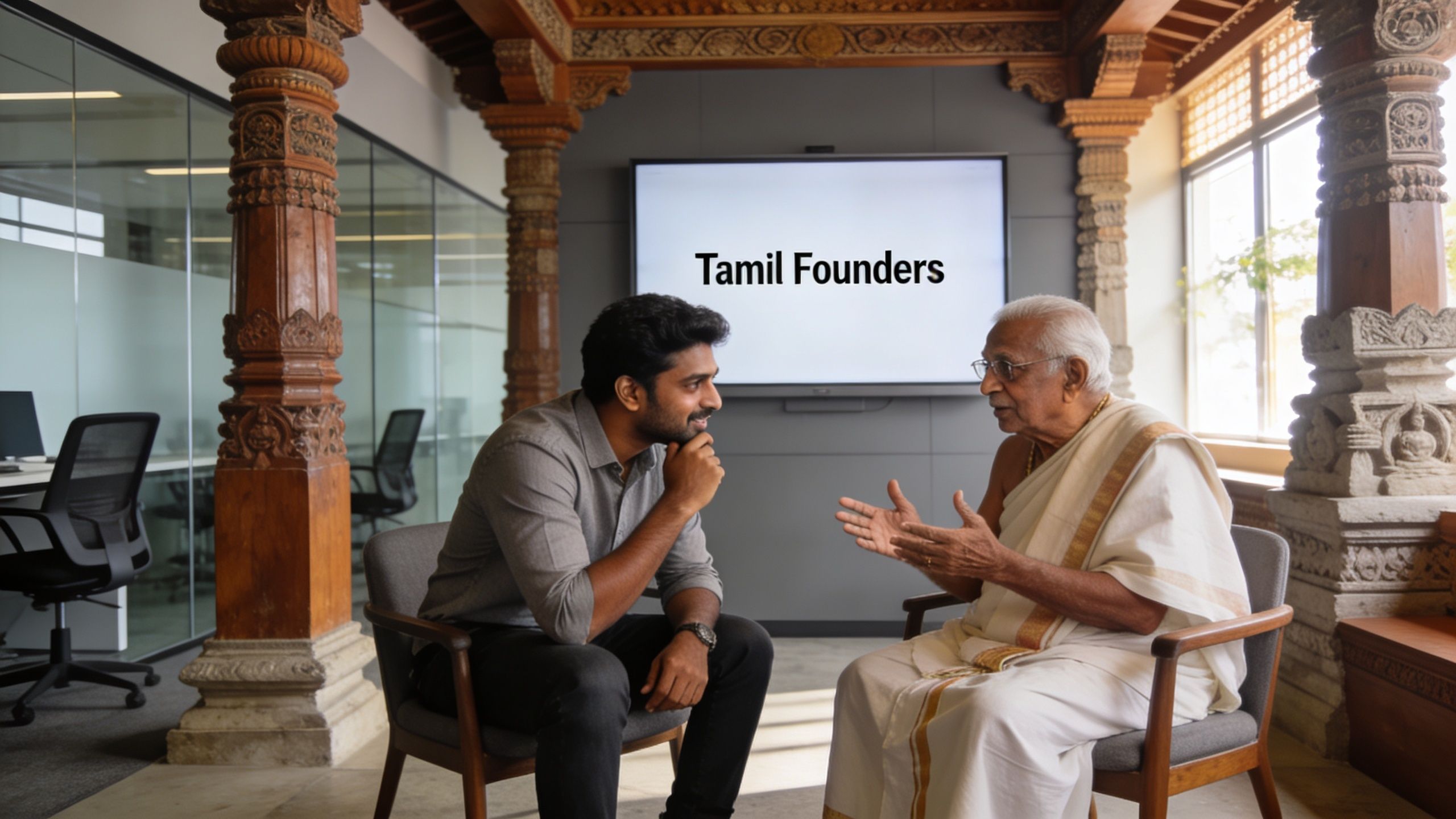
One practical issue stands out. Tamil entrepreneurship terminology lacks gender-inclusive language standardization. While translations exist, there is no unified, widely-adopted gender-neutral term, creating confusion for founders in multilingual ecosystems like the UAE who need to maintain consistent professional branding across Tamil and English contexts. Existing dictionaries do not address this practical issue for founders establishing credibility, as noted in this Tamil word reference on WordHippo.
That matters more than it sounds.
If you're a founder building in English but presenting parts of your identity in Tamil, inconsistent terminology creates friction in:
The cleanest practical move is to use தொழில் முனைவோர் as your default. It is broad, modern, and less awkward than forcing masculine or explicitly feminine constructions into every professional setting.
That doesn't mean other terms are “wrong”. It means this one is the most usable across mixed audiences.
Tamil-speaking founders in the UAE often operate across several identity layers at once. You may be speaking to a client in English, hiring from South Asia, networking with MENA founders, and pitching to a global investor set. Language inconsistency makes you look earlier-stage than you are.
What doesn't work is using literal dictionary output with no thought for audience.
What works is building a small style guide for yourself:
Clear identity language doesn't just sound polished. It reduces friction in every founder conversation that follows.
The fastest way to get comfortable with entrepreneur meaning in tamil is to use it in real founder situations. Below are examples you can copy, tweak, and use.
English: I am an entrepreneur building a software company in the UAE.
Tamil: நான் UAE-யில் ஒரு மென்பொருள் நிறுவனத்தை உருவாக்கும் தொழில் முனைவோர்.
Romanised: Naan UAE-yil oru menporul niruvanathai uruvaakkum thozhil munaivor.
Use this when you want to sound clear and modern in a formal setting.
English: I am a Tamil entrepreneur working on a startup for regional businesses.
Tamil: நான் பிராந்திய வணிகங்களுக்கு ஒரு ஸ்டார்ட்அப்பில் வேலை செய்கிற தமிழ் தொழில் முனைவோர்.
Romanised: Naan praanthiya vanigangalukkaaga oru startup-il velai seygira Tamil thozhil munaivor.
This works well at meetups where people need a quick understanding of who you are.
English: Entrepreneur building products for small businesses.
Tamil: சிறு வணிகங்களுக்கான தயாரிப்புகளை உருவாக்கும் தொழில் முனைவோர்.
Romanised: Siru vanigangalukkaana thayaarippugalai uruvaakkum thozhil munaivor.
Short is better here. Bios need clarity, not linguistic perfection.
English: An entrepreneur is someone who starts their own business and takes risk to grow it.
Tamil: தொழில் முனைவோர் என்பது தன் சொந்த தொழிலை தொடங்கி அதை வளர்க்க ஆபத்தை ஏற்கும் ஒருவர்.
Romanised: Thozhil munaivor enbathu than sontha thozhilai thodangi athai valarkka aabathai erkum oruvar.
This is useful when the audience understands business, but not startup language.
Most founders don't need more generic inspiration. They need practical places to learn, meet the right people, and stay organised.
Look first at ecosystem hubs, startup programmes, and founder-friendly communities in the UAE. In practice, that means checking local startup hubs, university-linked entrepreneurship centres, and operator-led meetups where the conversation is about execution, not just visibility.
Then build a small operating stack around communication and scheduling. If you're constantly juggling intro calls, partner meetings, and customer conversations, tools with strong scheduling support help. For founders who want cleaner booking flows tied to conversations, Superchat's calendar features are worth reviewing.
General ecosystem resources are useful for:
They are less useful when you need honest founder-level feedback on decisions like co-founder tension, pricing confusion, fundraising readiness, or whether to pivot.
That is where curated peer support becomes more useful than another open networking event.
If you're still shaping your founder identity, keep it simple:
A useful next read is this guide on being an entrepreneur in UAE, especially if you're translating identity into day-to-day founder execution.
தொழில் முனைவோர் is more than a translation. It is the closest practical Tamil label for someone who starts, builds, and carries risk in pursuit of a business idea.
That matters in the UAE because language shapes positioning. If your title sounds too traditional, you may undersell your ambition. If it sounds inconsistent across languages, you create confusion before a genuine conversation even starts.
Use the term with intent. Keep it consistent. Pair it with a clear explanation of what you build.
Your next action is simple. Open your LinkedIn profile and your WhatsApp bio. Check how you describe yourself in English and Tamil. If those two versions signal different identities, fix that today.
Then test your wording in real conversation. Say it out loud at your next meetup, pitch practice, or founder coffee. The right phrase should feel natural, clear, and aligned with the business you're building.
If you want a sharper founder identity and a better place to test it with people who understand the startup journey, Founder Connects gives founders in the UAE and MENA a trusted peer environment for honest feedback, practical support, and meaningful connections that move the business forward.


