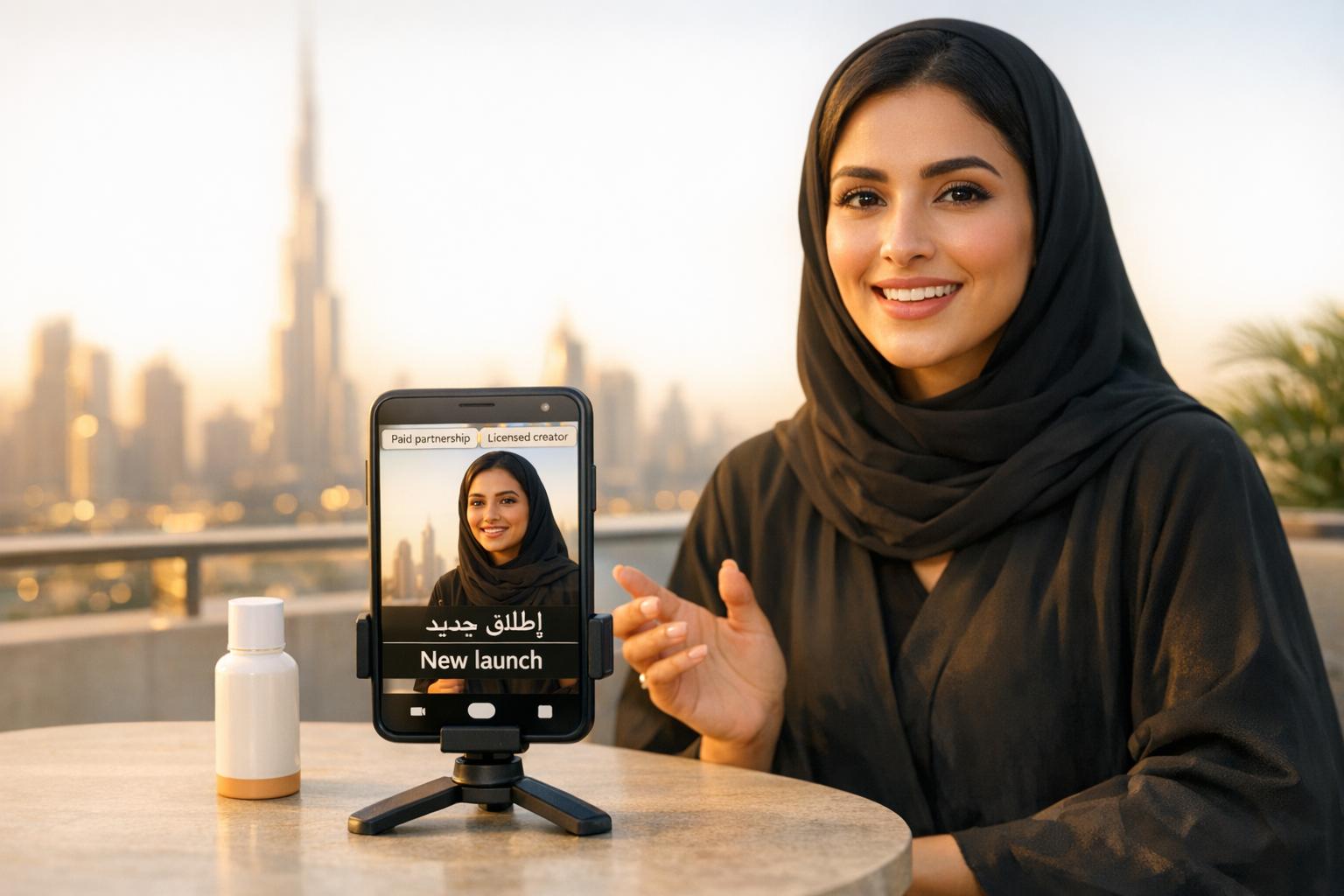
The UAE's 99% social media penetration and diverse population make influencer marketing a key tool for startups entering the market. Here's why it works and how to do it:
Influencer marketing in the UAE is growing fast, with the industry valued at AED 4.77 billion. For startups, it’s a reliable way to build trust, connect with audiences, and establish a strong market presence.

UAE Influencer Tiers: Engagement Rates and Best Use Cases
The first step in creating a successful influencer campaign is finding a voice that resonates with your brand. With the UAE's influencer market valued at AED 4.77 billion [4], there are plenty of options, but not all will suit your goals. It's not just about follower counts - it’s about finding influencers whose audience aligns with your target market.
Start by outlining your campaign objectives. Are you looking to increase brand awareness, drive sales, or build community engagement? For example, fintech startups need influencers who inspire trust, while AI brands benefit from voices that simplify tech concepts. Also, ensure the influencer’s audience is UAE-based. Their content style should match your brand’s tone - a luxury image won’t fit a budget-focused service.
Engagement matters more than reach. Look for influencers who spark genuine conversations in their comments, not just high like counts. An influencer with 100,000 followers but only 100 likes per post likely has fake followers [4]. Real engagement drives results. Additionally, make sure they hold the required National Media Council (NMC) licence (costing AED 15,000) or the relevant Abu Dhabi licence [4]. This ensures compliance with UAE laws and protects your business from fines. Once these basics are covered, you can categorise influencers by their scale. Staying updated on UAE startup news can also help you identify emerging voices in the ecosystem.
Breaking influencers into tiers helps you allocate your budget wisely.
| Influencer Tier | Follower Count | Engagement Rate | Best For |
|---|---|---|---|
| Nano | <10,000 | 4% - 12% | Local trust, niche audiences |
| Micro | 10,000 - 100,000 | 3% - 8% | Targeted campaigns, high ROI |
| Macro | 100,000 - 1M | 1% - 3% | Broad visibility, awareness |
| Mega | 1M+ | 0.8% - 1.2% | Mass campaigns, global reach |
Once you’ve identified the right tier, use specialised tools to narrow down your search.
The right tools can save you time and help you avoid influencers with fake followers - estimated to make up 30% of influencers in the UAE [6]. Expin uses AI to analyse UAE influencers, while HypeAuditor flags fake followers and engagement fraud [4]. Modash allows you to filter by region, industry, and engagement metrics, making it ideal for finding local talent [4].
For deeper insights into audience demographics and past performance, platforms like Meltwater and Klear are excellent choices [4]. They help verify whether an influencer’s audience matches your target market. Additionally, platform-specific searches can be helpful: Instagram dominates for lifestyle campaigns, TikTok is perfect for viral content, and LinkedIn works well for B2B startups in Dubai’s corporate sector [4][6].
When reviewing potential partners, pay attention to their comment sections. Genuine conversations indicate real influence, while repetitive emojis or generic comments suggest inflated metrics. Also, use analytics tools to confirm their audience is primarily UAE-based. By taking a data-driven approach, you can select influencers who align perfectly with your campaign goals.
Before diving into influencer collaborations, it’s crucial to have clear, measurable goals. With 99% social media penetration in the UAE [2][4] and 63% of consumers trusting influencers over traditional ads [4], the potential is enormous - but only if you have a solid plan. Your objectives will shape everything: the type of influencers you work with, the content they create, and how you allocate your budget. With the groundwork from Step 1 complete, you’re ready to define your campaign’s direction.
Start by clarifying your focus. Are you aiming for widespread brand awareness or targeted conversions? For example, launching a fintech app in Dubai or Abu Dhabi might call for macro-influencers who can deliver broad visibility. On the other hand, if you’re promoting something niche - like AI-powered tools for SMEs - micro-influencers with a more engaged audience will likely yield better results. Remember, 87% of UAE brands prioritise engagement rates and direct sales as key success metrics [3]. Choose influencers whose strengths align with your end goals.
Your objectives should follow the SMART framework: Specific, Measurable, Achievable, Relevant, and Time-bound [8]. Instead of vague goals like "increase brand awareness", set concrete targets like "generate 5,000 website clicks from influencer posts within 30 days" or "reach a 4.5% engagement rate on sponsored content." These specific goals make tracking easier and help you pivot when needed. Also, consider cultural nuances in the UAE - during Ramadan or Eid, focus on community-driven messaging rather than purely promotional content [2]. This thoughtful approach fosters trust and resonates with local audiences. For additional support, many UAE founders solve their challenges through collaborative communities.
When allocating your budget, keep in mind that influencer rates in Dubai and Abu Dhabi are 25%-50% higher due to demand [7]. If engagement is your goal, dedicate 70%-80% of your budget to micro-influencers. For broader campaigns, find a balance between macro and micro-influencers to maximise reach and impact.
Once your objectives are set, it’s all about measuring progress with the right KPIs. Avoid vanity metrics like likes and focus on meaningful engagement - saves, shares, and genuine comments. This is especially important as 61% of UAE marketers cite "fake followers" as a major challenge [3]. For awareness campaigns, track metrics like reach, impressions, and follower growth. Conversion-focused campaigns should monitor UTM-tracked clicks, lead generation, and direct sales through unique promo codes such as "STARTUP15" [8].
Engagement rate is a key indicator of success. Calculate it with this formula: (Total Likes + Comments) ÷ Follower Count × 100 [8]. In the UAE, a healthy engagement rate falls between 2% and 5% [8]. Be wary of profiles with over 100,000 followers but less than 1% engagement - they likely have fake followers. For industries like fashion and beauty, aim for a minimum Click-Through Rate (CTR) of 1.2% on Sponsored Stories [3]. Also, confirm that the influencer’s audience is predominantly based in the UAE; a large follower count won’t help if most of their audience is overseas [3].
Use tools like UTM parameters and unique promo codes to track ROI in AED. For example, calculate ROI with this formula: ROI = [(Net Profit - Campaign Cost in AED) / Campaign Cost in AED] × 100 [2]. UAE brands leveraging advanced analytics have successfully reduced their Cost-Per-Acquisition (CPA) from AED 55 to AED 42 over multiple campaigns [3]. Timing also matters - schedule posts during peak engagement hours, typically between 7:00 PM and 9:00 PM, to maximise visibility [3].
| Metric Category | Specific KPIs for UAE Market |
|---|---|
| Awareness | Reach, Impressions, Follower Growth [2] |
| Engagement | Likes, Comments, Shares, Saves, Story Views [2][3] |
| Conversion | UTM-tracked Clicks, Lead Generation, Direct Sales [2] |
| Efficiency | Cost Per Engagement (CPE), ROI Percentage [7] |
Finally, strike a balance between control and creative freedom. While it’s important to provide influencers with clear KPIs and brand guidelines, give them room to craft authentic content in their own voice. 87% of brands report better engagement when influencers have this flexibility [3]. Authenticity is key in the UAE market, and overly controlled content often falls flat.
After setting clear goals and KPIs, the next step is to establish genuine partnerships with influencers who can connect with UAE audiences. The UAE market is unique - 90% of the population consists of expatriates [1] - making trust and local credibility far more effective than flashy advertisements. When done correctly, these partnerships can achieve what traditional advertising often cannot. The key lies in choosing influencers who genuinely align with your brand’s values and resonate with the local audience.
In the UAE, audiences quickly recognise inauthentic or scripted content. While 72% of UAE consumers trust influencers more than traditional ads [5], this trust disappears when the content feels forced or culturally out of touch. To succeed, your chosen influencer must align with your brand and appeal to the right audience. For instance, fintech startups should avoid influencers whose content is unrelated to financial services.
Cultural fit is about more than just language. Arabic-localised content achieves 35%–50% higher engagement rates [5], as it reflects local aesthetics, values, and sensitivities rather than being a simple translation. Emirati audiences, with their strong purchasing power and preference for authenticity, require a tailored approach that differs from expatriate communities [5].
"The UAE rewards companies that invest in trust - through presence, brand, and personal relationships. If your market entry plan is purely digital and transactional, you'll hit a ceiling fast." – Sergei Andriiashkin, Founder and Strategy Partner, Vinden.one [1]
It’s also essential to ensure influencers comply with local regulations to avoid legal issues. Additionally, verify that the majority of an influencer’s audience is based in the UAE or GCC. If more than 70% of their followers are outside the region, your investment may not yield the desired results [3][10].
Long-term collaborations are far more effective than one-off campaigns. UAE consumers are more likely to trust a creator who uses a product consistently over several months rather than someone who posts a single, scripted ad [3]. This "always-on" approach builds credibility, with studies showing that it often takes at least five interactions before a consumer makes a purchase decision [3]. To encourage this, consider offering performance bonuses, affiliate commissions, or exclusive products as part of the agreement.
While it’s important to outline deliverables, giving influencers creative freedom leads to better results. Brands report 87% higher engagement when they provide strategic guidelines rather than rigid scripts [3]. Define your non-negotiables - such as mandatory calls to action, brand safety rules, or cultural considerations - but let the influencer communicate in their own style. For example, you might require a unique promo code like "STARTUP15" and proper disclosure tags such as #ad or #paid_partnership [3], while leaving the format up to them.
Costs can vary significantly. Micro-influencer campaigns might start around AED 3,000, while collaborations with top-tier celebrities can exceed AED 75,000 [3]. If your budget is tight, consider gifting high-value products. For instance, a hotel stay worth AED 3,000 could be an effective exchange if it matches the influencer’s typical rates [10]. Always request analytics, such as Story views or click-through rates, to confirm the influencer’s reach and authenticity [3]. These thoughtful partnerships not only drive engagement but also help establish a lasting presence in the market.
The effectiveness of these strategies is evident in UAE campaigns that prioritise strategic collaborations. While detailed case studies for startups are limited, the data tells a clear story: UAE-based micro-influencers (10,000–50,000 followers) achieve an average engagement rate of 4.5%, compared to just 1.7% for mega-influencers [10]. For a tech startup promoting an AI-powered tool for SMEs, collaborating with three business-focused micro-influencers would likely yield better results than hiring one celebrity with millions of followers.
High production quality also plays a critical role in the UAE, especially in Dubai, where 82% of consumers associate polished visuals with brand trust [3]. For example, a fintech app could team up with a finance-focused micro-influencer to create Instagram Reels showcasing real-world use cases, complemented by professional B-roll footage of Dubai’s skyline. This approach combines authenticity with the premium aesthetic that UAE audiences expect.
The bottom line? Trust, cultural connection, and creative freedom are the pillars of successful influencer partnerships. Focus on building relationships, not just chasing numbers.
Building on the partnerships discussed earlier, tailoring your content to the UAE's unique audience is key to making a real impact. With 99% social media penetration and over 10.73 million residents active daily [4], the opportunities are vast - if your messaging resonates with the right groups. The UAE is home to Emirati nationals, expatriates from over 200 nationalities, and international tourists, each with distinct tastes and expectations [2]. A localized strategy strengthens the trust and connection built through influencer collaborations.
To create effective content, focus on three primary groups: Emirati nationals, expatriates, and international tourists. Emirati nationals appreciate content that respects local traditions, such as modest dress and family-oriented themes [2]. Expatriates, who make up about 90% of the population, bring diverse cultural influences and buying habits [5]. Meanwhile, international tourists - especially luxury-focused travelers - respond to aspirational content showcasing the UAE’s premium lifestyle [2].
Family plays a central role in purchasing decisions. Campaigns that highlight community, family values, and shared experiences often perform better than those focused on individualism. During Ramadan and Eid, prioritize themes of generosity, reflection, and togetherness over overtly commercial messaging [2][6].
Language also matters. While English is widely used in business, Arabic-localized content can boost engagement rates by 35%–50% [5]. A bilingual approach that combines Arabic and English allows you to reflect local aesthetics and cultural nuances, appealing to both Emirati and expatriate audiences [6].
Once you've identified your audience, selecting the right content formats becomes crucial for meaningful engagement.
The UAE’s marketing landscape is increasingly video-driven. By 2026, more than 82% of marketing budgets are expected to focus on video-based creator partnerships [2]. Platforms like TikTok and Instagram Reels dominate among Gen Z and Millennials, while YouTube remains a favorite for long-form content such as reviews, tutorials, and product demonstrations [2][4].
Each platform serves different purposes:
Professional TikTok Spark Ads, for example, can reduce cost per acquisition by 35% compared to standard user-generated content [3]. While polished campaigns benefit from professional visuals like drone footage, authentic, unfiltered content remains vital - especially for Stories and day-to-day interactions.
| Platform | Primary Audience | Best Content Format |
|---|---|---|
| Expats, Tourists, Luxury Seekers | High-production visuals, Reels, Stories | |
| TikTok | Gen Z, Millennials | Viral short-form videos, Trends |
| Snapchat | Khaleeji (Local) Youth | Behind-the-scenes, Intimate updates |
| YouTube | General UAE Population | Long-form reviews, Tutorials, Vlogs |
| Professionals, B2B | Thought leadership, Industry insights |
To ensure compliance with UAE regulations, all paid content must include clear disclosure labels such as #ad, #sponsored, or the Arabic equivalent #إعلان [2]. Influencers must also have a valid licence from the Media Council, as unlicensed commercial activity can result in fines [2][4]. If your campaign involves drone footage - a popular choice for real estate or tourism - be sure to obtain permits from the General Civil Aviation Authority to avoid penalties exceeding AED 20,000 [3].
With your content strategy ready, the next step is executing and tracking your influencer campaigns effectively. In the UAE, where the influencer industry is worth around AED 4.8 billion [4], managing campaigns efficiently is vital. The right tools and adherence to local regulations can make all the difference in achieving success.
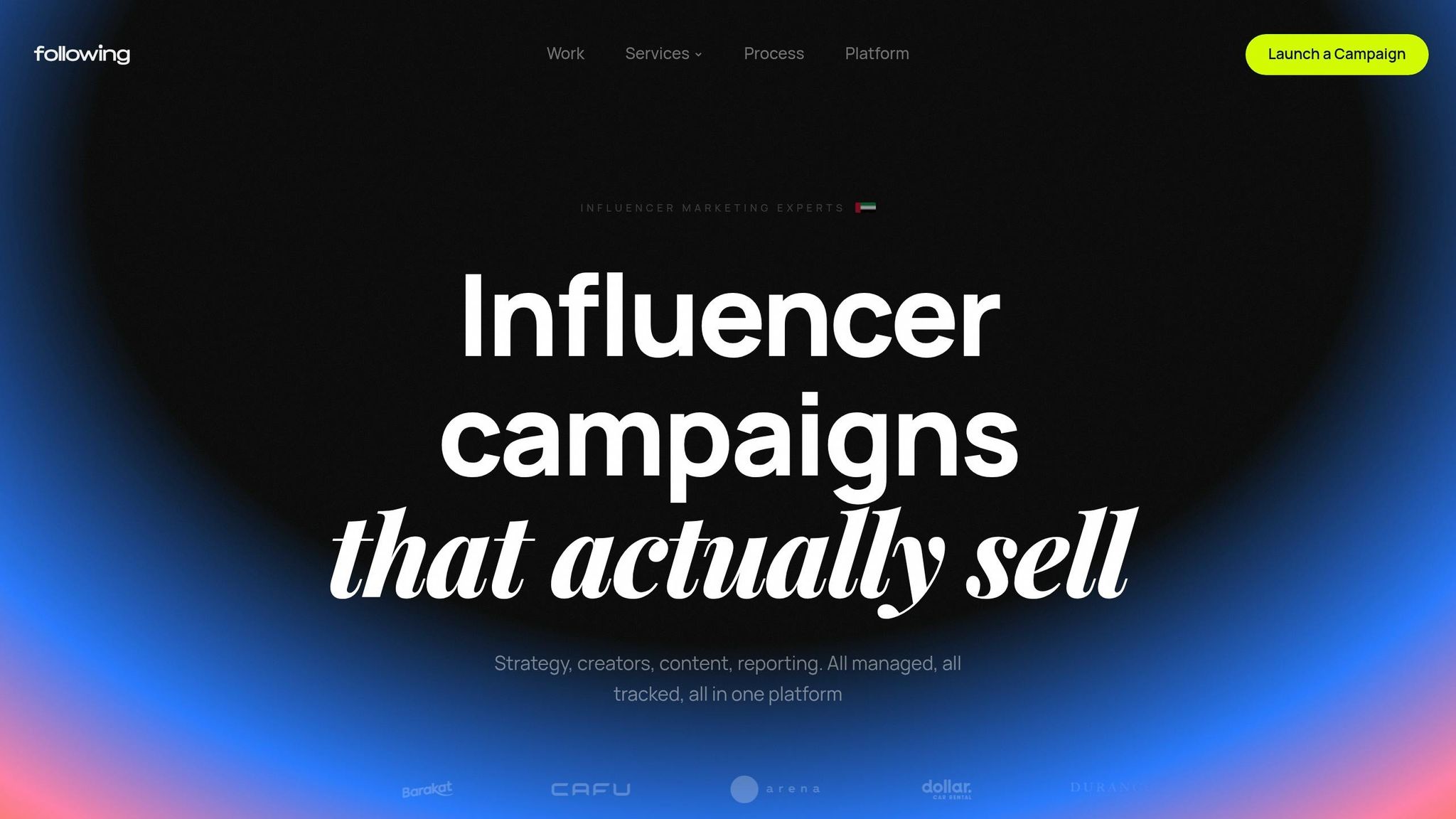
Handling influencer partnerships manually can lead to errors, with up to 40% of campaign milestones being missed [3]. Thankfully, UAE-specific tools can simplify this process while reducing administrative workload by up to 70% [3]. Platforms like Influencer.vip provide centralised dashboards for real-time ROI tracking and automated AED payments. Another option, following, connects brands and influencers directly via a mobile app, enabling quick adjustments during campaigns [11]. Tools like HypeAuditor are also indispensable for verifying authentic engagement [3].
Before launching, ensure that all influencers have the necessary NMC licence [3][4]. Influencers based in Abu Dhabi will also need an ADDED licence from the Abu Dhabi Department of Economic Development [4]. To track performance accurately, use UTM parameters and unique tracking links for each influencer, which help measure click-through rates and conversions [2][3]. Timing is also key - scheduling posts between 7:00 PM and 9:00 PM aligns with peak engagement times in the UAE [3].
Beyond tracking clicks and conversions, dive deeper into audience sentiment by monitoring comments and direct messages. For example, an influencer with a predominantly international following may not deliver the desired results for local retail campaigns. Additionally, using API data from platforms like Instagram - such as Story views and link clicks - offers more reliable insights than public metrics like likes, which can be artificially inflated [3]. These practices form the foundation for successful campaign execution and monitoring.
Operating within the UAE’s regulatory framework is critical to avoid legal issues and protect your brand’s reputation. Sponsored content must include clear disclosure tags like #ad, #sponsored, or the Arabic equivalent #إعلان [2][4]. These tags should be easy to spot and not buried among other hashtags. Contracts should clearly outline deliverables, payment schedules in AED, usage rights, and stipulate UAE law as the governing framework [2].
If your campaign involves drone footage - a popular choice for real estate and tourism brands - make sure to obtain the necessary permits from the General Civil Aviation Authority (GCAA) or the Dubai Civil Aviation Authority (DCAA). Unauthorised drone use can lead to fines of over AED 20,000 [3]. Creative briefs should also account for cultural sensitivities, particularly during Ramadan and Eid, where messaging should focus on community and family over commercial promotions [2][3]. While it’s important to provide influencers with clear guidelines, allowing them the freedom to craft authentic and engaging stories often leads to better results [3].
Once your campaign is live, the real work begins - evaluating what’s working and using that knowledge to expand successful influencer collaborations. This step is crucial for ensuring sustainable growth and consistent results over time.
In the UAE, measuring ROI goes beyond just counting followers. It’s about tracking metrics that matter, such as sales growth, audience expansion in key cities like Dubai and Abu Dhabi, engagement rates (likes, comments, shares, and saves), and regional media visibility through mentions [13]. A simple formula for ROI calculation is:
[(Net Profit - Campaign Cost in AED) / Campaign Cost in AED] x 100 [2].
To get precise data, use tools like unique promo codes for UAE buyers, custom UTM links for tracking e-commerce traffic, and CRM systems to log enquiries or calls [13][3]. Depending on your sector, success looks different: retail brands might focus on mall visits, healthcare startups on appointment bookings, and real estate companies on property tour requests [13]. For premium influencer partnerships, aim for engagement rates between 1.5% and 3% [3].
Avoid relying too heavily on vanity metrics like likes, as these can be inflated. Instead, prioritise verified engagement data. Advanced analytics tools can help refine your approach - some campaigns have seen their cost per acquisition drop from AED 55 to AED 42 over three cycles by leveraging these insights [3]. For a clear picture of your campaign’s impact, track results over a three- to six-month period to ensure measurable and sustainable outcomes in the UAE market [13].
With these insights in hand, you can confidently move toward building stronger influencer relationships.
Once you’ve evaluated ROI, it’s time to scale by focusing on influencers who deliver the best results. Many UAE-based startups are moving away from one-off posts and opting for "always-on" partnerships that last three to six months. This approach fosters deeper trust, especially since UAE consumers often require multiple interactions before making a purchase [3]. Interestingly, local influencers in Dubai tend to achieve 2x–4x higher engagement rates than macro-influencers, with average rates sitting at 4.27% (anything above 5% is exceptional) [13].
Concentrate your resources on the top 15% of influencers identified through your campaign data. This strategy can significantly lower your acquisition costs [3]. To streamline operations, professional management platforms can cut down manual tasks by up to 70%, making it easier to scale from a handful of influencers to over 50 partnerships [3].
While scaling, it’s important to strike a balance between structure and creativity. Provide influencers with clear brand guidelines and non-negotiables, but give them the creative freedom to maintain their authentic voice [3]. This "creator-first" approach ensures that influencers feel like genuine collaborators, not just paid advertisers, turning them into an integral part of your marketing team.
For startups in the UAE, scaling influencer partnerships not only boosts immediate ROI but also helps establish a lasting presence in the market.
To create a well-rounded market entry strategy, influencer marketing should be woven into your broader go-to-market plan - not treated as an afterthought. With a staggering 99% social media penetration rate in the UAE, your target audience is already active on platforms where influencers thrive [4]. Instead of running one-off influencer campaigns, consider integrating them into a layered approach. For example, use Public Relations to establish your brand's core message, and let influencers amplify that narrative to specific audience segments [9].
Building long-term partnerships with influencers ensures your brand maintains consistent visibility throughout the year, rather than relying on short bursts of activity [3]. This steady presence helps establish the multiple touchpoints needed to convert UAE consumers. By embedding influencer collaborations into your quarterly plans, you can generate a regular stream of content that feels genuine and builds trust over time. This methodical approach ensures that every dirham you spend is aligned with your market entry goals.
"In Dubai, reputation is currency and trust is earned." – Pella Dynamics [9]
When allocating your budget, focus on your objectives. For instance, micro-influencers are highly effective for competitive sectors like food and beverage, while LinkedIn thought leaders are ideal for connecting with decision-makers in the UAE [2][4]. Whether your goal is to boost awareness in Abu Dhabi, increase e-commerce sales, or establish credibility within the UAE's startup ecosystem, your influencer strategy should align with those specific targets.
To understand where influencer marketing fits, compare it directly with traditional advertising methods. Here's how they stack up:
| Criteria | Influencer Marketing | Traditional Advertising |
|---|---|---|
| Consumer Trust | 63% trust influencers over ads [4] | Declining trust in corporate messaging [12] |
| Engagement Rates | 2–3x higher than brand posts [9] | Lower engagement; banner blindness [12] |
| Longevity of Content | Days to weeks [9] | Ends when the budget runs out [12] |
| Long-term CAC | Decreases with evergreen content [12] | Fixed or rising costs [12] |
| Best For | Product launches, F&B, fashion [9] | Mass awareness, broad reach [12] |
| Regulatory Risk | High (requires NMC licensing) [9] | Low [9] |
With 68% of UAE residents aged 18–24 using ad-blocking software, traditional banner ads are struggling to engage younger audiences [12]. In contrast, influencer content not only generates 3x the brand recall of paid ads but also continues to deliver value long after it's posted [12]. For every AED 4 spent on verified creators, brands typically see a return of over AED 20 in earned media value [12]. These figures highlight why influencer marketing is a more effective and sustainable option, particularly for startups aiming to make the most of limited budgets.
This guide has outlined six practical steps to help businesses in the UAE harness the power of influencer partnerships. In a country where social media usage is at an impressive 99%, with users spending an average of 7.2 hours online daily, influencer campaigns have proven to deliver engagement rates 2–3 times higher than standard brand posts [5][9]. Additionally, 72% of UAE consumers place more trust in influencers than in traditional advertisements [5][9].
The steps - identifying the right influencers, setting clear KPIs, fostering genuine partnerships, creating tailored content, tracking campaigns, and assessing ROI - offer a straightforward approach that startups in the UAE can adopt immediately. Starting with nano or micro-influencers, who often achieve engagement rates between 3%–12%, is a smart way to test strategies and grow based on performance insights [4]. It’s also crucial to ensure influencers comply with local licensing and disclosure regulations. Building long-term relationships with influencers not only strengthens brand visibility but also caters to the UAE market, where consumers generally need at least five interactions with a brand before making a purchase [3].
With the UAE’s influencer marketing industry expected to reach nearly AED 1.02 billion by 2025 [5], the potential is immense. Whether you’re introducing a fintech app, an AI-driven service, or a consumer product, influencer collaborations can help you connect with the UAE’s diverse audience and earn their trust. By implementing these strategies, startups can navigate this dynamic market effectively and build meaningful, lasting relationships with their audience.
To choose the best influencer tier for your UAE startup, focus on your target audience, marketing objectives, and budget.
Align your marketing goals with the appropriate influencer tier to maximise your campaign’s impact.
To test influencer marketing in the UAE, you’ll generally need a minimum budget ranging from AED 10,000 to AED 20,000. The exact amount depends on factors like the influencer's tier (micro, macro, or celebrity) and the scale of the campaign you’re planning.
To monitor sales and ROI from influencer posts in the UAE, leverage tools like UTM parameters and unique promo codes. UTM links make it easier to track traffic and conversions directly tied to specific influencer campaigns. On the other hand, promo codes let you identify sales driven by individual influencers.
Beyond these tools, focus on key metrics such as conversion rates, cost-per-acquisition (CPA), and customer lifetime value (CLV). These insights will help you assess the overall performance and return on investment of your campaigns within the UAE market.


