
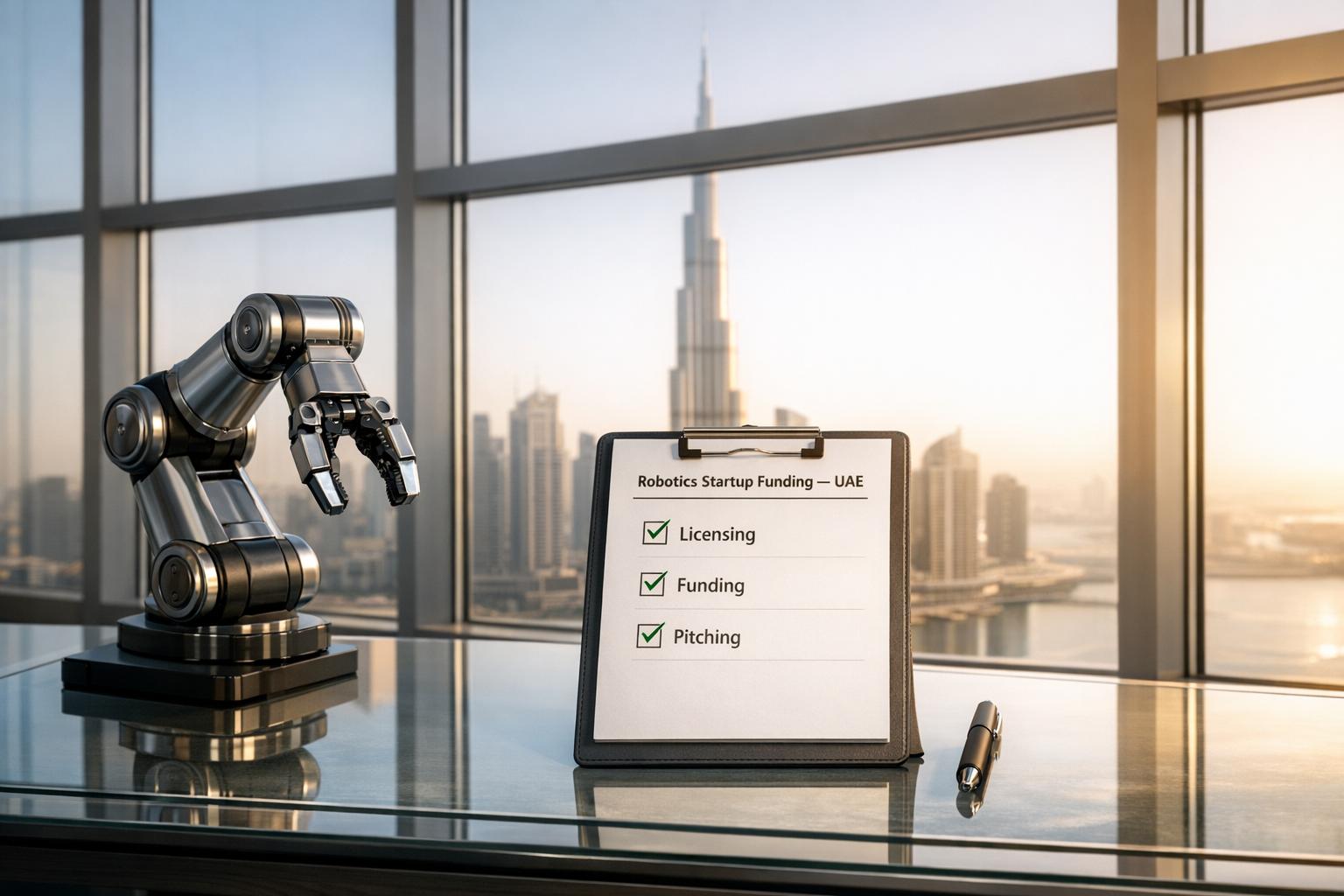
The UAE is a prime location for robotics startups seeking funding, thanks to a growing focus on AI and Deep Tech. In 2025, funding in these sectors increased by 87%, with $1.5 billion allocated to startups in H1 alone. However, general funding saw a steep decline of 93.67%, making preparation and execution critical for success. Here's a quick overview of what robotics startups need to know:
Preparation, clear alignment with UAE’s priorities, and strong investor relationships are key to thriving in the country’s competitive funding environment.

Complete Funding Roadmap for Robotics Startups in UAE
Before seeking investors, robotics startups must lay a solid foundation that showcases their ability to deliver results. The funding environment in the UAE has evolved significantly, with investors now placing a much stronger emphasis on execution rather than just innovative ideas. As CE Interim aptly puts it, "Investors in 2025 aren't investing in ideas - they're investing in execution." [1]
The first step is to clearly define your robotics solution and identify the market opportunity it addresses. Staying updated on the latest UAE startup news can help you refine this strategy.
Start by explaining the real-world problem your robotics solution solves and why it matters in the UAE context. Focus on practical benefits, like reducing logistics costs, rather than diving into technical specifics like algorithms.
The UAE robotics market offers immense growth potential. For example, the consumer robotics market is forecasted to grow from USD 186.0 million in 2024 to USD 636.2 million by 2030, with a compound annual growth rate (CAGR) of 23.3%. Similarly, the robotics system integration market is expected to increase from USD 258.7 million in 2024 to USD 397.7 million by 2030 [3][4].
To maximise your chances of success, target high-growth segments such as autonomous robotics for logistics and industrial automation - areas that align closely with the UAE's national priorities. The government has also set an ambitious goal of achieving the world's highest robot density per capita by 2030 [5].
Make sure to tie your robotics solution to specific UAE needs. Whether you’re improving efficiency in the Energy & Utilities sector or advancing Aerospace & Defence capabilities, show how your offering fits into the local market landscape [4].
Once you’ve established your value proposition, formalise these insights into a detailed business plan.
Your business plan should cover financial projections, market validation, and a clear path to profitability. Key details to include are your runway, burn rate, and the expected break-even point. With initiatives like the AED 2 billion Mohammed bin Rashid Al Maktoum Fund for Innovation and other government-backed programmes [1], investors in the UAE expect startups to demonstrate efficient use of capital.
Given the sharp 93.67% drop in general startup funding year-on-year [1], investors will closely examine evidence of product–market fit and financial discipline. Be sure to include your revenue model, operating costs, and profit margins, along with a clear strategy for achieving profitability.
Addressing local relevance is particularly important. Outline how your robotics technology aligns with UAE innovation goals and how you plan to enter and succeed in sectors like E-commerce & Retail, Food & Beverage, or Pharmaceuticals & Healthcare [4]. Provide specific strategies for market entry and customer acquisition.
Additionally, ensure your business structure, trade permissions, and shareholder agreements are well-documented. Investors expect clean, transparent paperwork before entering serious discussions [1].
After finalising your business plan, choose a legal structure that balances flexibility, tax efficiency, and funding requirements.
Free Zone entities are an attractive option, offering 100% foreign ownership, 0% corporate and personal income taxes, and 0% customs duties on imports and exports [5][6]. For instance, the Umm Al Quwain Free Trade Zone (UAQ FTZ) provides commercial licences that cover activities like reselling, installation, and maintenance of AI-driven robotics [5]. According to UAQ FTZ, their licences "empower firms engaged in the reselling of robotics that apply artificial intelligence, enabling them to emulate human-like intelligence and function effectively in hazardous environments" [5].
If your business model involves direct sales within the UAE, operating physical retail spaces, or distributing to local retailers, a Mainland licence may be necessary. While these licences provide full market access, some activities may require local participation [5].
For startups working on experimental robotics, specialised tech hubs like Abu Dhabi Global Market (ADGM) and Dubai International Financial Centre (DIFC) offer progressive regulatory frameworks and sandboxes for testing new technologies [6][7]. ADGM’s regulatory sandbox, for example, provides a controlled environment for compliant testing [7]. It’s worth noting that Dubai-based tech firms accounted for 96% of all funding in UAE tech companies during Q1 2025 [6]. For those seeking sovereign-backed capital, Abu Dhabi’s Hub71 and ADGM ecosystems are strong options.
Lastly, ensure your chosen licence includes "Installation, Repair, and Maintenance (IRM)" if servicing robots is part of your business model [5]. Importing robotics will require an import licence from the UAE Ministry of Economy, and certain technologies, like drones, may need additional permits from the General Civil Aviation Authority [5].
Once you've decided on your business structure, the next step is to register your business and secure the approvals needed to operate legally in the UAE.
The UAE has free zones specifically designed for robotics and AI startups. The Machine Economy Free Zone (MEFZ), launched in July 2025, is the world's first free zone dedicated to an economic model where AI-powered machines interact and generate income [10]. It also offers sandbox environments for testing autonomous vehicles and AI robotics [10].
Another standout is Innovation City in Ras Al Khaimah, which is the first free zone globally to be fully powered by AI. This zone uses automated tools to speed up business setup and licensing for robotics firms [11]. As Paul Dawalibi, CEO of Innovation City, explains:
"We examined each step to identify where technology could replace or enhance human tasks to increase speed, scalability, and cost efficiency" [11].
Most AI and robotics licences in Dubai free zones are processed within 5 to 7 working days [14].
For hardware-focused robotics, Dubai Silicon Oasis (DSO) is a good option, while Dubai Internet City (DIC) is better suited for software and AI-driven solutions [14]. Masdar City Free Zone hosts over 1,000 businesses across various sectors, including robotics and space [12]. Its proximity to the Mohamed bin Zayed University of Artificial Intelligence (MBZUAI) provides access to research and talent. Meanwhile, the Ajman Free Zone (AFZ) operates an AI Robotics Hub with co-working spaces [9].
Amier Al Awadhi, Acting Director of Masdar City Free Zone, highlights:
"This new package will help us harness the potential of AI to transform the tech industry through automation, adaptation, and personalisation" [12].
Free zones offer benefits like full foreign ownership, tax exemptions, and access to the Golden Visa programme, which provides 5 to 10-year residency options for founders and employees [12][14].
Once you've selected a free zone, the next step is formal registration and obtaining the required approvals.
The registration process is straightforward and follows a set timeline. You can select up to three activity codes to access specific incentives. Reserving a business name through the Department of Economy and Tourism (DET) or your chosen free zone portal usually takes 1–2 days and costs between AED 620 (Mainland) and AED 1,000 (Free Zone).
Initial approval involves submitting KYC documents, passport copies, and a short business plan (2–3 pages). This step typically takes 3–5 days. After paying the required fees, licences are issued within 5–7 days. Visa processing for founders and employees adds another 7–10 days.
Compliance setup must be completed within 60 days of licensing. Under the Personal Data Protection Law (PDPL), AI and robotics firms handling personal data must register with the UAE Data Office and appoint a data protection contact in this timeframe. Startups working on high-risk robotics in healthcare or autonomous vehicles can apply for DET's AI Regulatory Sandbox, receiving a 12-month waiver on certain requirements.
For importing robotics hardware, an import licence from the UAE Ministry of Economy is mandatory. Robotics equipment must meet safety standards, often requiring CE marking and approval from the Emirates Authority for Standardisation and Metrology (ESMA). If drones are involved, additional permits from the General Civil Aviation Authority (GCAA) are required.
Once registered, businesses can take advantage of tax incentives and government support to optimise operational costs.
Robotics startups in the UAE can lower operational costs through various tax incentives. The Small Business Relief (SBR) programme offers a 0% corporate tax rate for startups with annual revenue below AED 3 million, available until the end of 2026 [15]. This relief applies for up to three consecutive tax periods [15].
Early-stage companies with annual turnover below AED 375,000 are also exempt from VAT registration, reducing administrative burdens [15]. However, VAT registration becomes mandatory once turnover exceeds this threshold.
Many free zones provide "Startup" or "Incubator" packages, which include reduced licensing fees starting at around AED 5,500 per year, deferred capital requirements, and flexible co-working spaces [15]. The Emirates Development Bank (EDB) offers financing of up to AED 5 million for tech startups, which can be especially helpful for robotics companies needing capital-intensive equipment [15].
Digital banking solutions in the UAE come equipped with integrated accounting and tax tools [15]. Keeping close track of revenue is essential to maintain eligibility for the AED 3 million threshold under the Small Business Relief programme.
To qualify for the 0% corporate tax rate, your business must be a UAE resident and not part of a large multinational group or engaged in regulated activities like banking [15]. Startups can also explore non-equity funding options, such as early-stage grants from the Mohammed bin Rashid Innovation Fund or the Dubai Future Foundation.
Once your business is officially registered and compliant, the next challenge is securing the capital needed to grow. In the UAE, there’s a variety of funding options available, ranging from government programmes to venture capital and alternative financing routes.
For robotics startups, the Mohammed bin Rashid Innovation Fund (MBRIF) is an excellent place to start. It offers seed funding of up to AED 2 million and growth capital between AED 5–20 million for ventures focused on innovation. The programme also includes a Guarantee Scheme with flexible loan guarantees [17]. Ricky Husain, Founder of North Ladder, highlights its impact:
"The biggest benefit has been the MBRIF's ability to build both capacity and capability for the startup community, from the ground up" [17].
The Khalifa Fund for Enterprise Development, which has disbursed over AED 1.3 billion to more than 1,200 SMEs, is another valuable resource [16]. In 2025, this fund supported a robotics startup specialising in agricultural technology, enabling them to implement hydroponic systems that improved efficiency significantly [16]. Meanwhile, the Dubai Future District Fund, with a budget of USD 272 million, targets startups from seed to growth stages, focusing on ventures aligned with innovation priorities [18].
Additionally, the UAE government allocated AED 2.445 billion in contracts and tenders for Emirati SMEs in 2026. Winning government contracts can serve as a reliable revenue stream, as receivables from these contracts can be leveraged for invoice or LPO financing [18]. To qualify, ensure your business plan is clear and meets eligibility requirements, such as Emirati ownership and a focus on innovation.
Beyond government support, external investment is crucial for scaling up.
In 2024, UAE startups raised an impressive $1.41 billion in venture capital [7]. Key players include regional firms like BECO Capital and Shorooq Partners, alongside a growing presence of international investors focusing on AI and deep tech [7]. Interestingly, nearly 50% of venture capital in the UAE now comes from global investors [7].
Venture capitalists typically look for scalable unit economics, large market potential, a strong team, and well-organised legal documentation. On the other hand, angel investors prioritise founder-market fit, early traction, and a clear growth strategy [18]. Aligning your startup with the UAE's National AI Strategy 2031 - emphasising sectors like healthcare, energy, and smart cities - can increase your chances of securing funding [19].
The Abu Dhabi Innovation Program, managed by ADIO, offers a AED 2 billion fund to support sectors like AI and advanced technologies [19]. Between mid-2024 and mid-2025, the number of AI companies in Abu Dhabi grew by 67%, reaching approximately 700 firms [19].
To improve your funding prospects, prepare a comprehensive application pack. This should include a 12–24 month financial forecast, a clear breakdown of how the funds will be used, and a data room with clean legal and ownership documents. Platforms like Founder Connects can help you identify and connect with the right investors. Building and managing these relationships should be a priority.
Alternative funding options like incubators, accelerators, and crowdfunding can also provide valuable support.
Hub71 offers up to AED 500,000 in a mix of cash incentives and in-kind support, including housing, office space, and health insurance. It also provides access to pilot projects with government entities [7][19]. In its 17th cohort, 26 AI-focused startups collectively raised USD 223 million (AED 818 million) [19].
The Dubai Future Accelerators (DFA) programme is another excellent opportunity, as it doesn’t require equity in exchange for participation [19]. In its 5th cohort, 65% of startups secured agreements with public sector partners for long-term collaborations [19]. Theresa Wernery, Founder of Terrax, shared her experience:
"We felt we needed some external input to help us to refine our direction and strategy, and the MBRIF team has given us valuable input on key aspects, such as branding, pricing structures, presentation skills and intellectual property protection" [17].
Specialised tracks like Hub71+ AI and Hub71+ ClimateTech offer tailored infrastructure, including advanced computing resources [7]. Interestingly, over 60% of Hub71's 16th cohort came from outside the UAE [19]. Revenue-based financing is also gaining traction, allowing startups to raise funds without diluting equity prematurely [19].
The process of applying to major accelerators can take three to six months, so plan your runway accordingly [19]. Ensure all your legal documents - such as your Trade Licence, MOA, and UBO declaration - are in order, as incomplete documentation is a common reason for rejection [18]. To cut down on initial setup costs, consider the ADGM Tech Startup Licence, with fees starting at around AED 3,650 per year [19]. Assemble all necessary legal documents as part of your funding checklist to stay prepared.
Your investment pitch serves as the bridge between your business plan and the market. In 2025, raising capital in the UAE demands clarity, structure, and a solid business model. Investors are increasingly focused on traction and financial discipline rather than just ambition [1]. A well-structured pitch deck that highlights your value proposition, backed by tangible market results, is crucial.
Your pitch deck should strike a balance between technical strengths and market appeal. Investors want to see not only innovative technology but also a clear explanation of why customers will pay for it and the specific problem it solves [20]. Avoid overloading your presentation with jargon. Instead, focus on delivering a straightforward narrative that highlights your value proposition without relying on vanity metrics [1].
Key points to include in your pitch:
It's also important to account for the longer development cycles in robotics (18–24 months) and enterprise sales cycles (12–18 months) when preparing your cash flow projections [20]. Many investors now favour Robots-as-a-Service (RaaS) models over one-time hardware sales due to their predictable annual recurring revenue [20].
With a clear and concise pitch deck, the next step is to back up your claims with real-world performance.
Investors want proof that your robots can perform in real-world scenarios, not just in controlled lab environments [21]. As Vaibhav Totuka from Qubit Capital notes:
"Paying customers provide the strongest validation. Even small pilot projects demonstrate market traction" [21].
To build confidence, launch small-scale pilot projects with paying customers. Use these to showcase your product's reliability and commercial viability [21]. Be sure to document performance metrics such as uptime, accuracy rates, and failure modes compared to manual processes. Highlight the economic benefits for customers, such as reduced labour costs, improved productivity, or enhanced quality [21].
For Series A funding, robotics companies are often expected to show AED 3.67 million to AED 11 million (USD 1 million to USD 3 million) in annual recurring revenue [21]. A recent example is MMI, a healthcare robotics company, which raised USD 110 million in February 2025 to expand its robotic-assisted microsurgery systems [21]. Similarly, SAEKI Robotics secured USD 2.3 million in seed funding by integrating digital manufacturing with robotics for decentralised factory setups [21].
To attract investment, aim for a Technology Readiness Level (TRL) of 7–8, which indicates your product is ready for real-world use [21]. Ensure your robots meet safety standards such as CE marking or approvals from the Emirates Authority for Standardisation and Metrology [5].
The UAE market heavily favours B2B models, which accounted for 70% of total MENA funding in the first half of 2025 [6]. Reduce risk by ensuring no single customer makes up more than 30% of your total revenue [21]. Focus on high-demand sectors like healthcare, logistics, manufacturing, and retail, where automation is urgently needed [5].
Enterprise applications in the UAE saw explosive growth in funding during Q1 2025, with a 1,111% year-on-year increase [6]. Late-stage capital also surged, with AED 2.79 billion (USD 760 million) raised in Q1 2025, a 660% jump from the previous quarter [6]. However, funding is increasingly concentrated among top-performing companies, with mid-2025 seeing around 50 companies each raising USD 50 million or more [21].
Positioning your startup in line with the UAE's National Artificial Intelligence Strategy 2031 can unlock significant opportunities for government support. The UAE aims to become a global leader in AI and achieve the highest density of robots per capita by 2030. This goal is backed by substantial government investment in R&D and grants [5].
In your pitch deck, reference the "National Artificial Intelligence Strategy 2031" and the "UAE Strategy for Artificial Intelligence" to show alignment with these priorities [5]. Quantify how your robotics solution contributes to the UAE's objectives, such as improving productivity or reducing labour costs [5].
This alignment can open doors to government-backed initiatives like Hub71, which offers equity-free grants, subsidies of up to 100% for early-stage founders, and co-investment opportunities [6]. Abu Dhabi-based investors like Mubadala and ADQ are particularly focused on tech-enabled infrastructure and enterprise projects that align with national goals [6].
Highlight the economic benefits your solution brings to the UAE. For instance, showcase how it reduces costs in manufacturing or boosts efficiency in healthcare [21]. Startups that align with national priorities can also access government and defence grants as well as non-dilutive R&D funding [21].
Dubai remains a key hub for tech funding, accounting for 96% of all UAE tech investments in Q1 2025 [6]. Meanwhile, Abu Dhabi is emerging as a centre for larger deals, thanks to the involvement of government-backed funds [6]. Building trust and long-term relationships is essential, as this often precedes investment decisions in the UAE [1].
Platforms like Founder Connects can help you network with the right investors and build these critical relationships within the UAE's startup ecosystem. Prioritising these connections will strengthen your investment pitch.
For robotics startups in the UAE, building strong, local connections is a cornerstone of securing funding. Cold emails and impersonal outreach rarely work here. Instead, warm introductions through trusted networks are far more effective. The UAE's tech ecosystem thrives on personal relationships and trust, making strategic networking a non-negotiable step in the fundraising journey.
Finding the right investors often starts with joining platforms designed to connect UAE entrepreneurs with funding opportunities. Founder Connects is an excellent resource for robotics startups, offering curated investor lists, expert mentorship, and networking opportunities tailored to the UAE tech landscape. It also hosts virtual mastermind groups where founders can exchange insights and solutions, along with live talks and consultations that focus on deep-tech and hardware startups [22][23].
Platforms that prioritise warm introductions through reliable networks can make a huge difference. Accelerators like Flat6Labs and Techstars are great examples, as they provide structured pathways to meet investors, often through demo days and mentorship programmes [23].
Government-backed initiatives also open doors to valuable connections. For instance, Hub71 links startups with over 25 venture capital firms and offers incentive programmes to ease costs for housing and office space, allowing founders to focus on networking [24]. Similarly, the Mohammed Bin Rashid Innovation Fund (MBRIF) and Abu Dhabi Investment Office (ADIO) provide not just funding but also credibility and access to influential networks [24].
When leveraging these platforms, make sure to highlight how your robotics solution aligns with the UAE's national strategies, such as the Dubai Robotics and Automation Programme. This alignment often attracts interest from government-linked investors focused on national priorities [22].
Once your digital network is in place, take things a step further by attending key industry events.
In-person events are just as important as digital platforms for growing your investor network. Major conferences like GITEX Global, Step Conference, and the Sharjah Entrepreneurship Festival are prime opportunities to meet both local and international investors who are actively scouting for robotics and deep-tech ventures [22]. These events give you the chance to showcase your innovations, demonstrate technical expertise, and establish rapport with potential backers.
Hub71 also organises regular community events in Abu Dhabi, offering structured networking within a global tech ecosystem [7]. Meanwhile, the Dubai Future Foundation hosts events focusing on robotics advancements, creating further opportunities to present solutions that align with national objectives [5]. Additionally, demo days from platforms like in5 and Dubai Future Accelerators provide direct access to investors evaluating hardware and automation solutions.
To maximise these opportunities, research the attendee list in advance and schedule meetings where possible. Instead of relying on chance encounters, prepare concise and impactful demonstrations of your robotics solution. Remember, investors at these events often have limited time, so clarity and precision are key.
Securing funding isn't just about the initial meeting; it's about nurturing relationships over time. Regular communication with investors can keep your startup on their radar. Consider sending monthly updates that highlight key milestones, such as technical advancements, cost savings for clients, or new partnerships [22]. Sharing specific metrics like uptime improvements or customer success stories adds credibility and keeps investors engaged.
Peer-to-peer networking, particularly within UAE angel networks, carries significant weight. Founder-led introductions often open doors that cold outreach cannot [22][23]. As Founder Connects aptly puts it:
"Networking is not just about exchanging business cards; it's about building a community that supports your vision" [22].
Platforms like Founder Connects can also help by offering access to over 500 investors in the Middle East. Use these tools to target investors who specialise in robotics, deep-tech, or hardware, rather than casting a wide net with generalist investors [22]. Building these relationships early lays a strong foundation for successful fundraising when it’s time to formally seek investment.
Securing funding is just the beginning of a startup’s journey. The true test lies in how well the capital is utilised. In the UAE, investors expect startups to demonstrate financial discipline and establish clear governance from the outset. The funding landscape has evolved significantly. According to Tracxn, startup funding activity saw a sharp 93.67% decline year-on-year as of 2025. This shift highlights that investors are now prioritising businesses designed for long-term sustainability over bold but unproven ideas [1].
Once funding is secured, implementing strong governance frameworks is essential. Reporting systems should align with the UAE National AI Strategy 2031, which aims for AI to contribute 14% of the nation’s GDP - approximately AED 352.5 billion [28]. For robotics startups, this means going beyond standard financial metrics. Track physical performance indicators like commercial mileage, transport orders, and aggregated AI performance data to prove your commercial viability [28].
An excellent example of aligning with national strategies is Nauticus Robotics. In February 2026, the company established a UAE legal entity after securing AED 183.6 million in funding. This included workforce localisation and setting up a manufacturing unit, showcasing their commitment to national goals [25].
For startups developing autonomous systems, engaging with regulatory sandboxes is a smart move. Platforms like the Global Regulatory Innovation Platform (GRIP) allow startups to collaborate with government stakeholders to design regulatory tools that ensure compliance while fostering innovation [26]. As Kelly Ommundsen, Head of Digital Inclusion at the World Economic Forum, points out:
"What is required instead is a transition towards regulatory systems that are iterative, responsive and co-created with a range of stakeholders" [26].
Additionally, implement data governance practices for managing multimodal interaction data, such as spatial vision and motion trajectories, while adhering to the UAE’s strict data compliance standards [28].
Once governance is in place, the focus naturally shifts to how funds are allocated.
Strategic fund allocation is what separates thriving robotics startups from those that quickly deplete their capital. It’s crucial to allocate funds to the right departments or milestones and to monitor burn rates and runway carefully [1].
Given the UAE’s ambitious goals, such as Dubai’s Autonomous Transportation Strategy targeting 25% autonomous journeys by 2030, robotics solutions aligned with these objectives are more likely to attract investor interest. For example, in January 2026, Lianhe Sowell International Group invested AED 734.6 million to establish a specialised robotics headquarters in the UAE, integrating R&D, manufacturing, and global sales into one operational hub [27].
Regularly update financial models to reflect actual operating costs and track your break-even point with precision. Adjust spending as market conditions shift. With the UAE’s AI market projected to grow at a compound annual growth rate (CAGR) of 45.90%, reaching AED 812.7 billion by 2034, careful resource allocation is key to capturing this growth [27].
Consider hiring interim CFOs or seeking advisory support to handle complex financial negotiations and establish professional governance systems [1]. This allows technical founders to concentrate on product development while ensuring that financial reporting meets investor expectations.
Once governance is established and funds are allocated, take full advantage of the UAE’s robust support ecosystem. Government initiatives like the Mohammed bin Rashid Al Maktoum Fund for Innovation offer AED 2 billion in funding for technology ventures beyond the initial capital phase [1]. Similarly, the Khalifa Fund provides tailored support for knowledge-driven businesses [1].
Engage with local angel investor networks, such as Dubai Angel Investors, to gain strategic introductions and insights into the UAE market [1]. Community platforms like Founder Connects can also be valuable, offering networking events, mastermind groups, and curated investor lists to help your startup grow.
Benjamin Zhai, CEO of Robo.ai Inc., highlights the UAE’s supportive ecosystem:
"The UAE has far-sighted policy direction at the top, with sovereign funds responsible for integrating foundational computing power, technology, and capital. Robo.ai's role within this framework is to deliver the application layer that brings this ecosystem to market" [28].
Ensure that your licensing (whether Mainland or Free Zone), trade permissions, and tax compliance are all in order to avoid operational hurdles. Additionally, maintaining a clear focus on how your robotics solutions address specific UAE market needs will help sustain investor confidence for future funding rounds.
Executing effectively after funding is the critical step that determines whether a robotics startup in the UAE can achieve long-term success.
Even with a noticeable decline in overall startup funding, the numbers reveal that preparedness is key. Targeted investments and a rising focus on deep-tech sectors show that only startups with a clear strategy and strong execution thrive. In fact, the first half of 2025 saw $1.5 billion in total capital deployed - a 36% jump - with Deep Tech and AI deal shares increasing by an impressive 87% [2]. This highlights a critical trend: funding flows to startups that demonstrate strategic clarity and market alignment.
Preparation is everything. Investors in the UAE expect startups to present a clear path to profitability, a pitch deck free of unnecessary jargon, and a legal structure that's investor-friendly - whether operating from the Mainland or a Free Zone. Beyond having the right paperwork, robotics startups must prove how their technology addresses specific needs in the GCC and contributes to the UAE's vision of a tech-driven economy.
Trust matters more than anything else. As CE Interim aptly puts it, "In the UAE, trust precedes term sheets. Start early" [1]. Building trust with angel investors, venture capitalists, and sovereign wealth funds is a long-term process, requiring months of consistent engagement. Platforms like Founder Connects can be invaluable here, offering networking events, mastermind groups, and curated investor lists to help startups foster these vital connections.
Diversify your funding options. Success in the UAE's startup ecosystem requires more than just venture capital. Government-backed initiatives like the AED 2 billion Mohammed bin Rashid Al Maktoum Fund for Innovation and the Khalifa Fund provide non-equity support for knowledge-driven ventures [1]. Angel investments also saw a notable 42% year-on-year increase, hitting $85 million in the first half of 2025 - driven by interest from family offices and high-net-worth individuals [2]. Engaging with regulatory sandboxes, joining innovation hubs like Hub71, and demonstrating scalability across the region are equally important steps.
For robotics startups, the UAE offers an unparalleled platform to launch and grow - but only for those who combine technical expertise with strategic planning, regulatory awareness, and alignment with the country's broader vision. As Khaled Talhouni of Nuwa Capital explains, "If you're a founder building with global ambition, UAE is now an ideal launchpad with capital and talent" [2]. By following these guidelines, robotics startups can secure the funding they need to innovate while contributing to the UAE's ambitious goals.
The decision to base your robotics startup in a Free Zone or on the Mainland depends largely on your business objectives. Free Zones provide perks like 100% foreign ownership, tax exemptions, and streamlined licensing, making them a great choice if your focus is on exports, research, or development projects. On the other hand, Mainland registration opens doors to the UAE's local market, including opportunities for government contracts and partnerships with local businesses - though it comes with stricter licensing requirements. Weigh factors like your target audience, funding approach, and future growth plans to determine which option aligns best with your goals.
To run a robotics startup legally in the UAE and secure funding, obtaining a trade licence is a must. This can be done through the Department of Economic Development (DED) or a relevant free zone authority. Depending on the nature of your business, you might also need extra approvals related to technology standards, safety requirements, or innovation compliance.
A well-prepared business plan is crucial, as is ensuring that your operations align with local regulations. To make the process smoother, it's a good idea to consult with local authorities or legal experts who can guide you through the licensing requirements.
In the UAE, investors typically prefer startups to demonstrate solid progress before considering funding. This often means having a minimum viable product (MVP) backed by customer validation. Early-stage investors are keen on seeing signs of product-market fit, active user engagement, or even initial revenue streams. Showing clear growth potential and proof that the market has responded positively to the product helps build investor confidence in the startup's potential, making it more likely to secure the necessary funding.


