
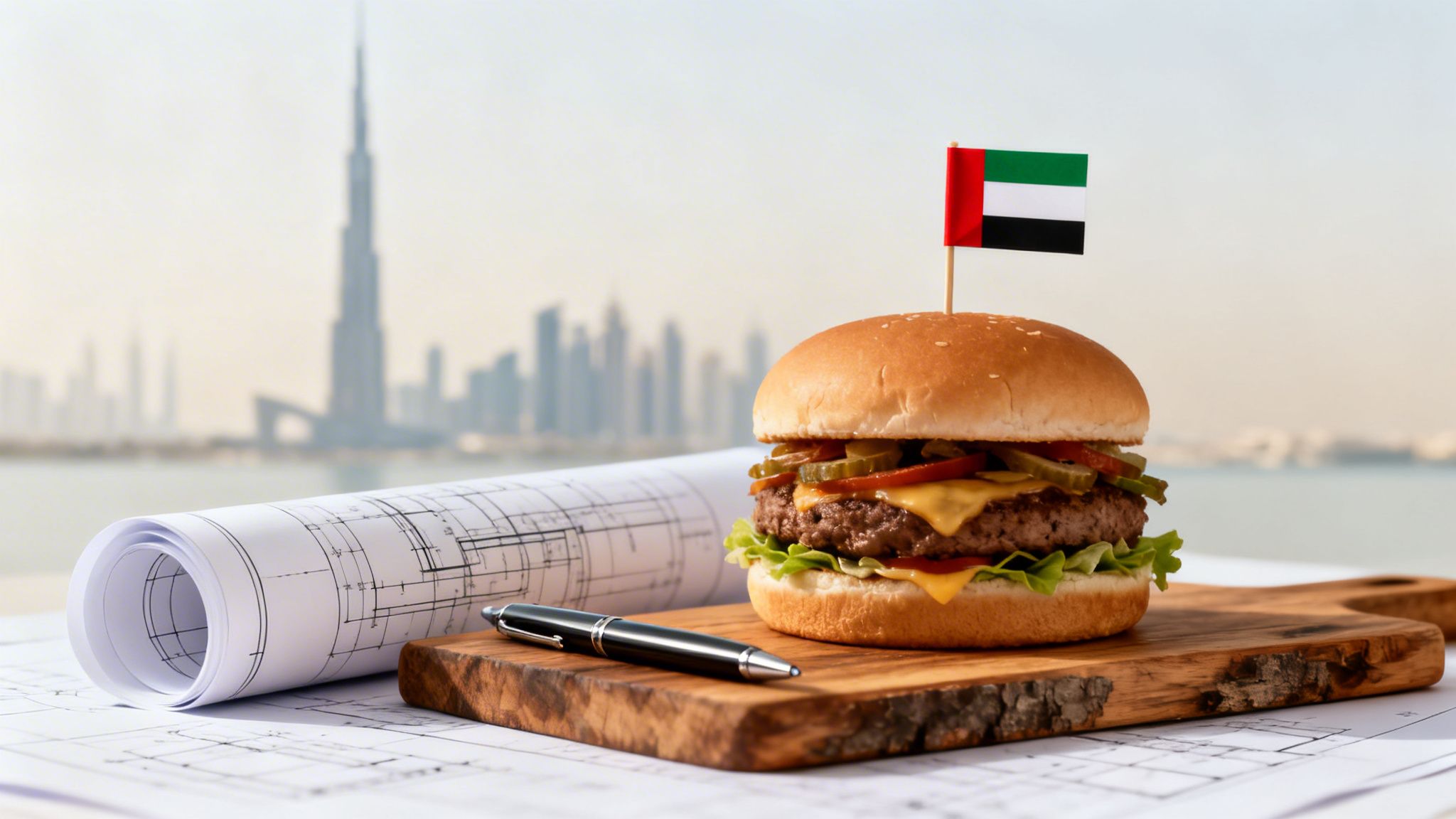
Let's get straight to the point: As of 2026, there are no permanent In-N-Out Burger restaurants in the UAE. The excitement you see on social media is for limited, one-day pop-up events. They appear with little warning, generate huge queues, sell out in hours, and then vanish.
The buzz about a permanent In-N-Out launch in the UAE is fuelled by these successful, temporary appearances. For years, foodies and founders have awaited a permanent location, but the iconic American brand follows a famously slow-growth strategy. They prioritize quality control over rapid global franchising—a powerful lesson for any founder in the MENA region.
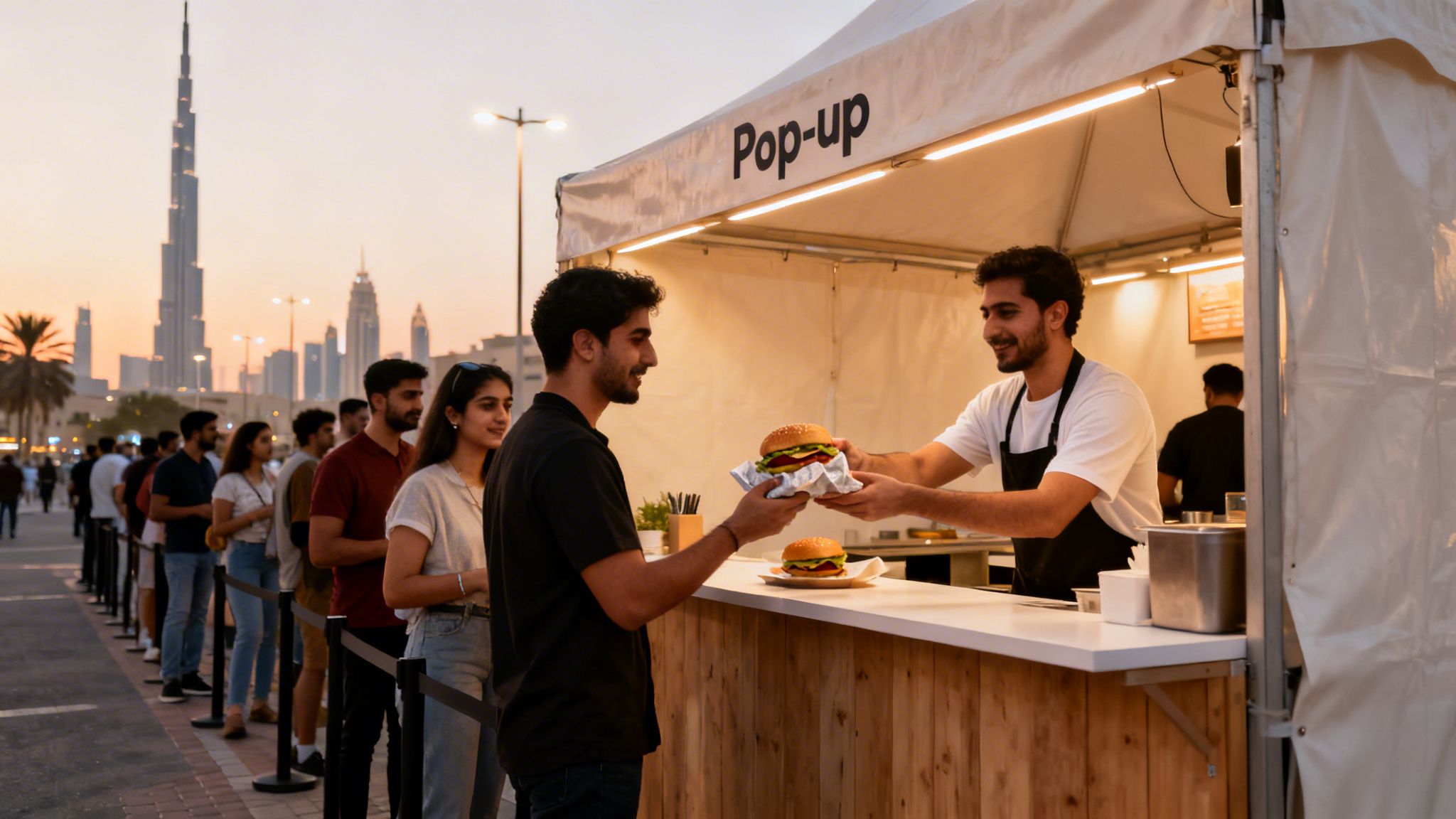
This calculated scarcity creates more authentic hype than a multi-million dirham ad campaign. Instead of being another burger joint in a crowded market, In-N-Out makes its brief visits unmissable cultural events. The strategy is built on one idea: make your brand an experience, not just a product. For founders building a business in the UAE, this is a masterclass in creating a brand people genuinely care about.
Here are the key takeaways for your startup:
The "In-N-Out effect" isn't just about burgers; it's a strategic framework for creating high-impact moments. It proves that what you don't do can be as powerful as what you do, turning scarcity into your most valuable marketing asset.
Instead of planning a massive, expensive launch, how could you create a single, high-value "pop-up" experience for your first 50 users? Consider an exclusive webinar, early access to a new feature, or a private meetup. The goal is to build a core group of advocates who will market for you.
Here’s a clear summary of the current situation and what it means for founders in the UAE.
This table reinforces the core lesson: control your narrative, obsess over quality, and use scarcity to your advantage.

The craze around In-N-Out's pop-ups in the UAE isn't just about a good burger. It’s a practical case study in building a brand through intentional scarcity. We value what’s rare. By holding infrequent, surprise events, In-N-Out engineers intense "fear of missing out" (FOMO). The limited supply and one-day-only schedule turn lunch into a can't-miss cultural event—an exclusive experience everyone wants to share.
This tactic creates a wave of organic social media buzz that no paid ad campaign can match. Every photo of a Double-Double against the Dubai skyline becomes a status symbol. This user-generated content provides powerful social proof, fuelling a cycle of desire and anticipation for the next "drop."
For founders in the UAE, this is a lesson worth its weight in gold. It's a perfect example of how to create a high-signal event that builds a loyal community from day one.
The success boils down to three core ingredients:
For a startup, this isn't about selling burgers. It's about seeing how a well-run product beta, an invite-only meetup, or a limited offer for your first 100 customers can generate unstoppable momentum before you even launch.
This strategy translates directly to the tech world. Instead of rolling out a new feature to everyone at once, give early access to a small, hand-picked group of your most dedicated users. Their feedback becomes priceless, and their excitement on social media builds anticipation for the public release.
Ask your team today: "How can we build a high-value, limited-access experience around one part of our business—a product, service, or piece of content?" It’s a simple change in perspective that can help you cultivate the kind of brand loyalty that In-N-Out commands.
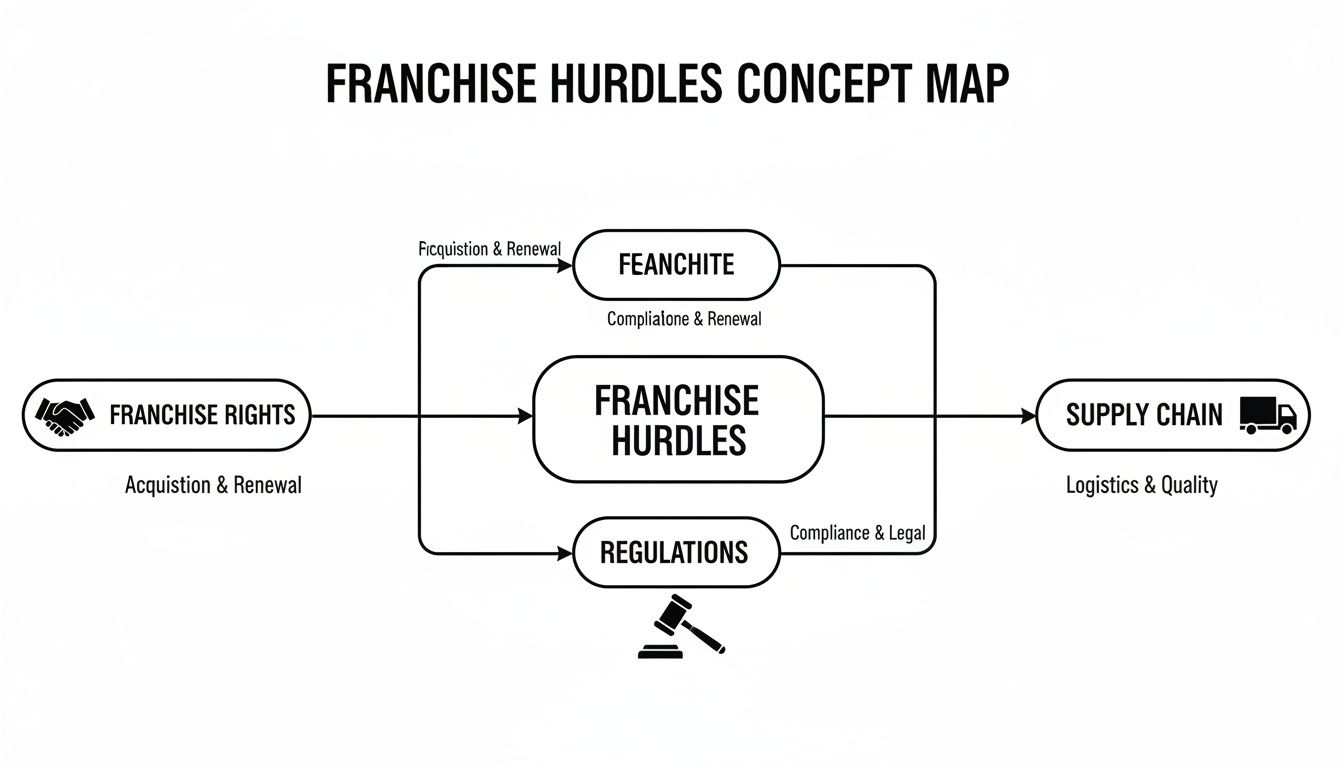
Bringing a global giant like In-N-Out to the UAE is more complex than just renting a shop. For any founder in the F&B or retail space, understanding these obstacles is a critical reality check. This is a game of massive logistical, legal, and financial hurdles—the very reason why even beloved brands are so deliberate with expansion.
First, you must secure the master franchise rights. This isn't a simple form; it's a grueling vetting process where global HQs scrutinize potential partners for deep operational experience, a proven track record, and significant capital. They are handing over their reputation in a new region to one entity.
Once you have the rights, the real work begins. Launching in the UAE means navigating a complex web of local regulations, from business licensing with the Department of Economy and Tourism (DET) to specific health codes for the F&B industry. If you’re just starting, our guide on a business startup in Dubai can give you the foundational knowledge you need.
Then comes the supply chain. In-N-Out is legendary for its policy of never freezing its beef patties or fries. Replicating that in the UAE would mean building an entire cold-chain logistics network from scratch.
This involves:
This commitment to quality is the brand's identity, but it also represents a monumental upfront investment and operational challenge.
For an F&B founder, this is a critical lesson in scaling. Your supply chain isn't just a cost; it's the bedrock of your promise to the customer. One weak link can bring down the strongest brand.
Despite these challenges, the prize is enormous. The UAE's Quick Service Restaurant (QSR) market is valued at roughly $6.55 billion USD in 2025 and is projected to reach $16.38 billion USD by 2030. This explosive growth shows a massive public appetite for convenient dining, creating fertile ground for both global giants and homegrown innovators.
When scouting the market, founders need to research the competition. Helpful resources for this include official directories for multinational companies in Dubai. The hurdles are high, but the opportunity is undeniable.
An official In-N-Out in the UAE isn't happening anytime soon. But your craving for a fresh, high-quality burger can be satisfied. The UAE’s food scene has exploded with fantastic homegrown and international burger joints that share the values that make In-N-Out a legend.
This is your roadmap to the best alternatives, broken down by what you love about In-N-Out—whether it's the fresh ingredients, the perfectly seared patty, or the simple diner vibe.
So, why can’t you find an In-N-Out in The Dubai Mall? It comes down to two major, non-negotiable hurdles for a brand as protective as In-N-Out.
First is the supply chain. In-N-Out’s brand is built on fresh, never-frozen ingredients. Their patties are ground in their own facilities, and their potatoes are cut fresh in-house. Replicating that 8,000 miles away in the UAE is a logistical nightmare. They would either have to fly everything in—compromising freshness and incurring huge costs—or build a dedicated butchery and distribution center here, a massive investment.
Second is the franchise model itself. In-N-Out famously does not franchise. The company remains privately owned by the Snyder family, who maintain absolute control by owning and operating every location. This ensures consistency but means they expand slowly and deliberately. This level of control is what makes the brand special but also what keeps it out of international markets like the UAE, similar to the challenges faced by chains like Ocean Basket Dubai in navigating local partnerships and supply chains.
While an official branch is out of reach, several local and international chains have stepped up. These spots offer their own take on a great burger, often hitting the same notes of quality and simplicity.
Each of these spots brings something unique, but all share a commitment to quality that will satisfy any serious burger enthusiast.
The frenzy around every In-N-Out pop-up in the UAE is a live masterclass in creating demand. For founders, this "scarcity playbook" is a blueprint for generating buzz without a huge marketing budget. The idea is to shift your product from a commodity to a sought-after experience. This works especially well in the UAE, a market that thrives on exclusive access and responds to a well-timed "drop."
You don't need a physical location to pull this off. The same principles apply to digital products. The goal is to build an artificial barrier to entry that makes getting in feel valuable.
Here are three simple frameworks UAE founders can use today:
The scarcity playbook isn't about being exclusionary. It's about building a strong brand identity and a loyal community from day one by making your audience feel part of something special.
This strategy helps you build early momentum and get high-quality feedback from passionate advocates who will champion your brand. Building this initial traction is a vital part of the journey we explore in our guide on what marketing and sales truly mean for a startup.
This approach fits perfectly with the digital-first habits of the UAE market. The broader foodservice market in the United Arab Emirates is expected to grow from 23.21 billion USD in 2025 to 27.28 billion USD in 2026, supercharged by delivery services. With high smartphone use and a preference for dining at home, consumers are ready for new, digitally-delivered experiences. Founders can tap into this by creating their own digital "pop-ups"—delivering high value directly to their audience without needing a large physical footprint.
What does a burger pop-up in Dubai have to do with your startup? Everything. The story of In-N-Out’s temporary appearances in the UAE is a clear lesson for any founder: get your quality right, use scarcity to build demand, and create an unforgettable experience.
But knowledge isn't enough. It's time to act. You don't need a massive budget. You can start small, creating a focused moment of excitement that gets people talking. This is how you build a brand that customers become fans of.
Pick one feature of your product or service. Get your team together and ask: "How can we create an exclusive 'pop-up' style experience around this for our best customers or prospects?"
The point is to manufacture a high-signal moment. Here are three simple frameworks:
This isn't just about making a few quick sales. It’s about creating a story. An exclusive experience makes your customers feel important, turning them into genuine advocates for your brand. Use this playbook to build the kind of loyalty money can't buy.
Even after digging into In-N-Out's pop-up strategy, a few questions always come up. Here are straight answers for founders and foodies tracking the brand in the UAE.
There is no official schedule. The surprise is part of the strategy. Your best bet is to follow local food bloggers on Instagram and TikTok. News usually drops just a day before or on the morning of the event. Also, monitor the social media accounts for major malls, as they often host these pop-ups.
No. In-N-Out Burger has never officially announced plans to open permanent restaurants in the UAE or the Middle East. The company has publicly stated its focus on slow growth within the United States, staying close to its distribution centers. The pop-ups are strategic marketing, not a sign of a full launch.
This gets to the heart of their business model. Since its founding in 1948, In-N-Out has been a private, family-owned company that refuses to franchise. This gives them absolute control over every detail, from staff training to their rigid supply chain.
Franchising would force them to give up that control, which goes against their core principle of ensuring every burger meets an obsessive quality standard. This commitment to quality over fast growth preserves the brand's cult status but keeps it out of the UAE market. It’s a deliberate trade-off, putting brand integrity above all else.


