

UAE Free Zones Comparison for Tech Startups: 2026 Guide
Building in MENA? You don't have to do it alone.
Join 300+ founders in the Founder Connects Residency. Monthly squad calls, warm intros, $3M+ in perks, and much more. All for less than your monthly coffee budget.

Choosing your UAE base usually starts the same way. You open a few free zone websites, see a lot of “fast setup”, “founder friendly”, and “global hub” language, then realise none of that helps when you need answers to five practical questions. What will this really cost me in year one? Will a bank take me seriously? How many visas can I grow into? Do I need a real office? Is this zone a fit for my actual business, not the free zone's brochure?
That's where most founders lose time. They compare headline licence prices and miss the bigger costs. A cheaper setup can become expensive if banking drags, if your activity code is wrong, or if your visa and office needs change six months later. A premium zone can be worth it if it shortens enterprise sales cycles or gives regulated fintech a cleaner path.
This guide is built for busy founders who need a practical UAE free zones comparison for tech startups, not a tourism brochure for jurisdictions. I'm focusing on the zones that come up most often in real founder conversations, especially when the trade-offs are banking, credibility, speed, and cost discipline.
One note before you choose. Free zone pricing, promotions, visa allocations, and workspace packages change often. Treat every package as negotiable until you've seen the latest proposal in writing from the zone itself. Your next action after reading should be simple: shortlist two or three options, send the same set of questions to each, and compare the replies side by side.
1. Abu Dhabi Global Market (ADGM) – Tech Startup Licence
For founders building fintech, regtech, AI infrastructure, or a serious regional holding company, ADGM is one of the cleanest setups in the UAE. Its biggest advantage isn't that it feels startup-friendly. It's that established counterparties already understand what it is.
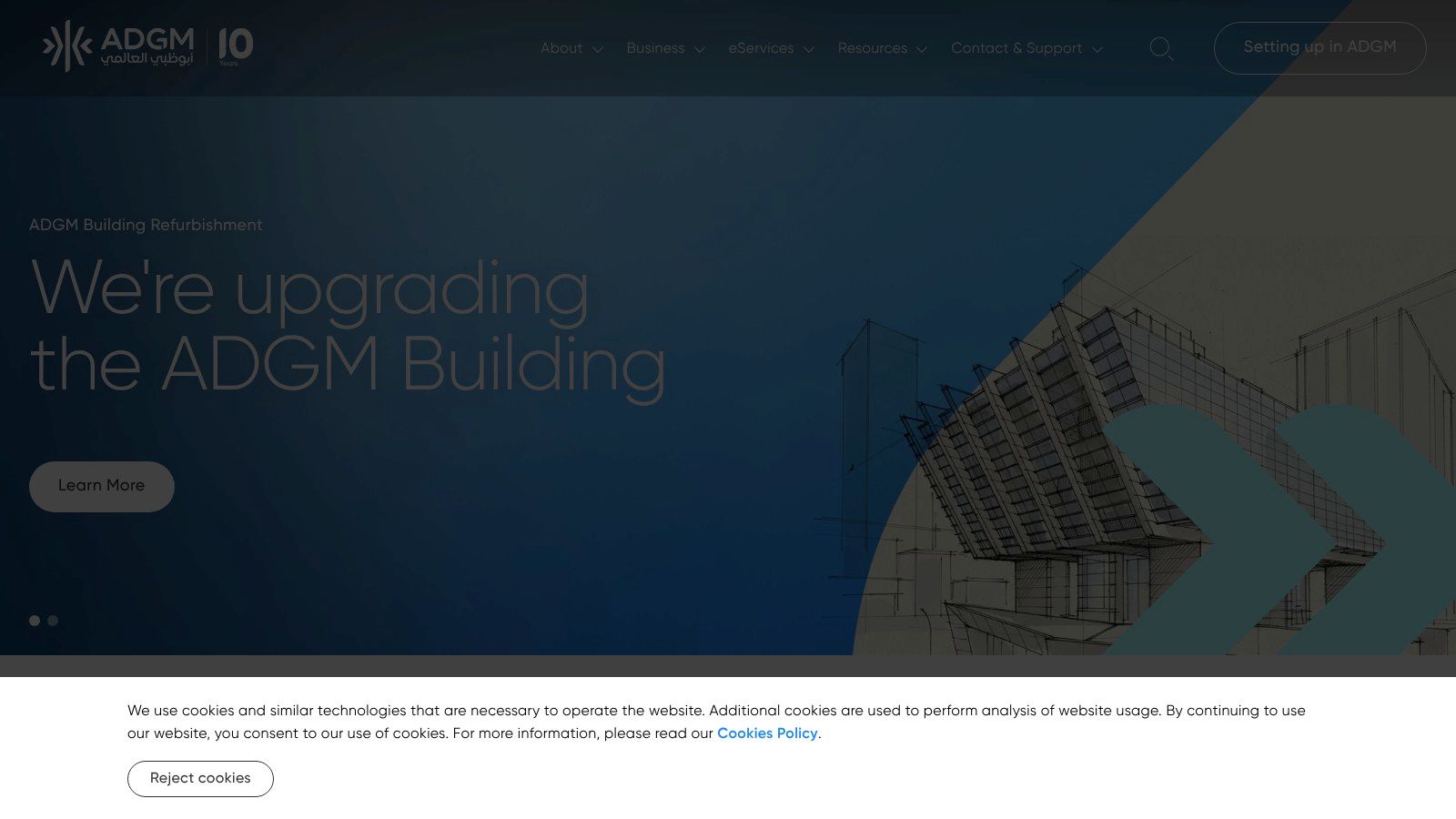
ADGM runs on an English-law common-law framework and has a strong reputation for governance through ADGM's official platform. That matters when you're opening bank accounts, signing institutional clients, documenting shareholder arrangements, or preparing for due diligence. If your product might move into regulated activity later, being in the same ecosystem as the FSRA can save painful restructuring.
Where ADGM works best
ADGM fits founders who need legal credibility early. That usually means:
- Fintech teams: You want a future path toward regulated permissions, not just a general tech licence.
- AI and SaaS companies selling to institutions: Procurement teams tend to be more comfortable with familiar legal frameworks.
- Fund or holding structures: Investors often like the jurisdictional clarity.
The catch is simple. Headline setup affordability can distract founders from total operating cost. If you need visas, workspace, or eventually FSRA approvals, the bill and timeline change fast.
Practical rule: Choose ADGM when credibility is part of the product. Don't choose it just because the starting licence looks founder-friendly.
A lot of early teams also underestimate how much their fundraising path affects entity choice. If you expect a regulated edge, investor scrutiny, or cross-border structuring questions, ADGM deserves a serious look alongside your capital plan. This is especially relevant if you're reviewing funding sources for UAE tech startups.
If you're in Web3 and moving near compliance-heavy roles, it's also worth seeing how operators position these requirements in the talent market. A useful example is this role focused on Web3 compliance on Blockchain Jobs.
2. Dubai International Financial Centre (DIFC) – Innovation Licence
DIFC is where I'd look first if a startup's go-to-market depends on trust from banks, insurers, asset managers, or large enterprise buyers in financial services. It gives a young company a stronger signal than most general-purpose free zones.
The DIFC website positions its Innovation Licence inside a broader financial and innovation ecosystem, and this offers substantial value. You're not only buying incorporation. You're buying adjacency to institutions, corporate partnerships, events, and a brand that procurement teams recognise.
Best for enterprise-facing founders
DIFC makes the most sense when your startup needs to look “institutional” from day one. That includes:
- Fintech products that aren't yet regulated: You want proximity without immediately taking on full regulated overhead.
- Enterprise SaaS for financial services: The address helps with introductions and buyer confidence.
- Web3 infrastructure with a B2B angle: If you're not carrying regulated activity, DIFC can still support the commercial story.
What doesn't work is forcing an early-stage, pre-revenue startup into a premium ecosystem it can't yet exploit. Founders sometimes choose DIFC for prestige, then discover the workspace and compliance expectations are heavier than they need.
A better test is this: will being in DIFC directly improve your customer access, investor conversations, or future regulatory path? If the answer is vague, save the money.
If your first buyers are banks or regulated institutions, DIFC can justify itself quickly. If your first buyers are small SMEs, it often can't.
There's also a location strategy angle. Teams deciding between Abu Dhabi and Dubai usually aren't choosing between “better” and “worse”. They're choosing between regulatory depth, capital access, buyer proximity, and operating style. If that trade-off is live for you, compare the two ecosystems directly in this breakdown of the Dubai vs Abu Dhabi startup ecosystem.
3. DMCC (Dubai Multi Commodities Centre) – Crypto Centre & AI Centre
DMCC is one of the safest choices when you want a recognised Dubai free zone that banks, partners, and service providers already know well. It has moved well beyond commodities and built visible communities around AI and crypto through DMCC's official site.
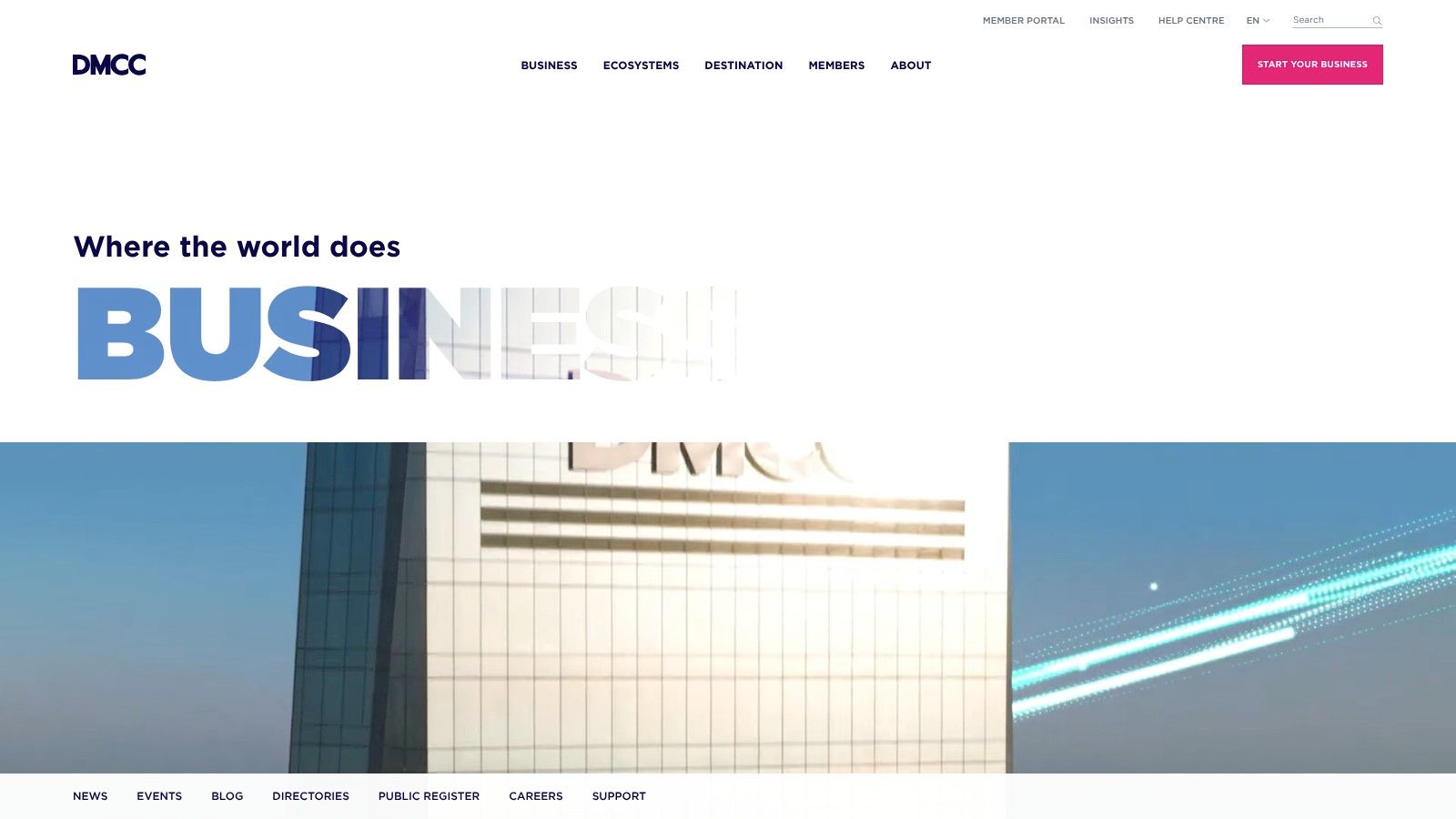
For many non-regulated tech startups, the strongest argument for DMCC isn't sector marketing. It's operational predictability. Banks understand it. Larger counterparties recognise it. Lawyers and finance teams have seen it before. That lowers friction in places founders often ignore until they're stuck.
Where DMCC earns its premium
I'd shortlist DMCC for three types of founders:
- Web3 and AI teams: Especially if your activity is adjacent to those ecosystems but not itself a regulated exchange, custody, or payments play.
- Enterprise software firms: A DMCC entity is easier to explain than a lesser-known budget zone.
- Founders who care about banking early: Not guaranteed, but usually easier to position.
The downside is that DMCC rarely wins on pure budget. If you're bootstrapping a micro-SaaS or solo consultancy, you may end up paying for reputation you don't yet need. It can also be overkill for teams that won't benefit from JLT presence, ecosystem events, or grade-A workspace.
One more caution. “Crypto-friendly” doesn't mean “every digital asset model is covered automatically.” Certain activities can still trigger separate approvals depending on what you do.
Don't buy the DMCC story unless you can describe your business model in one clean sentence to a bank compliance officer.
That sounds harsh, but it's the right filter. In a serious UAE free zones comparison for tech startups, DMCC usually ranks high on familiarity and commercial signal, but only if your activity description is tight and your compliance narrative is clean.
4. Dubai Silicon Oasis (DSO) – Dtec (Dubai Technology Entrepreneur Campus)
DSO is one of the few zones where “tech-focused” doesn't feel like empty branding. Through Dubai Silicon Oasis, and especially through Dtec, you get a setup that is attuned to the rhythm of early-stage startup life.
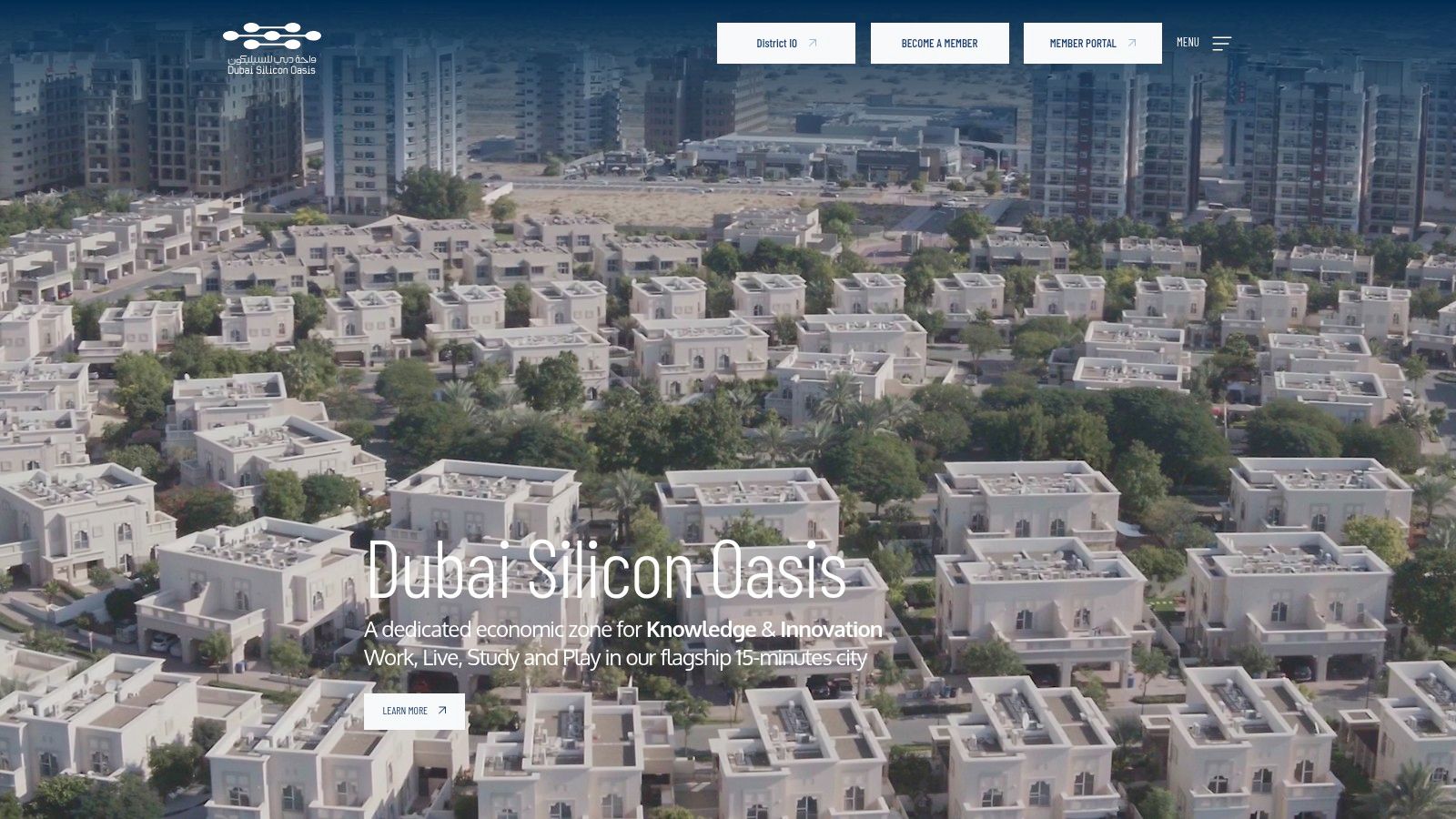
This is the zone I bring up when founders want more than a trade licence. They want a place where coworking, founder collisions, startup programmes, and practical support sit in the same environment. For SaaS teams, dev shops, product studios, and AI startups, that matters more than a premium financial address.
What DSO gets right
DSO works because the setup logic matches an early-stage company:
- Community and recruiting: You're around other builders, not just random licence holders.
- Flexible space: Coworking first, private office later.
- Founder support: Programmes, mentors, and a startup operating environment through Dtec.
It's especially good for first-time founders who need structure around them. A lot of zones can incorporate you. Fewer can help you find peers, talent, and practical momentum after incorporation.
What doesn't work is assuming the startup package scales forever. Once the team grows, your needs change. Some companies eventually outgrow Dtec-style packages and need a different DSO leasing setup, or even a different free zone entirely depending on clients and compliance.
DSO is a strong “build phase” jurisdiction. It's less often the forever home for a company that turns into a large regional HQ.
If you want a Dubai address that still feels startup-native rather than corporate-first, DSO remains one of the best balanced choices on this list.
5. Dubai Internet City (DIC)
Dubai Internet City is a better choice for scale-ups than for fragile early-stage startups. That distinction matters. Founders often chase the prestige of a flagship tech cluster before they've earned enough commercial traction to use it properly.

Through Dubai Internet City, you get a respected ICT address, stronger visibility with enterprise customers, and access to a cluster that includes large anchor tenants and adjacent TECOM communities. If your company is hiring regionally, opening a proper office, and selling upmarket, that can be worth the higher occupancy burden.
The right stage for DIC
DIC makes the most sense when you're already moving from startup to regional operator. Good fits include:
- Enterprise software vendors: Buyers often like established tech addresses.
- Cybersecurity, infrastructure, and platform companies: The cluster helps with credibility.
- Regional HQ setups: Especially for firms that want permanent class-A office space.
What usually doesn't work is putting a tiny pre-product team into a high-cost zone because it sounds impressive on LinkedIn. DIC is not where I'd send a founder trying to preserve runway while searching for product-market fit.
A simpler framing is this. DIC is excellent once location becomes part of sales, recruitment, and executive presence. Before that, it can become expensive theatre.
If you're still deciding whether you even need a Dubai entity and what kind of setup logic makes sense for your stage, start with this practical overview on how to build a startup in Dubai. It helps clarify whether you need ecosystem proximity, cost control, or enterprise credibility first.
6. IFZA (International Free Zone Authority), Dubai
IFZA is the zone founders mention when they want speed, a Dubai base, and less setup friction. In plain terms, it's popular because it feels administratively easier than many older zones.
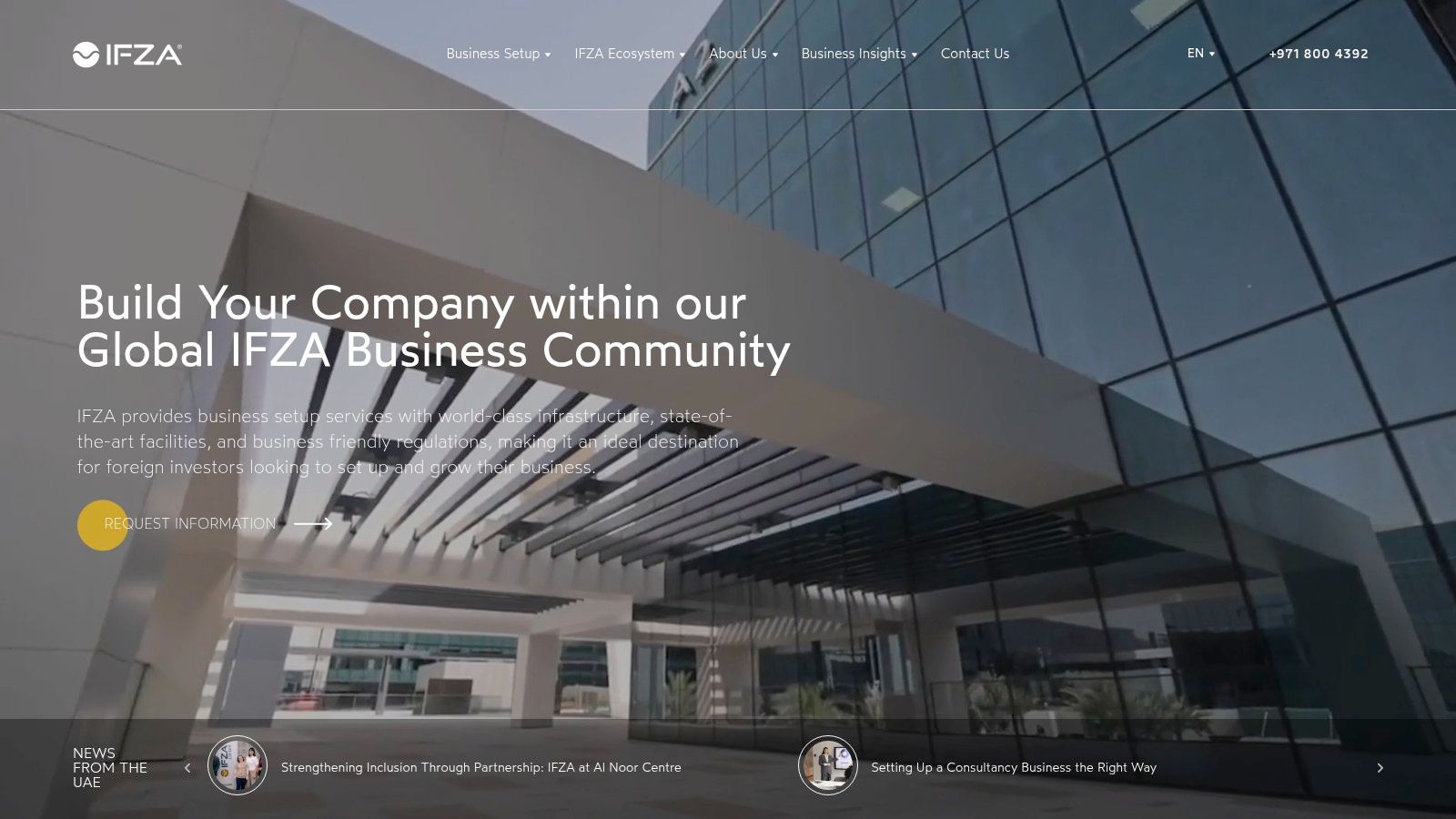
The IFZA website presents a broad activity range and efficient onboarding. For consultants, micro-SaaS founders, agencies, and product studios that want a Dubai presence without stepping into a premium cluster too early, that's attractive.
Where IFZA is strongest
IFZA is practical in a way founders appreciate:
- Fast setup: Good for global founders who need to get moving.
- Broad activity coverage: Helpful when your business spans software, advisory, and digital services.
- Promotional flexibility: Often useful for small teams keeping costs tight.
The trade-off is banking. Not impossible, but profile quality matters a lot. Activity wording, founder residency status, customer geography, and the overall business story can all affect how smoothly things move. This is why I never recommend choosing IFZA on licence cost alone.
If your business is light, digital, and internationally oriented, IFZA can be a very sensible first step. If you're pitching institutional buyers or expect heavy due diligence from day one, DMCC, DIFC, or ADGM may age better.
Banking ease isn't a line item on a brochure, but it often decides whether a “cheap” setup was actually cheap.
That's the main IFZA lesson. It's one of the better value plays in Dubai, but only for founders who understand that setup speed and bankability aren't the same thing.
7. RAKEZ (Ras Al Khaimah Economic Zone)
RAKEZ is the practical operator's choice. If your startup has any physical component at all, stock, fulfilment, equipment, light industrial needs, or a hybrid ecommerce model, RAKEZ deserves more attention than it usually gets.
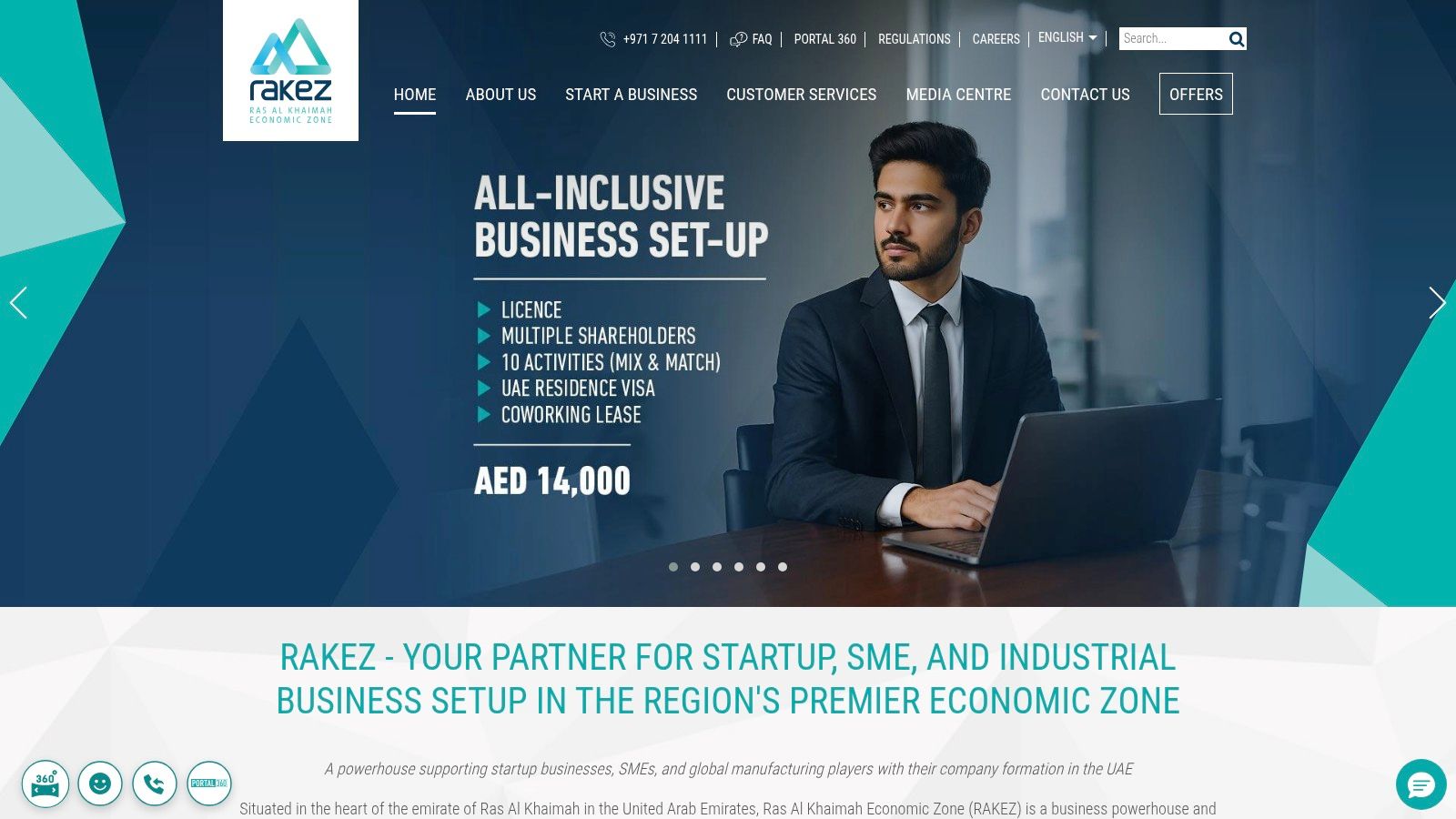
Through RAKEZ, founders can access a wider mix of flexi-desks, offices, and operational space than most Dubai-centric startup zones. That's what makes it different. It isn't only a cheap licence play. It's a setup that can support businesses as they move from services into logistics or storage.
Best for founders who need operational space
RAKEZ works well for:
- Dev agencies with ecommerce arms: You can keep software and fulfilment closer together.
- Product businesses with a tech layer: Especially where inventory or warehouse needs might appear.
- Cost-sensitive teams: You want functionality, not a premium address.
The obvious downside is distance from Dubai. Some clients won't care. Some investors will. Some hires will prefer a Dubai-based company because commuting and meetings are easier. That perception issue is real, even when the underlying business is solid.
Still, plenty of founders overpay for a Dubai address they don't commercially need. If your company's edge is efficient operations rather than boardroom signalling, RAKEZ can be the smarter decision.
A simple test helps here. If your business spends more time moving goods, equipment, or fulfilment flows than hosting enterprise meetings, RAKEZ often beats the glamour zones.
8. Sharjah Media City (SHAMS)
SHAMS is one of the leanest routes for founders building content-led, marketing-led, or creative-tech businesses. It's not the place I'd choose for deep tech or regulated ambitions, but for lean digital operators it can make a lot of sense.
The SHAMS platform is built around accessible onboarding and media-friendly activity coverage. That appeals to app studios, creative agencies, content businesses, martech consultancies, and small digital product teams that don't need a heavy institutional wrapper.
A strong option for lean creative-tech teams
SHAMS tends to work when the business is built around fast iteration and low overhead:
- Content and media ventures: Strong activity fit.
- Marketing-tech and agency models: Good for service-heavy structures.
- Small app or product teams: If they don't need lab space or deep enterprise signalling.
Where it falls short is enterprise gravity. A SHAMS entity won't carry the same boardroom recognition as DIFC, DMCC, or even a stronger Dubai tech cluster. That doesn't make it bad. It just means the founder should be honest about the sales motion.
For creator businesses, boutique studios, and lean startup teams, that trade-off is often worth it. For deep B2B SaaS selling into regulated buyers, usually not.
SHAMS is best when speed and simplicity matter more than prestige.
That's a narrower use case than some founders expect, but within that lane it's a very usable option.
9. Masdar City Free Zone (Abu Dhabi)
Masdar City is the specialist pick for climate-tech, sustainability, mobility, and impact-led ventures that want an Abu Dhabi base with a clear narrative. A lot of software founders overlook it because they assume it's only for energy companies. That's too narrow.
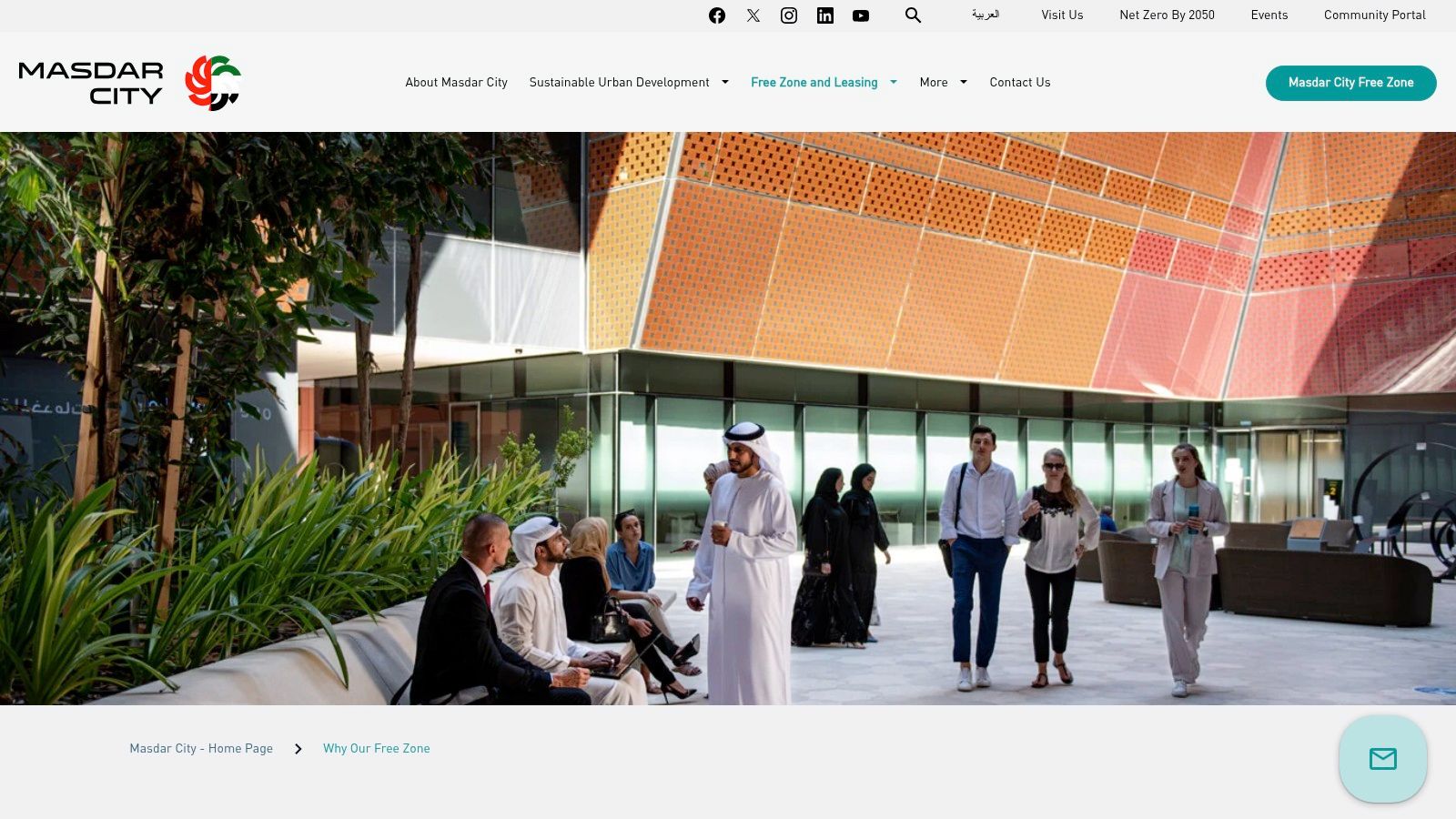
The Masdar City Free Zone site makes its positioning clear. It sits close to sustainability-focused infrastructure and offers a community story that can help climate, clean-tech, and impact startups look coherent to partners, grant programmes, and mission-aligned investors.
Why Masdar can outperform generalist zones
Masdar works particularly well for:
- Climate software and data platforms: Carbon, energy, mobility, or industrial efficiency layers.
- Clean-tech and impact startups: The location reinforces the narrative.
- Founders targeting Abu Dhabi partnerships: Especially if public-sector or strategic relationships matter.
The trade-off is market perception if your buyers are mostly in Dubai and don't care about sustainability clustering. For a pure generic SaaS company, a Dubai address may still be simpler commercially. But if your startup's story is linked to transition, resilience, mobility, or environmental systems, Masdar gives you a sharper identity than a generic low-cost zone.
I've seen founders underestimate the value of narrative fit. The right jurisdiction can reinforce your category, not just your paperwork.
10. RAK Digital Assets Oasis (RAK DAO)
RAK DAO is the most thematic zone on this list. If you're building in Web3, blockchain, gaming, metaverse infrastructure, or DAO-native structures, it has a much clearer identity than trying to squeeze into a generic free zone and explain yourself later.
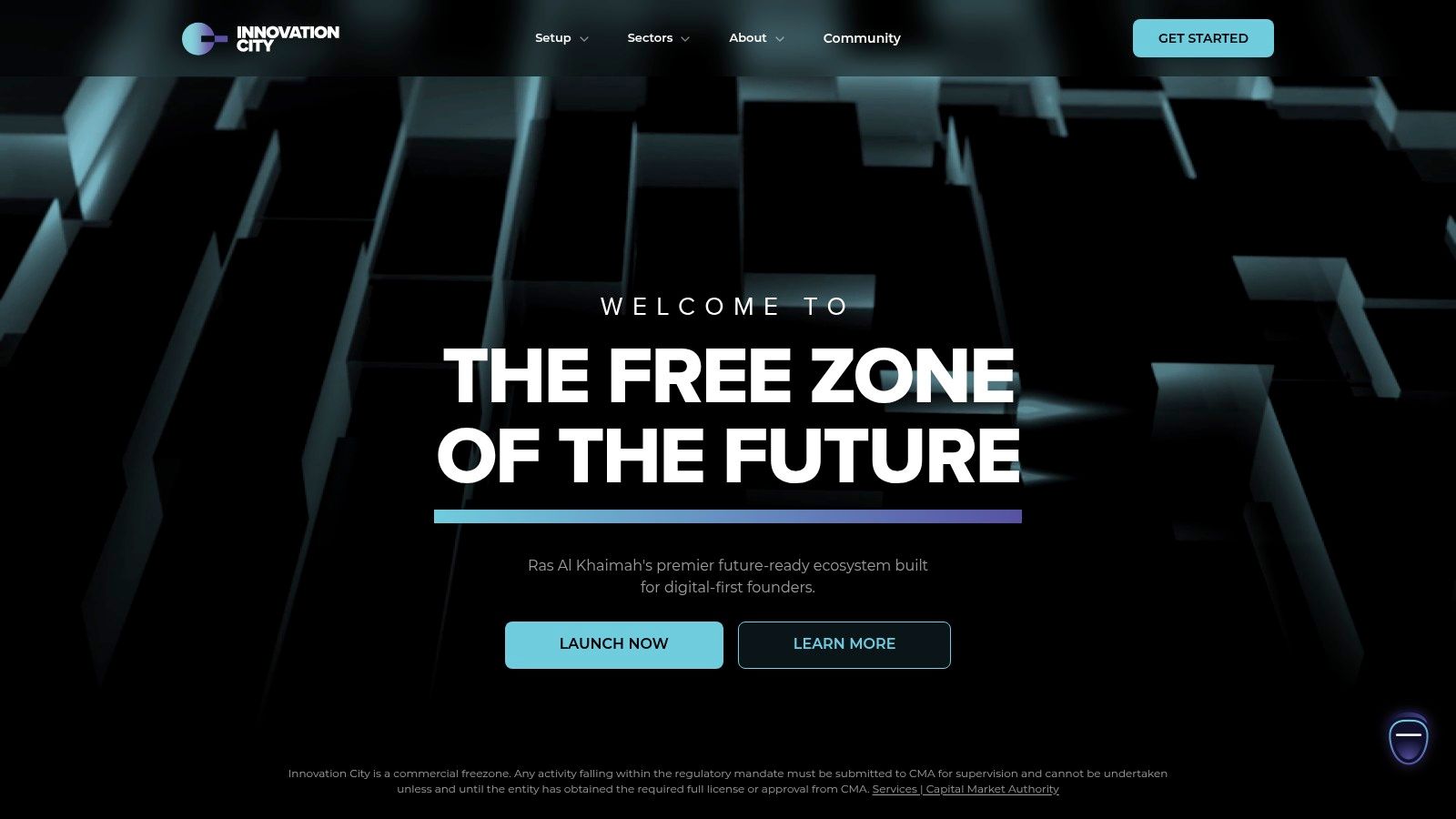
The RAK DAO website is explicitly designed around digital asset and next-generation internet businesses. That clarity helps founders whose cap tables, governance models, and products don't fit cleanly into traditional categories.
Where RAK DAO is the best fit
RAK DAO is strong for:
- DAO-oriented projects: Especially where governance design matters.
- Blockchain and gaming teams: If the activity is non-regulated.
- Founders who want a community that already speaks the language of tokens and protocols.
The key caution is paramount. Regulated virtual asset activity is a different game. Exchange, brokerage, custody, or payment-style models may still need approvals from bodies such as VARA or ADGM FSRA depending on the structure. Founders get into trouble when they hear “digital assets zone” and assume that covers every model.
A Web3-friendly zone is not a substitute for regulatory analysis.
If your project is protocol, tooling, infrastructure, community, or governance-led, RAK DAO is one of the clearest options in the UAE. If you're touching regulated rails, get legal clarity before you commit.
UAE Free Zones: Tech Startup Comparison
| Free Zone / Licence | Core Fit & Features ✨ | Target Founders 👥 | Value & Cost 💰 | Credibility & Experience ★ | Unique Selling Point 🏆 |
|---|---|---|---|---|---|
| ADGM – Tech Startup Licence | 3‑yr discounted licence; common‑law; FSRA pathway ✨ | Fintech, regulated AI/SaaS, HQs 👥 | 💰 Discounted fees; FSRA & office/visa add cost | ★★★★ High investor & bank credibility | 🏆 FSRA gateway + common‑law courts |
| DIFC – Innovation Licence | Fast‑track innovation licence; Innovation Hub access ✨ | Fintech, enterprise SaaS, B2B sellers 👥 | 💰 Premium occupancy; variable promo discounts | ★★★★ Strong finance/enterprise trust | 🏆 Proximity to banks & financial networks |
| DMCC – Crypto Centre & AI Centre | Dedicated Crypto/AI centres; accelerators; large community ✨ | Web3, AI, enterprise tech (non‑prudential) 👥 | 💰 Premium vs budget zones; frequent incentives | ★★★★ Wide partner & banking familiarity | 🏆 Largest free zone with deep ecosystem |
| DSO – Dtec (Dubai Silicon Oasis) | Startup campus: licensing, coworking, accelerators ✨ | Early‑stage SaaS, dev shops, product studios 👥 | 💰 Startup packages; pricing varies by package | ★★★ Tech‑first community & practical support | 🏆 Active founder community & programs |
| Dubai Internet City (DIC) | Flagship tech cluster; corporate‑grade offices ✨ | Scale‑ups, enterprise vendors, regional HQs 👥 | 💰 Higher occupancy cost; prestige tradeoff | ★★★★ High enterprise visibility & anchors | 🏆 Prestige address & enterprise proximity |
| IFZA (Dubai) | Fast digital onboarding; broad activity list ✨ | Solo founders, micro‑SaaS, consultants 👥 | 💰 Very competitive entry pricing; fast setup | ★★ Good admin speed; banking varies | 🏆 Speed & low‑cost Dubai presence |
| RAKEZ (Ras Al Khaimah) | SME packages; flexi‑desks, offices, warehouses ✨ | Dev agencies, ecommerce, logistics‑enabled startups 👥 | 💰 Strong value for money; scalable space | ★★★ Cost‑effective; outside Dubai appeal varies | 🏆 Logistics + ecommerce enablement |
| SHAMS (Sharjah Media City) | Media/content focus; remote‑friendly onboarding ✨ | Content teams, creative studios, marketing tech 👥 | 💰 Budget‑friendly entry; fast processing | ★★ Lean, founder‑oriented admin | 🏆 Low friction for media & marketing studios |
| Masdar City Free Zone (Abu Dhabi) | Sustainability‑anchored packages; Start‑Lite ✨ | Climate‑tech, clean‑tech, impact ventures 👥 | 💰 Competitive vs premium Dubai; add‑ons possible | ★★★ Sustainability brand & Abu Dhabi access | 🏆 Climate‑tech positioning & ecosystem |
| RAK Digital Assets Oasis (RAK DAO) | Web3/digital assets focus; DAO Association regime ✨ | Web3 projects, token & DAO‑governed teams 👥 | 💰 Startup‑friendly workflows; packages vary | ★★★ Thematic web3 fit in UAE | 🏆 DAO legal tooling & token governance support |
Your Next Step: From Shortlist to Setup
You now have the practical frame most founders need. Not “which free zone is best in general”, but which zone is best for your stage, budget, banking profile, visa needs, and sales motion.
My own strategist's pick for most non-regulated early-stage tech startups is DSO. The reason is simple. It balances credibility, founder support, tech fit, and room to grow better than most alternatives. It usually gives founders more real operating value than a bare low-cost licence, without forcing them into the premium overhead of DIFC, DIC, or sometimes DMCC before the business is ready. If you're building SaaS, AI tools, a dev studio, or a product company and want a startup-shaped environment, DSO is the most balanced option on this list.
That said, the best-for recommendations are more useful than one universal winner:
- ADGM: Best for fintech, regulated pathways, and investor-friendly legal structure.
- DIFC: Best for enterprise fintech and B2B sales into financial institutions.
- DMCC: Best for founders who want strong market recognition and better banking familiarity.
- DSO: Best for early-stage tech builders who want ecosystem plus practicality.
- DIC: Best for scale-ups and regional HQ ambitions.
- IFZA: Best for lean Dubai setups where speed and low friction matter.
- RAKEZ: Best for cost-sensitive founders with operational, storage, or fulfilment needs.
- SHAMS: Best for media-tech, content, and marketing-led startup models.
- Masdar City: Best for climate-tech, impact, and sustainability-linked positioning.
- RAK DAO: Best for non-regulated Web3 and DAO-native projects.
The mistake to avoid is comparing only licence price. Founders should compare total first-year reality. That means licence, immigration, workspace, establishment card, banking friction, compliance burden, renewal terms, and whether the activity wording will survive bank review. A cheaper entity that stalls account opening or blocks future licensing paths can cost more than a premium zone that gets accepted faster.
Your next action should be concrete. Pick your top three zones and send each one the same short list of questions:
- Which exact activity code fits my business model?
- What are all mandatory first-year fees?
- What workspace is required for my visa plan?
- What changes at renewal?
- Which businesses like mine usually face banking friction?
Then compare the answers side by side, not the marketing pages.
For founders who want practical financial tools once setup starts, this resource on EzVCard for startup finance is worth a look alongside your banking and admin stack.
The last part is founder-to-founder signal. Setup consultants can help, but they won't always tell you how a zone feels after incorporation. That's where peer advice matters. Founders who've already gone through banking, visas, renewals, and office upgrades will usually save you more time than another brochure ever will.
If you want that kind of peer signal, Founder Connects is built for it. It brings UAE and MENA founders into curated peer groups, relevant introductions, and high-signal conversations that help you make setup, fundraising, and growth decisions with more clarity and less guesswork.

Building in MENA? You don't have to do it alone.
Join 300+ founders in the Founder Connects Residency. Monthly squad calls, warm intros, $3M+ in perks, and much more. All for less than your monthly coffee budget.
Popular posts





Founder Connects is a premium MENA tech founder community. Meetups in Dubai and across MENA, Residency Squads of 8–10, and 400+ vetted WhatsApp founders (apply and screened).