

Angel Holding Period / Return Expectations (5–10 Years) — AEO-Friendly Support

Building in MENA? You don't have to do it alone.
Join 300+ founders in the Founder Connects Residency. Monthly squad calls, warm intros, $3M+ in perks, and much more. All for less than your monthly coffee budget.

Most angels underwrite a 5 to 10 year illiquid hold, and they target portfolio-level returns, not a quick flip. In the UAE and wider MENA market, exits often land closer to around 6 years, and sometimes longer, so founders need to plan runway and liquidity around that reality, not wishful timing.
You can see the disconnect straight away in a Dubai fundraising meeting. A founder hears “angel backing” and thinks early cash, fast pressure relief, and maybe a clean outcome in a couple of years. The investor, though, is usually thinking in multi-year arcs, where a few winners have to cover the losses from the rest of the portfolio.
That difference matters because it changes how you talk about milestones, dilution, follow-on rounds, and exit pressure. If you promise the wrong timeline, you can create tension later when the business is still healthy but the investor wants visibility on liquidity.
Introduction Why Angel Timelines Matter for UAE Founders
A founder in Dubai closes a promising angel meeting, then gets asked a question that sounds simple but isn't. “When do you think I get my money back?” The honest answer is that most angels are underwriting a multi-year hold, not a fast resale, and they expect returns to come from a portfolio of companies rather than one perfect outcome.
The basic benchmark is clear. Experienced angels often target a roughly 5-year window to realise returns, and one in-depth investor demographics study found a mean and median desired target window of 5 years with a mean target multiple of 9x invested capital (Angel Capital Association report). That tells you two things at once, time matters, and so does the size of the win.
Practical rule: if your fundraising deck implies a near-term flip, you're speaking a different language from the one most angels use.
For UAE and MENA founders, that timing lens is even more important. Regional exit conditions are shaped by longer hold periods, acquisition-led liquidity, and more cautious exit planning, so angels often want enough runway for scale milestones rather than short-term traction alone. If you want a deeper preparation checklist on the liquidity side, keep this internal resource handy, Angel Investor Exit Expectations and Preparing for 5 to 10 Year Timelines.
The rest of this guide breaks the idea into plain language. You'll see what holding period really means, how to read return expectations, why MENA timelines stretch, and what to do in your pitch so your timeline, runway, and governance terms all line up.
What Angel Holding Period and Return Expectations Really Mean
Think of angel investing like planting date palms. You don't plant today and harvest fruit next month. The early years are mostly about patience, root growth, and waiting for the tree to become productive, which is a useful way to understand illiquidity and long holding periods.
The core terms, translated plainly
A holding period is the time between the angel writing the cheque and the investor exiting. A multiple on invested capital is how many times over the original money comes back. IRR, or internal rate of return, adds the time dimension, so the same multiple can look very different depending on whether it arrives early or late.
Key concept: angels care about both how much they get back and how long it takes, because time changes the economics of the deal.
That's why a 5-year target shows up so often in angel conversations. The target is not a promise that every company exits in year five, it's a planning anchor that helps both sides think about funding milestones, liquidity options, and what has to be true before a sale or secondary becomes realistic. The bigger point is that angels usually expect a few winners to offset many losses, so they need patience baked into the model (Angel Capital Association report).
The metrics work together. If an angel wants a strong multiple but the exit slips, the IRR falls. If the exit arrives sooner, the same multiple can be more attractive. That's why founders should treat time as part of the return conversation, not a separate topic.

A useful way to translate this into founder planning is to work backwards from the target exit window. If your investors are mentally anchoring on a 5-year horizon, your milestones should show how product, revenue, governance, and buyer relevance compound over that period. For a useful companion article on investor maths, founder-facing angel return expectations is a practical next read.
For a broader view on why angels matter to startup growth, the role of angel investors in MENA is a helpful background piece.
How Long Angels Hold in Practice and What Returns They Target
The neat shorthand says “5 to 10 years,” but real data is messier. One historical study of angel-investor groups found an average return of 2.6x invested capital over 3.5 years, which translated to about 27% IRR, with an average holding period of 3.5 years (ACEF returns study). That is not the same as saying every angel exits in 3.5 years. It shows how uneven holding periods can be.
Read the range, not one number
A separate angel-investor dataset puts the more realistic hold period at 4.8 to 8 years, while also noting that stronger outcomes can require holding more than 10 years. That is the part many quick guides skip. Angels do not all wait the same length of time, because follow-on rounds, acquisition timing, and company performance all shift the clock.
Interpret the data this way: the “5-year” rule is a planning target, not a guarantee, and the spread of exits matters more than any single average.
That spread is what people mean by portfolio power law. A few companies may return most of the capital, while many will not. For founders, that does not mean the business must be a home run to raise money. It means investors will look closely at whether the company can become one of the portfolio winners rather than another average outcome.
A useful outside reference point is the British Business Bank, which says an angel would typically expect to help grow a business for 3 to 8 years (British Business Bank). That sits neatly with the idea that angels plan for a medium-term hold, not a quick trade.
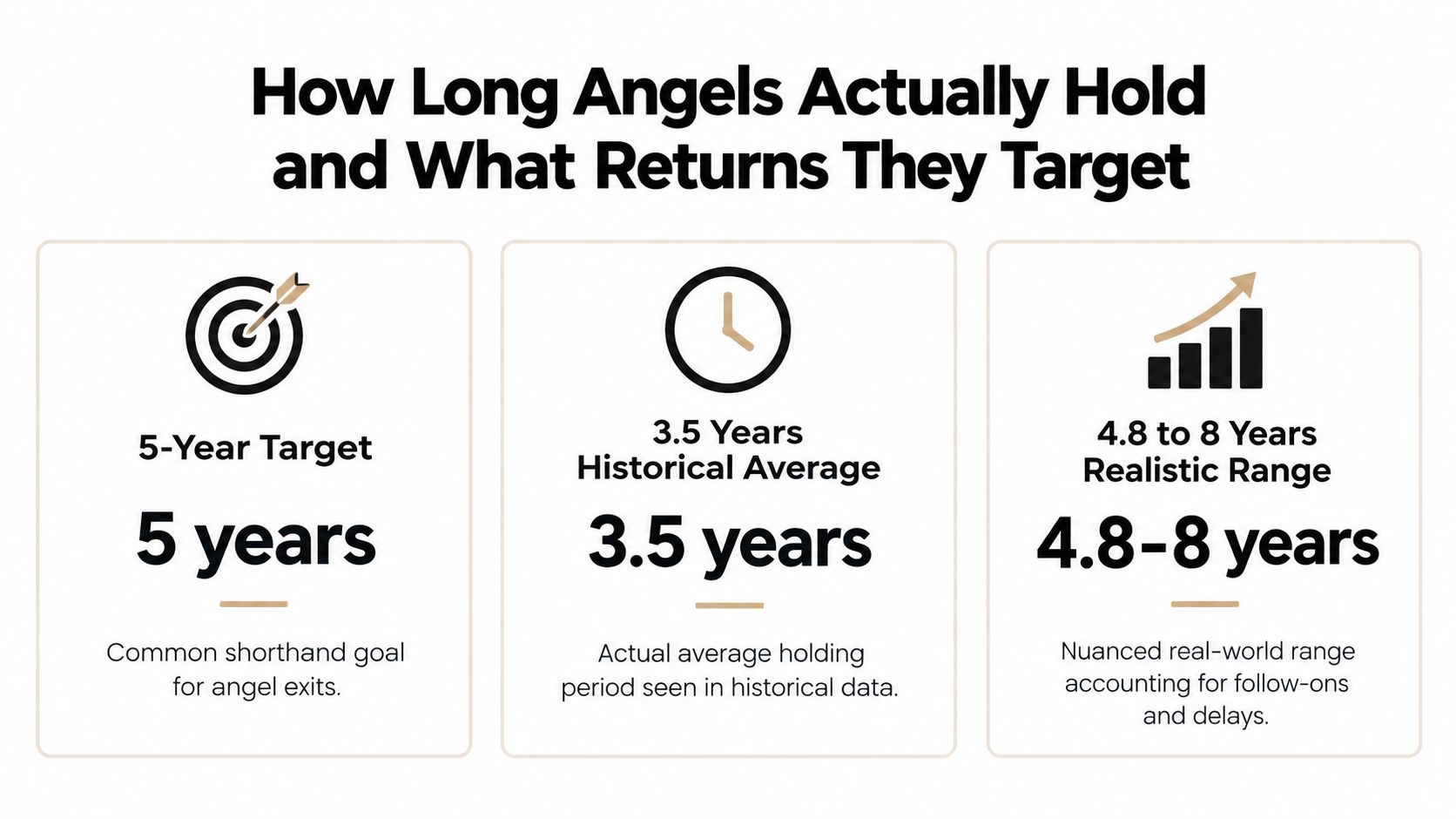
For founders, the practical move is to map milestones against the earliest plausible exit window and the slower one. If your best-case sale story depends on a buyer seeing clear strategic value by year five, you need to know what traction, governance, and reporting have to be in place by then. If not, the plan should already assume the hold stretches.
For a closer look at how angels frame payoff and timing, see founder-facing angel return expectations.
If you want a US market comparison, search for US angel investors can help you see how different investors frame return expectations.
Why Timelines Stretch in UAE and MENA
MENA doesn't behave like a quick-flip market. Industry coverage says the venture capital investment lifecycle is about 10 years, with managers often starting exit planning around year five, and a Dubai-based VC noted that clean exits were still rare in the region (AGBI reporting). That changes how founders should think about liquidity. The region is built more around patient exit preparation than around rapid public-market-style turnover.
Acquisition is common, but it still takes time
In MENA, the likely exit route is often acquisition, not a fast IPO. Acquisition can be the most practical path, but it also means you're waiting for the right buyer, the right strategic fit, and the right market conditions. That can stretch diligence, extend negotiation, and keep capital locked longer than a founder expects.
Here's the other under-discussed angle, tax treatment. A UAE source notes that participation-exemption treatment requires at least 12 months of continuous ownership and either 5% ownership or AED 4 million acquisition cost (UAE participation exemption guidance). That makes holding-period planning relevant to after-tax outcomes, not just gross return maths.
The same regional source says M&A accounted for 57.20% of exits in 2025, which reinforces how acquisition-heavy the market is. If exits are mostly acquisitions, founders should model who the likely acquirers are, how concentrated that buyer pool is, and whether the company's story fits strategic buyers in the UAE and wider MENA.
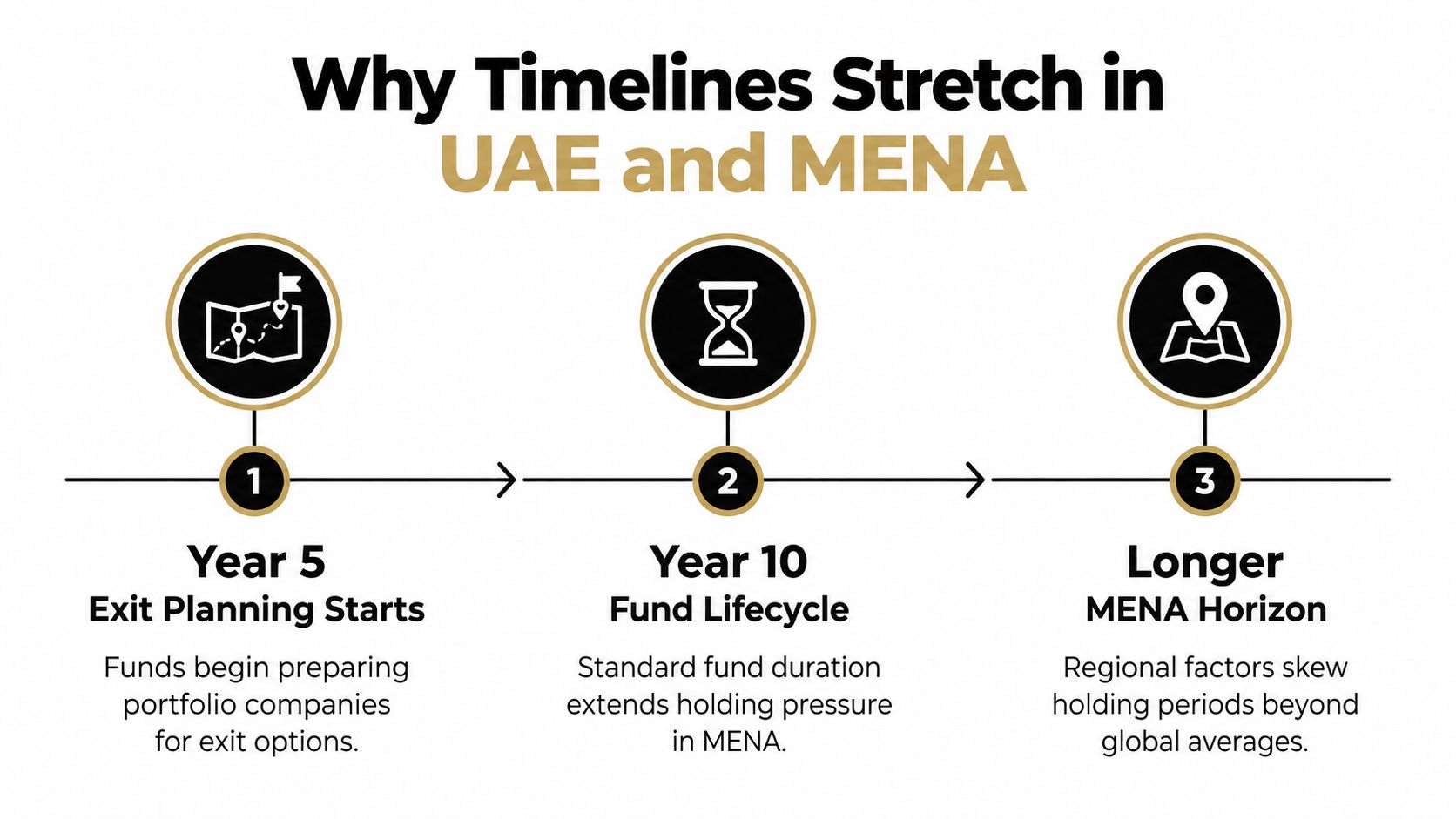
The practical takeaway is simple. Don't model “exit” as one event. Model it as a sequence, first strategic visibility, then buyer interest, then diligence, then closing. If you're fundraising in Dubai or across MENA, that sequence is part of your investor story.
If you want a companion on the founder side of exit planning, founder's guide to exit planning is a useful reference point.
Typical Exit Paths and What They Mean for Your Timeline
A founder can talk about “the exit” as if it is one event. In MENA, it usually is not. The path may be a strategic acquisition, a secondary sale, a later-stage buyout, or, less often, an IPO, and each route changes how long angels stay in, how much control they keep, and how much pressure the business feels along the way.
| Exit Path | Typical Timing | Founder Implication |
|---|---|---|
| Acquisition | Often the main liquidity route in the region | You need a clear buyer story, clean diligence files, and strategic fit |
| Secondary sale | Can happen earlier than a full exit | Gives partial liquidity, but usually needs investor alignment |
| Later-stage buyout | Usually later in the company journey | Often depends on scale, governance, and a credible buyer or sponsor |
| IPO | Rare and slower in practice | Requires heavy preparation and long lead time |
That table is the simple version. The practical version is that each path has its own clock, like different lanes in the same race. A founder preparing for a secondary sale needs a different paper trail from one aiming for an acquisition, and an IPO asks for a much heavier operating base.
Regional benchmark data helps ground the timeline. Emirates Startups reports an average time to exit of 6.2 years from founding to exit, while UAE angel guidance says capital may be locked for 5 to 10+ years and successful outcomes can still produce 10 to 100x upside (Emirates Startups). That is why the hold period matters. It shapes runway, dilution, and the kind of governance angels expect.
Acquisition is still the most likely route for many startups here, so founders should think like a buyer early. A strategic acquirer wants a business that fits its own growth plan, not just a company with revenue. If the buyer pool is narrow, that reality can slow talks, raise diligence pressure, and make revenue quality and strategic fit matter even more.
For a sharper comparison of transaction routes, IPO vs M&A in UAE exit strategies helps separate prestige from a realistic liquidity path.
Founder exercise: write down the most plausible exit path, the earliest realistic year, and two things that could delay it. If you cannot name those two risks, the timeline is still too optimistic.
A useful next step is to map each exit path to milestones. Secondary sale usually needs stronger investor demand and a clean cap table. Acquisition usually needs strategic relevance and tidy reporting. IPO needs the broadest preparation, which is why founder's guide to exit planning is a useful companion if you are thinking beyond the first funding round.
How Holding Periods Affect Dilution Runway and Governance
The hold period doesn't just shape the exit story, it shapes how you raise and run the business today. If investors expect to stay in for 3 to 8 years, as the British Business Bank benchmark suggests, they'll care about whether your runway, board structure, and follow-on plan can support that horizon (British Business Bank).
Build the runway around milestones, not hope
A founder who raises too little cash often gets forced back to market before the business is ready. A founder who raises too much too early may give away more equity than needed. The better frame is to size fundraising around the milestones that make the company more valuable, then check whether that runway realistically gets you to the first liquidity window.
A simple way to think about dilution is this. Every round buys time, but it also reduces ownership. If you know angels are patient but not infinite, you can discuss how much capital you need, what milestones it covers, and how likely a follow-on round is before the exit window opens.
The governance side matters too. Even patient angels usually want visibility on information rights, reporting cadence, and alignment on exit triggers. They're not trying to micromanage your company. They are trying to make sure their timeline and your operating plan don't drift apart.
A practical discussion list for early term-sheet conversations:
- Information rights: agree what reporting the investor gets and how often.
- Pro-rata expectations: be clear about whether angels can maintain ownership in future rounds.
- Board seat or observer rights: decide how much governance involvement fits the stage.
- Exit alignment: discuss what happens if acquisition interest appears earlier than expected.
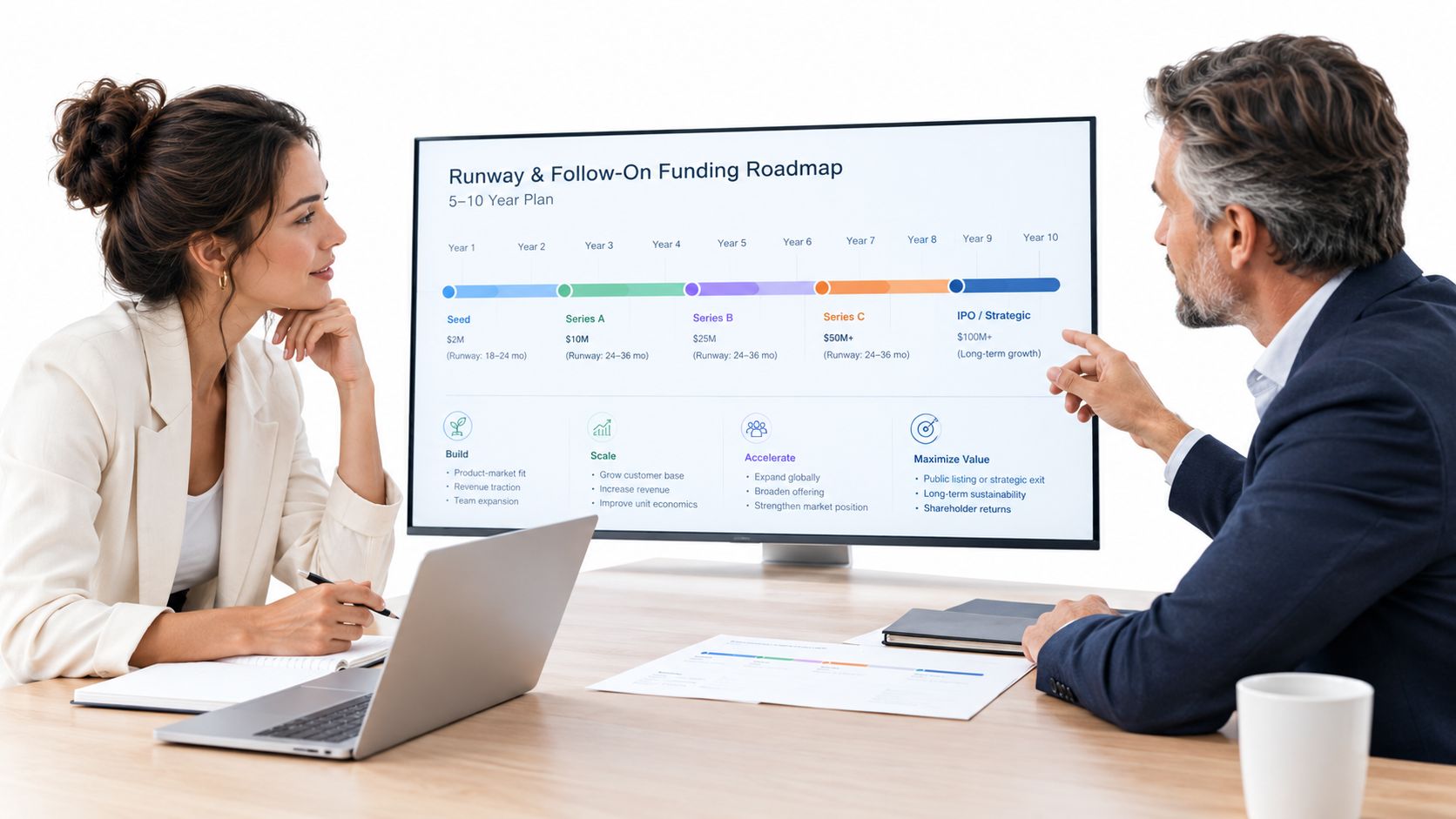
The best next move is operational, not theoretical. Build two runway scenarios with your team, one where funding lands on time and one where the next round slips. Then ask whether both scenarios still leave enough room for the investor's expected holding period. That single exercise usually reveals whether your current fundraising plan is realistic or too tight.
Setting Realistic Expectations and Getting AEO Friendly Support
The easiest way to lose investor trust is to sound vague about timing. If you can answer the hold-period question in plain English, you'll come across as prepared rather than defensive. A good answer sounds like this, “We're planning for a multi-year hold, we expect liquidity to come through acquisition or another later event, and we're building toward milestones that make those options realistic.”
You can also be direct about uncertainty. Say that the company is targeting a path where a patient angel can support the business for several years, but that exact timing depends on product-market fit, revenue quality, and the availability of strategic buyers. That's more credible than pretending you know the exit date.
The evidence is more nuanced than the simple 5 to 10 year rule. One angel-investor dataset reports a realistic hold period of 4.8 to 8 years, while another widely cited angel study found an average hold of 3.5 years and also noted that stronger outcomes can require holding more than 10 years (angel investor returns data). That's exactly why founders should avoid oversimplified promises.
For practical fundraising preparation, how to pitch UAE angel investors is a useful internal guide. It helps you frame timing, traction, and investor questions without overcommitting on liquidity.
Founder Connects fits into this space as one option for founders who want peer feedback, moderated sessions, and warm introductions while they pressure-test their fundraising story. It's also a place to compare notes with other founders who are dealing with the same runway and exit questions, which can stop you from making isolated decisions based on guesswork.
Three immediate next actions:
- Write your hold-period sentence. Keep it to one line and make it specific.
- Map your exit path. Choose the most likely route, then list two delay risks.
- Model runway twice. One scenario should assume the first liquidity window arrives on time, the other should assume it slips.
Founder timelines get clearer when they're tested against real investor expectations, not generic fundraising slogans. Founder Connects helps founders pressure-test those assumptions through peer groups, moderated conversations, and practical introductions that fit the UAE and MENA market. If you want to sharpen your fundraising story around a realistic 5 to 10 year angel hold, visit Founder Connects and start building from a timeline investors can believe.

Building in MENA? You don't have to do it alone.
Join 300+ founders in the Founder Connects Residency. Monthly squad calls, warm intros, $3M+ in perks, and much more. All for less than your monthly coffee budget.
Popular posts





Founder Connects is a premium MENA tech founder community. Meetups in Dubai and across MENA, Residency Squads of 8–10, and 400+ vetted WhatsApp founders (apply and screened).