

Business Networking Events for UAE Founders in 2026

Building in MENA? You don't have to do it alone.
Join 300+ founders in the Founder Connects Residency. Monthly squad calls, warm intros, $3M+ in perks, and much more. All for less than your monthly coffee budget.

You've just left another Dubai networking event with a phone full of LinkedIn scans, a pocket full of business cards, and no clear next step. You spoke to investors who weren't investing in your category, founders who wanted the same introductions you did, and service providers who opened with a pitch before learning what you're building.
That isn't a networking problem. It's a room-selection problem.
The UAE has built an unusually dense, institution-backed business-events ecosystem. Dubai hosted 301 business events in 2023, a 25% increase from the previous year, while Dubai Chamber of Commerce hosted 95 trade missions and business matchmaking events in the same year, according to Dubai events industry data. The opportunity is real, but abundance makes poor selection expensive.
This guide takes a different position from the usual event calendar. For UAE and MENA founders, the win isn't attending more business networking events. It's choosing fewer, higher-signal rooms, preparing with a specific outcome, and tracking whether a conversation became a useful introduction, meeting, hire, pilot, or partnership.
The 40 Business Cards and Zero Outcomes Problem
The founder stood near the edge of a crowded Dubai ballroom, tray in one hand and phone in the other. The event was hosted around the DIFC ecosystem, the room was full, and conversations moved at the speed of LinkedIn QR scans. By the end of the evening, he had 40 business cards, but no investor introduction, no credible senior-hire lead, and no customer conversation worth booking.
He had followed the accepted script. Arrive, circulate, exchange details, mention the company, post a photograph, and call the night productive. In reality, he'd become a card collector, which is the default mode of UAE networking in 2026.
Large rooms aren't automatically bad. Dubai World Trade Centre reported 2.47 million participants across exhibitions, conferences, seminars, and business events in 2023, and networking was identified as the top reason for 70% of B2B event attendees in the UAE events dataset covered by Reuters' report on Dubai's MICE sector. The problem is walking into a large room without knowing which conversations matter.
The room is the product
A high-signal room has fewer seats, a defined attendee mix, and a stated outcome. It might be a founder dinner for B2B operators, a FinTech roundtable with banking decision makers, or an invite-only peer session for founders at a similar stage. You should know why the room exists, who it is designed for, and what a good conversation should produce.
Practical rule: Don't ask which event you should attend next. Ask which type of room could move the business forward now.
That distinction also applies outside the UAE. If you're comparing formats or looking for ideas on how professional communities structure focused gatherings, the guide to best DC networking events offers a useful contrast to the broad mixer model.
Every recommendation that follows is a filter. Use it to judge attendance, prepare properly, and measure the result. The objective isn't a fuller calendar. It's a network that produces access, insight, and progress.
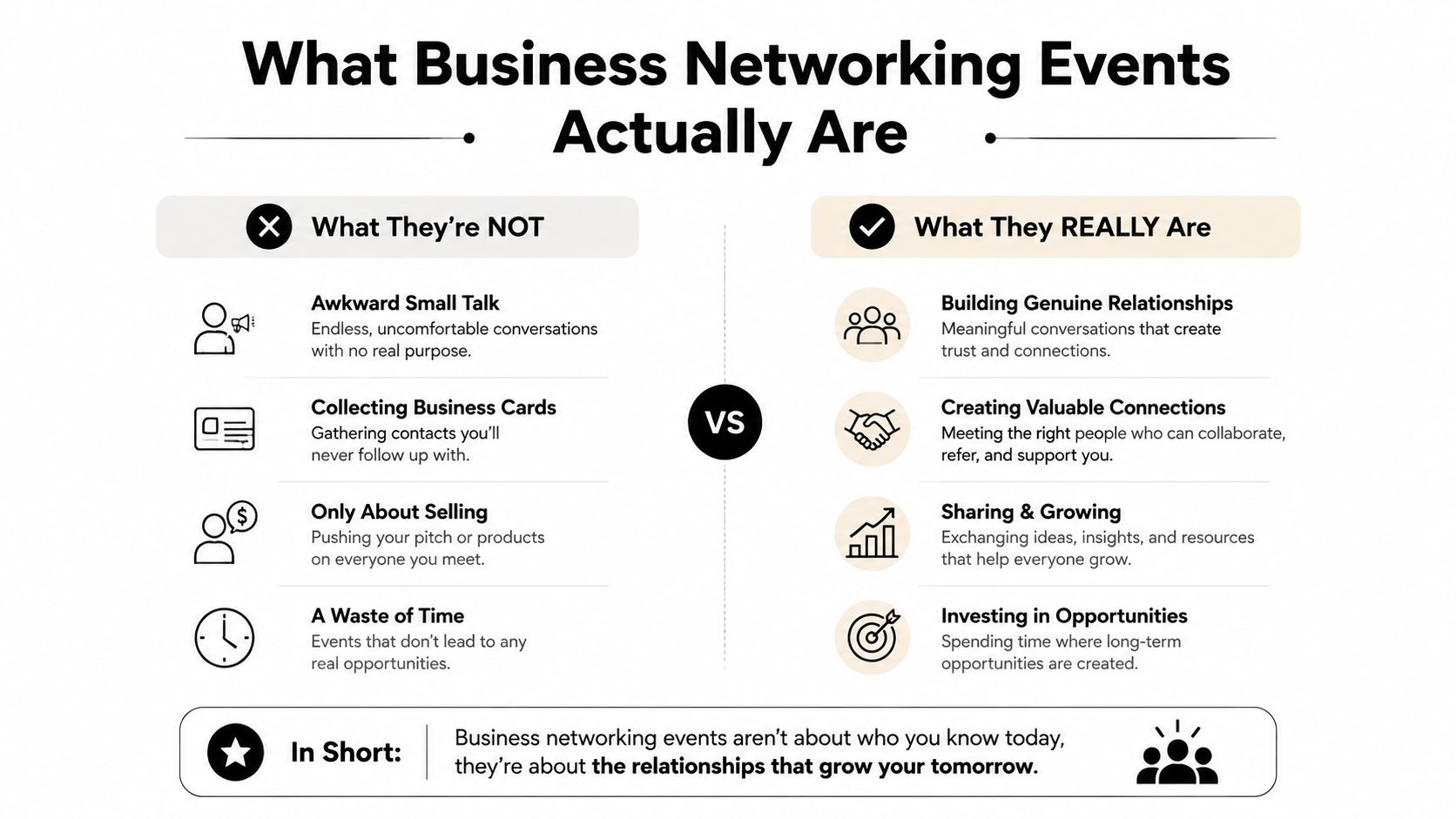
What Business Networking Events Actually Are
A business networking event is a structured gathering where founders, operators, investors, enterprise buyers, or ecosystem partners meet with an implicit commercial purpose. They exchange context, introductions, market knowledge, hiring leads, or deal opportunities. The relationship is the deliverable, not the speech on stage.
The UAE's event scene includes several distinct formats. Treating them all as interchangeable is how founders end up in the wrong room.
Match the format to the job
- Large mixers: Useful for broad awareness, brand visibility, and discovering adjacent sectors. They're weak when you need a specific introduction.
- Sector conferences: FinTech, artificial intelligence, climate, logistics, and health gatherings concentrate specialist knowledge and buyers. Attend with meetings planned, not with the hope that a corridor conversation will solve your pipeline.
- Demo nights: Strong for product feedback, early visibility, and investor preparation. They work best when the audience understands the category.
- Founder dinners: Small tables create more time for context, especially when the host screens for stage, sector, or role.
- Invite-only salons: These are useful when access, trust, and sensitive operating discussions matter more than exposure.
- Accelerator demo days: Designed around investor and partner access, but founders need to know whether the audience fits their funding stage.
- Curated peer cohorts: These prioritise repeated interaction, accountability, and practical problem-solving over one-off introductions.
Dubai, Abu Dhabi, and Sharjah offer a broad mix of these rooms. UAE startup-meetup listings cover 10 meetup options across Dubai, Abu Dhabi, and Sharjah, with the observation that smaller rooms can be better for founder networking than large expo floors, as described by Founder Connects' UAE startup meetups guide.
A conference may deliver content, a trade show may deliver product discovery, and a mixer may deliver exposure. A networking event should deliver a path to a relationship. Volume is not value when the audience, purpose, and follow-up process don't align.
The Benefits Founders Actually Care About
“Build relationships” is too vague to guide a founder's calendar. You need to decide which outcome matters before you enter the room.
The six outcomes below are the ones worth pursuing:
- Warm investor introductions. A relevant introduction from a trusted operator is more useful than a cold pitch to every investor in attendance.
- Customer or pilot validation. The right buyer can tell you whether the problem is urgent, budgeted, and locally relevant.
- Senior hiring signal. UAE expansion often requires regional general managers, product leaders, and operators who understand the market rather than only the job description.
- Co-founder matching. This demands repeated conversations and evidence of working style. A single fast introduction rarely provides enough information.
- Distribution partnerships. A channel partner can help you reach customers more efficiently than building every route yourself.
- Peer accountability. Founders need candid feedback, decision support, and someone who notices when a commitment hasn't been completed.
The priority changes with company stage.
Pre-seed
Prioritise peer accountability and early customer validation. You need people who will challenge the problem definition, test the assumptions, and introduce you to potential users. A small founder dinner where one participant understands your buyer can outperform a room packed with generic startup enthusiasm.
Series A
Shift towards hiring signal and investor access. You're likely making more complex decisions around leadership, regional growth, and capital. Look for events where experienced operators, investors, and relevant enterprise stakeholders are present.
Growth stage
Focus on distribution partnerships and enterprise introductions. Depending on your sector, that may include access into organisations such as ADNOC, Emirates NBD, or government entities. The point isn't to name-drop these institutions. It's to seek a credible route to the right decision maker, procurement context, or local partner.
A fintech founder, for example, may attend a Hub71 dinner not to meet everyone, but to find one person who can explain the path to a banking pilot. That is a sharper objective than “networking”.
| Stage | Top Priority Benefits | Secondary Benefits |
|---|---|---|
| Pre-seed | Peer accountability, customer validation | Co-founder conversations, early market feedback |
| Series A | Senior hiring signal, investor access | Customer pilots, strategic peer support |
| Growth stage | Distribution partnerships, enterprise introductions | Executive hiring, cross-border expansion insight |
Choose one primary benefit for the next event. If you chase all six at once, you'll recognise interesting people but fail to make a useful request.
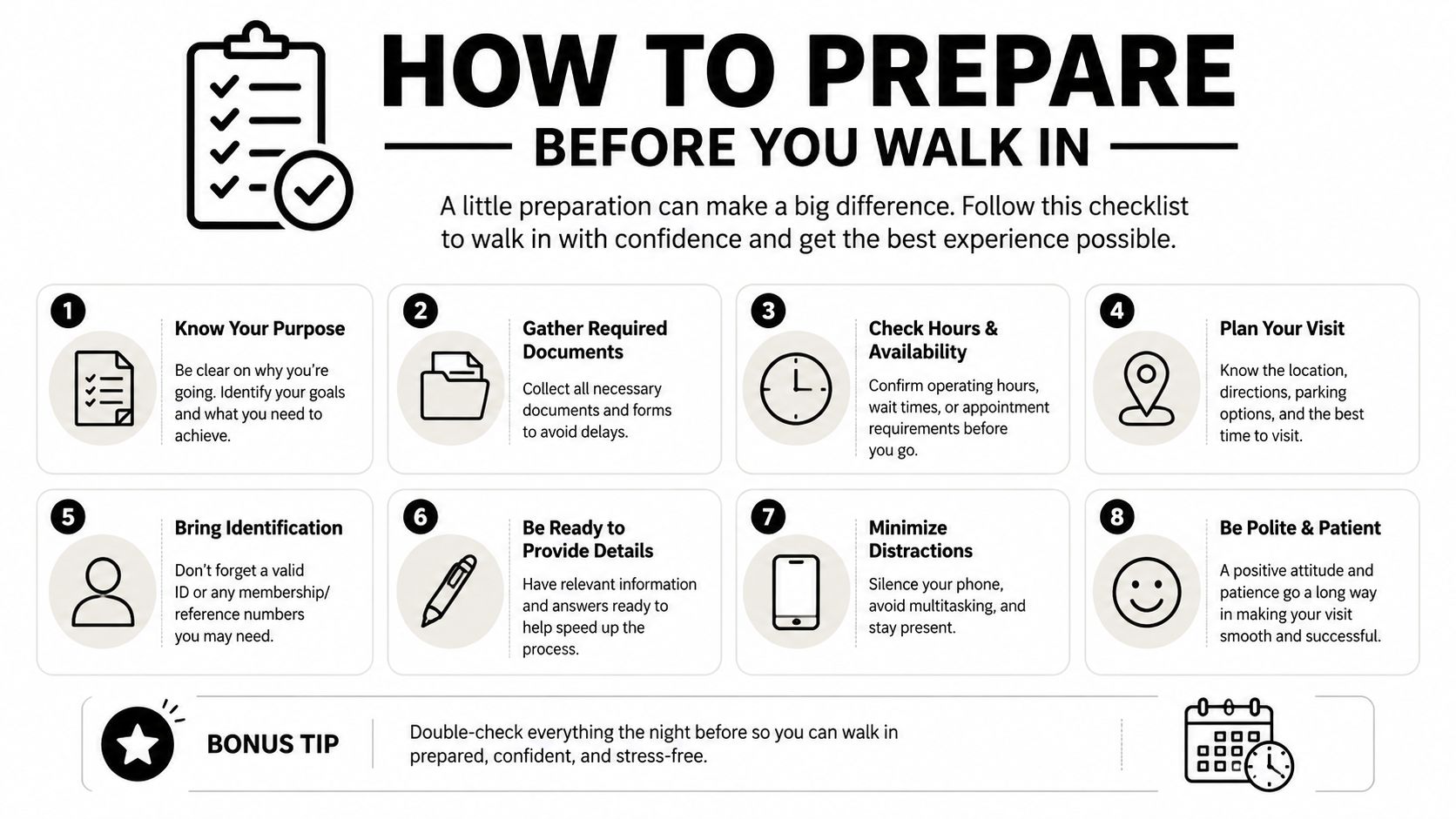
How to Prepare Before You Walk In
A crowded Dubai room can produce plenty of introductions and no progress. Fix that before registration. Write one result you want within the next 30 days: three qualified customer conversations, two investor or partner introductions, one senior-hire lead, or sharper feedback on one strategic assumption.
Choose the event only if its attendee mix supports that result. Build a target list of five to ten relevant people, then check their role, company, market, and likely priorities. A famous title is useless if that person cannot help with your current objective.
If you are organising the event, build a pre event survey to learn what attendees want and group people around related needs. Do not leave the room to form randomly.
Prepare in 30 minutes
- Define the outcome: Write one primary goal and the next action it should produce.
- Map the room: List five to ten relevant attendees. Add one person who could introduce you to each.
- Write the one-liner: Explain the problem, who experiences it, and your unfair insight. Skip your funding history and feature list.
- Prepare two questions: Ask how buyers currently solve the problem or what blocks adoption in the UAE.
- Choose one request: Ask for a customer conversation, a relevant introduction, or feedback on a defined assumption.
- Set the follow-up rule: Decide what you will send within 24 hours and which conversations deserve a meeting.
- Bring a capture system: Your phone is enough. Record the person's context, the issue they mentioned, and the promised next step.
Arrive early for one unhurried conversation. Use it to test fit, not deliver a rehearsed speech. Ask what the other person is working on, listen for a problem you understand, then explain your own work only when it fits.
Your digital profile should support the same conversation. Apply these LinkedIn networking tips for UAE founders so your profile and follow-up reflect your in-person objective.
Within 24 hours, send a personal note. Mention the specific discussion, include any useful resource or introduction you promised, and propose a clear next step. If you cannot write that message without checking your notes, capture better context next time.
Generic Mixers vs Curated Founder Rooms
A crowded Dubai mixer can fill your phone with contacts and still leave you without a useful conversation. Generic events suit broad awareness, quick market sensing, and introductions across industries. They also attract people with unrelated goals, uneven preparation, and little reason to discuss the problem your company is solving.
Curated founder rooms make a different trade. Invite-only dinners, moderated peer groups, and structured salons may ask for an application or background details before admission. That extra step filters out attendees who only want to sell, collect contacts, or ask indiscriminately for capital. The payoff is a room where founders can discuss decisions, constraints, and regional context with greater honesty.
Selection alone does not guarantee quality. A small gathering fails when one personality controls the conversation, the host does not moderate, or every participant sits at the same stage. A large conference can still produce strong outcomes if you review the attendee list, arrange side meetings, and arrive with a clear purpose.
Use these questions before you register:
- Who is in the room? Look for operators, investors, founders, and buyers connected to the problem in front of you.
- Why are they attending? A customer-discovery session creates different conversations from an event built mainly for visibility.
- How will people interact? Moderation, thoughtful introductions, table prompts, and facilitated matching usually outperform unplanned circulation.
- What continues afterwards? Check whether the host supports introductions, follow-up, or another setting for useful conversations.
- Does the host care about outcomes? Registration volume says little about qualified introductions, meetings, or partnerships.
| Format | Best For | Watch For | Main Trade-off |
|---|---|---|---|
| Large mixer | Awareness and broad discovery | Weak screening, unclear attendee intent | Reach over relevance |
| Sector conference | Specialist knowledge and buyer access | Too much passive attendance | Content can crowd out conversation |
| Founder dinner | Trust and detailed operating discussion | Stage mismatch or poor moderation | Smaller reach |
| Invite-only salon | Sensitive, high-context introductions | Opaque selection criteria | Access requires fit |
| Peer cohort | Accountability and repeated support | Group stagnation or excessive similarity | Time commitment |
The UAE fit matters. A founder may need people who understand regulation, market access, regional hiring, procurement, or cross-border expansion. A founder-only room can beat a generic business event when the discussion requires candid operating context, especially across Dubai, Abu Dhabi, Sharjah, Saudi Arabia, or another MENA market.
If you are comparing a formal referral organisation with a founder community, this guide to BNI and founder communities clarifies whether structured referrals or peer-led problem-solving matches the job.
Choose the room for the outcome you need. Skip events that offer noise without fit.
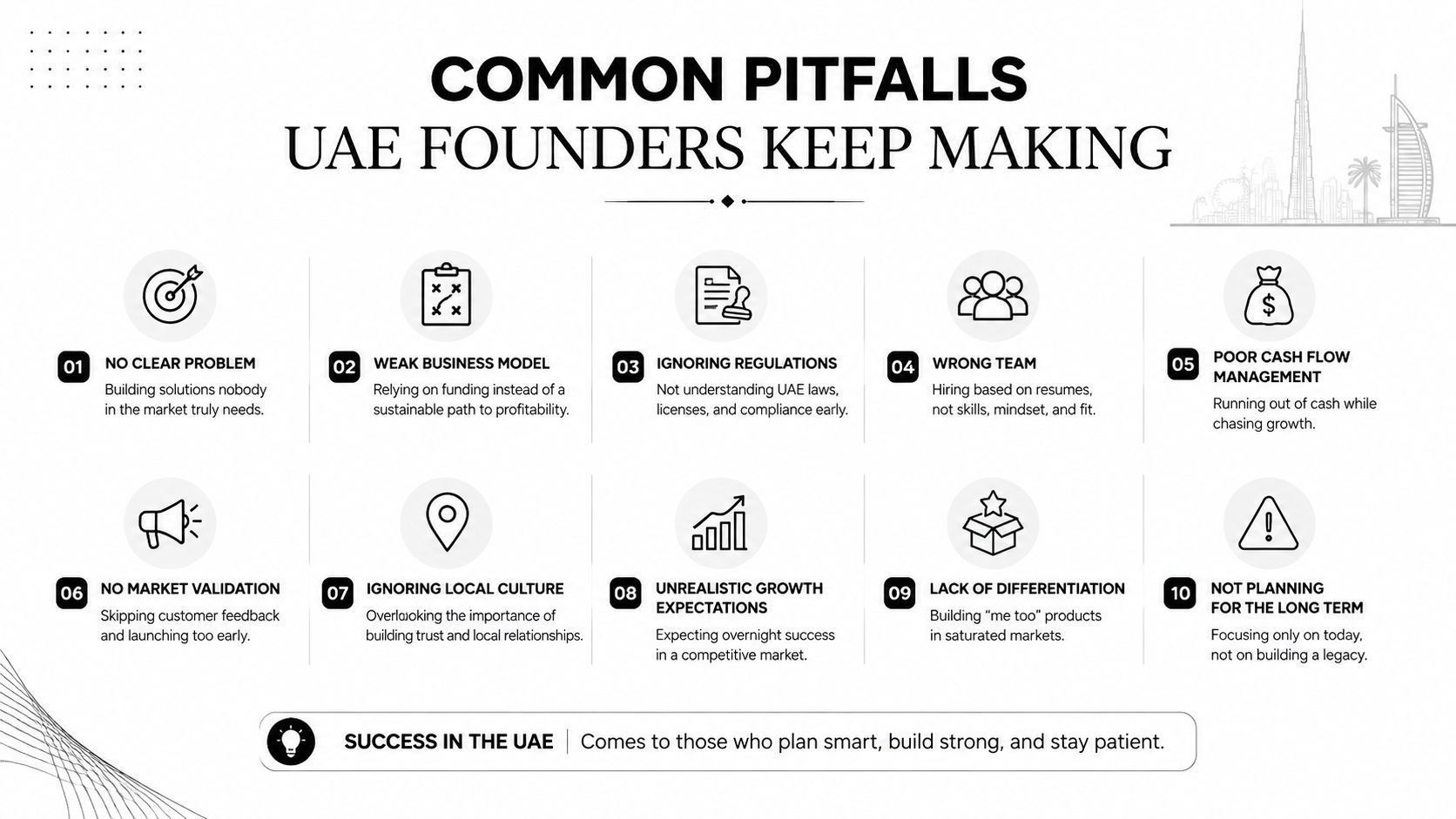
Common Pitfalls UAE Founders Keep Making
A crowded room can still produce a weak business night. The usual failure is confusing activity with progress: collecting 40 cards, posting selfies, and adding LinkedIn contacts while no customer, hire, investor conversation, or partnership moves ahead.
Use a target list instead. After each qualified conversation, note the person's problem, the contribution you could make, and one agreed next step. Without those three details, the contact is interesting but unproven.
Where the night goes wrong
Pitching before listening turns a potentially useful conversation into a product monologue. Ask what the other person is trying to accomplish, then explain your product only if the problem and your offer match.
Choosing the wrong stage wastes attention. A pre-seed founder seeking product feedback has little reason to spend the evening with enterprise buyers. A scaling operator entering the Gulf needs regional operating context, not a room filled only with first-time founders.
Ignoring geography creates bad assumptions. A discussion that helps in Dubai may not answer questions about Abu Dhabi, Sharjah, Saudi Arabia, or another MENA market. Check whether attendees understand the geography you are targeting, including its regulation, procurement, hiring, and access patterns.
Skipping follow-up throws away the warmest moment. Send a concise note within 24 hours, mention the conversation, offer one useful attachment or introduction, and suggest a specific call.
Measuring exhaustion rewards the wrong event. A busy evening proves only that you were busy. Record warm leads, qualified introductions, meetings booked, and deals or hires influenced over 30, 60, and 90 days.
Start with a better question: “What are you trying to make happen in this market?” Listen for a problem you can address or a person you can introduce. Then make one relevant request, rather than presenting your entire company.
The useful contact isn't the most impressive person you meet. It's the person connected to the next decision your company needs to make.
Before registering, inspect the host's criteria, format, audience, and follow-up process. Choose fewer, higher-signal rooms, prepare specific requests, and leave generic mixers that offer noise without fit. A list of ten common business pitfalls that startup founders in the UAE often face during development.
Measuring Networking ROI Without Lying to Yourself
Most founders measure networking by mood. The event felt energetic, the room looked busy, and several people said they'd “love to stay in touch”. None of that tells you whether the event deserves another evening in your calendar.
Treat each event as a channel with a simple record. Capture five inputs:
- Qualified introductions made: Count introductions that connect you to a relevant decision maker, operator, buyer, investor, or partner.
- Warm leads captured: Record people who expressed a credible problem, need, or commercial interest.
- Follow-ups sent: Track messages sent within 48 hours while the conversation is still fresh.
- Meetings booked: Count calls, coffees, site visits, or working sessions that enter the calendar.
- Deals, pilots, or hires influenced: Credit the relationship when it contributes to a commercial or hiring outcome.
Review the lag, not just the night
A good event may create a meeting quickly, while a valuable investor or enterprise relationship may take longer. Review outcomes at 30, 60, and 90 days so one quiet week doesn't distort your judgement.
The practical scoring rule is blunt: if fewer than 20% of new contacts convert to a real follow-up, the room is probably wrong for your objective, according to the framework used here. That doesn't mean you failed. It means the audience, format, or request didn't create enough relevance.
| Metric | What to Count | Target per Event | 30-Day Review | 90-Day Review |
|---|---|---|---|---|
| Qualified introductions | Relevant decision makers or connectors | Set before attendance | Check introductions completed | Check relationship quality |
| Warm leads | People with a credible need or fit | Set by stage | Check active conversations | Check pipeline influence |
| Follow-ups sent | Personal messages within 48 hours | Complete for qualified contacts | Review response quality | Review continued engagement |
| Meetings booked | Confirmed next conversations | Set from the primary goal | Check attendance and fit | Check progression |
| Deals, pilots, or hires influenced | Outcomes with a traceable connection | Record without forcing attribution | Note early influence | Credit the relationship that advanced the result |
Don't credit the ballroom for a deal it didn't create. If an introduction led to an enterprise pilot, attribute the value to the person and relationship that moved the opportunity forward. The venue supplied access, but the connection did the work.
For practical execution after the event, use this networking follow-up checklist to keep the handoff from conversation to action visible.
Numbers beat feelings, but only when the numbers describe the right outcome.
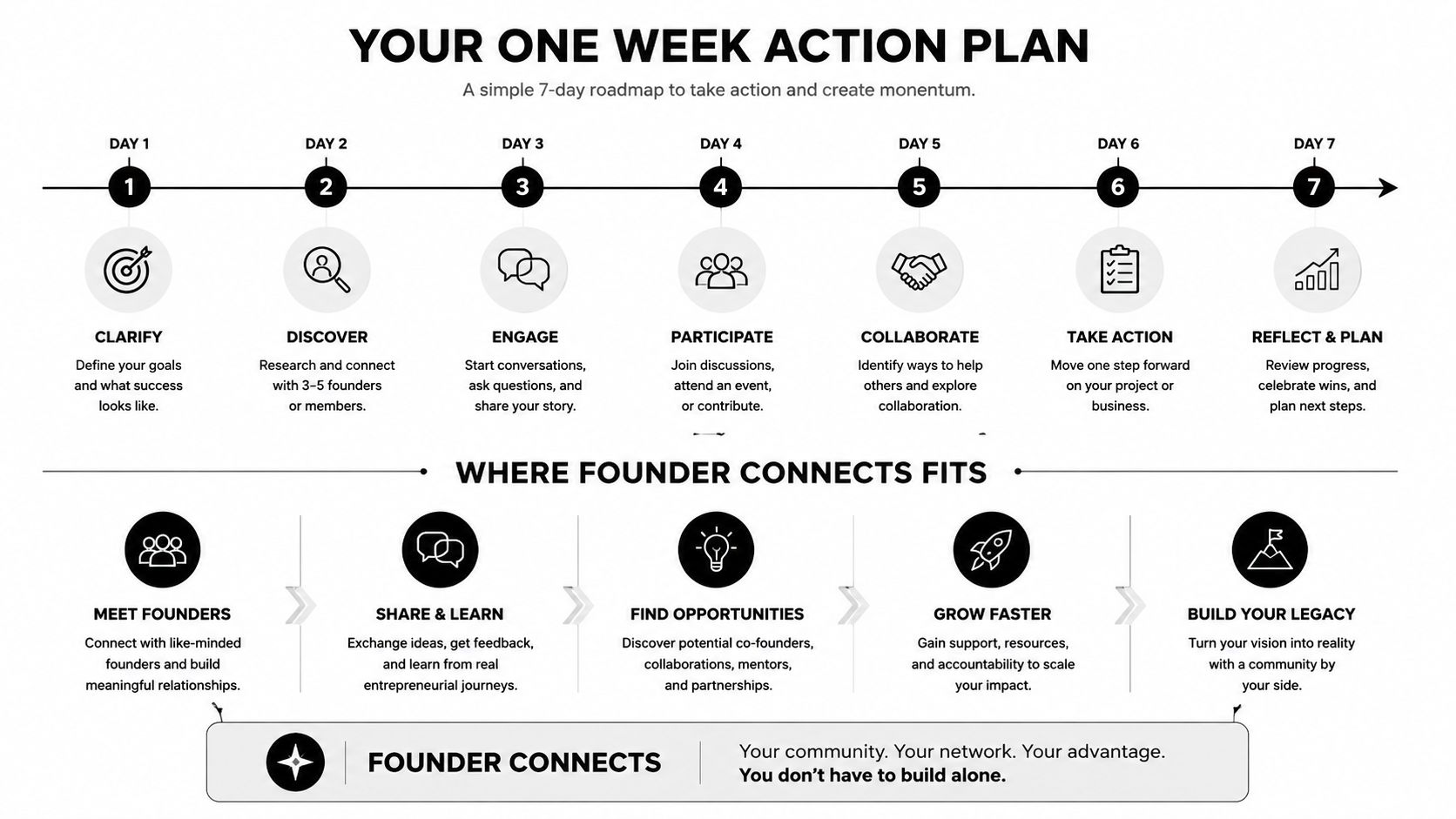
Your One Week Action Plan and Where Founder Connects Fits
You don't need a new networking philosophy. You need a week with a smaller, more deliberate operating rhythm.
Run this seven-day sprint
- Monday, audit: Review your last three events using the ROI scorecard. Put each into keep, test, or drop.
- Tuesday, sharpen: Write your one-liner and define the target list for the next room. Remove anyone who can't contribute to the immediate objective.
- Wednesday, compare: Find two curated options alongside any large conference already on the calendar. Assess the audience, format, screening, and follow-up.
- Thursday, systemise: Prepare two follow-up templates and create a CRM tag for networking-sourced deals, pilots, hires, and introductions.
- Friday, attend: Choose one event and cap yourself at five real conversations. Leave with notes and a next step, not just new contacts.
- Weekend, convert: Send follow-ups, make any promised introductions, and book one next conversation.
- Review, decide: Keep the event type that produces relevant movement. Test an alternative format where results are weak. Drop rooms that repeatedly generate noise.
A weekly community can provide the continuity that a one-off event lacks. The Founder Connects community page lists weekly Meetups in Dubai, and Dubai is one of five live chapters, alongside Abu Dhabi, Nairobi, Beirut and Cairo, with Riyadh, Doha, Muscat, Casablanca, Toronto and Hamburg coming soon.
Founder Connects fits as an ongoing layer between scattered business networking events. It uses curated founder experiences, moderated peer groups, recurring sessions, and intentional one-to-one introductions to support accountability and practical collaboration. Its event listings also show recurring meetup activity, including a Dubai founder gathering limited to founders, co-founders, senior directors, and company decision makers, plus a separate Friday meetup in Oud Metha scheduled from 4:00 PM to 5:00 PM and marked free to attend, based on Dubai founder meetup listings and Dubai investors group listings.
The point isn't to replace every conference or sector event. Use large gatherings when you need market exposure, and curated rooms when you need trust, context, and a next step. Your network compounds through repeated, relevant interaction, not through a single crowded evening.
Founder Connects offers UAE and MENA founders curated peer groups, moderated sessions, intentional introductions, and recurring founder events built around practical progress rather than surface-level contact collection. If your next networking event should produce sharper feedback, stronger accountability, or a relevant introduction, visit Founder Connects and explore the community.

Building in MENA? You don't have to do it alone.
Join 300+ founders in the Founder Connects Residency. Monthly squad calls, warm intros, $3M+ in perks, and much more. All for less than your monthly coffee budget.
Popular posts





Founder Connects is a premium MENA tech founder community. Meetups in Dubai and across MENA, Residency Squads of 8–10, and 400+ vetted WhatsApp founders (apply and screened).