

Pitch Practice Dubai: Where Founders Hone Skills

Building in MENA? You don't have to do it alone.
Join 300+ founders in the Founder Connects Residency. Monthly squad calls, warm intros, $3M+ in perks, and much more. All for less than your monthly coffee budget.

For pitch practice in Dubai, choose the format that matches the feedback you need, rehearse against a hard time limit and bring one precise question for the people listening. Founder Connects' Pitch Night gives ten founders 60 seconds each to pitch after one marquee founder shares their full story, then the room votes.
You might have a polished deck but still struggle to explain what your startup does before a listener's attention moves on. Or you may have a clear short pitch, but no answer ready when someone asks who pays, what evidence supports demand or what you need next. The useful choice isn't a bigger stage only. It's a place where you can practise the skill that's weakest, whether that means repeated mentor feedback, a timed live pitch or a more demanding follow-up conversation.
Dubai's founder support is growing alongside its business community. Dubai SME facilitated the launch of 3,461 new Emirati businesses in 2024 and delivered training programmes and awareness sessions to 5,498 entrepreneurs that year, according to the Dubai Media Office's update on Dubai SME. For your next rehearsal, write down the customer problem, your solution, the evidence you have and the one action you want from the listener. Then build a compelling slide presentation that supports the story rather than carrying it.
1. Founder Connects
Founder Connects suits founders who want peer learning and practical feedback, not a room built around surface-level networking. Its Dubai Pitch Night Meetup gives founders a clear rehearsal format: one marquee founder shares their full story, then ten founders each pitch for 60 seconds and the room votes. Pitching is optional. Founders opt in during registration, and presenters are selected at random from those who opted in during the morning session.

The short format makes this a useful clarity test, not a substitute for investor diligence or customer validation. Prepare four points: the customer problem, the product or solution, evidence that people want it and the specific support or introduction you're asking for. Practise aloud with a timer until the core message is clear without slides. The room vote can help you see whether people understand the idea quickly, but it can't tell you whether customers will pay.
Practical rule: Ask listeners what they understood before explaining what you meant. The gap between those answers is the work.
Founder Connects also offers free virtual Playbook sessions and Virtual Residency Squads, where 8 to 10 founders meet monthly to work through shared challenges and tested playbooks. Its WhatsApp community has 500+ vetted founders who apply and are screened, with a 23.3% acceptance rate. Residency costs $582 for 6 months. The community has 300+ Residents, and its live chapters include Dubai, Abu Dhabi, Nairobi, Beirut and Cairo.
The trade-off is access: joining the WhatsApp community requires an application and screening, and Meetup formats can vary. Check the current listing before you go. For a stronger rehearsal, use Founder Connects' guide to giving better startup pitches, then bring one specific question for the room.
- Best for: Founders who want peer accountability, a timed public run-through or virtual participation.
- Prepare: A slide-free 60-second pitch and a direct ask.
- Check: The current Meetup format and registration details on Founder Connects.
2. in5 Innovation Centers
If your main weakness is handling investor questions, in5 is a stronger fit than an informal pitch circle. Its Investor Readiness Bootcamp includes hands-on work on investment storytelling and investor-style questions. Pitch with Confidence sessions focus on investment narratives and difficult questions, while founder pitch opportunities sit within its Tech, Media and Design community programmes.

That structure can help you move beyond a smooth delivery. A founder might explain the product clearly yet struggle to defend customer usage, revenue assumptions or the amount of capital sought. In practice, ask a peer to interrupt after the pitch and challenge one claim at a time. “Who pays?” and “What evidence backs that?” are more useful rehearsal prompts than “Did it sound good?”
The main trade-off is access. Some sessions may prioritise the in5 community, and availability and pricing can vary by programme or session. Check the current programme details directly on in5's website before planning around a specific session.
Use the session to test the substance as well as the delivery. Dubai Angel Investors' application requirements include the company summary, problem and target customer, customer usage and value, business model, revenue and customer numbers, team experience, milestones, key performance indicators, market size, financial projections and the amount and terms of capital sought. Treat those topics as a prompt for follow-up rehearsal, not a demand to cram every detail into the opening pitch.
For context on how structured programmes differ across the UAE, see this guide to UAE accelerators and incubators. Before you apply, ask in5 which upcoming session includes live pitch practice and whether participants receive individual feedback.
3. Dubai Technology Entrepreneur Campus (Dtec)
Dtec is worth considering when your startup sits in technology and you want pitch practice alongside a founder and business community. Its recurring pitch sessions and structured programmes can give founders a chance to test delivery, sharpen messaging and respond to questions. Themed calls, including MedTech and HealthTech, can make the rehearsal more relevant than a generic pitch room.
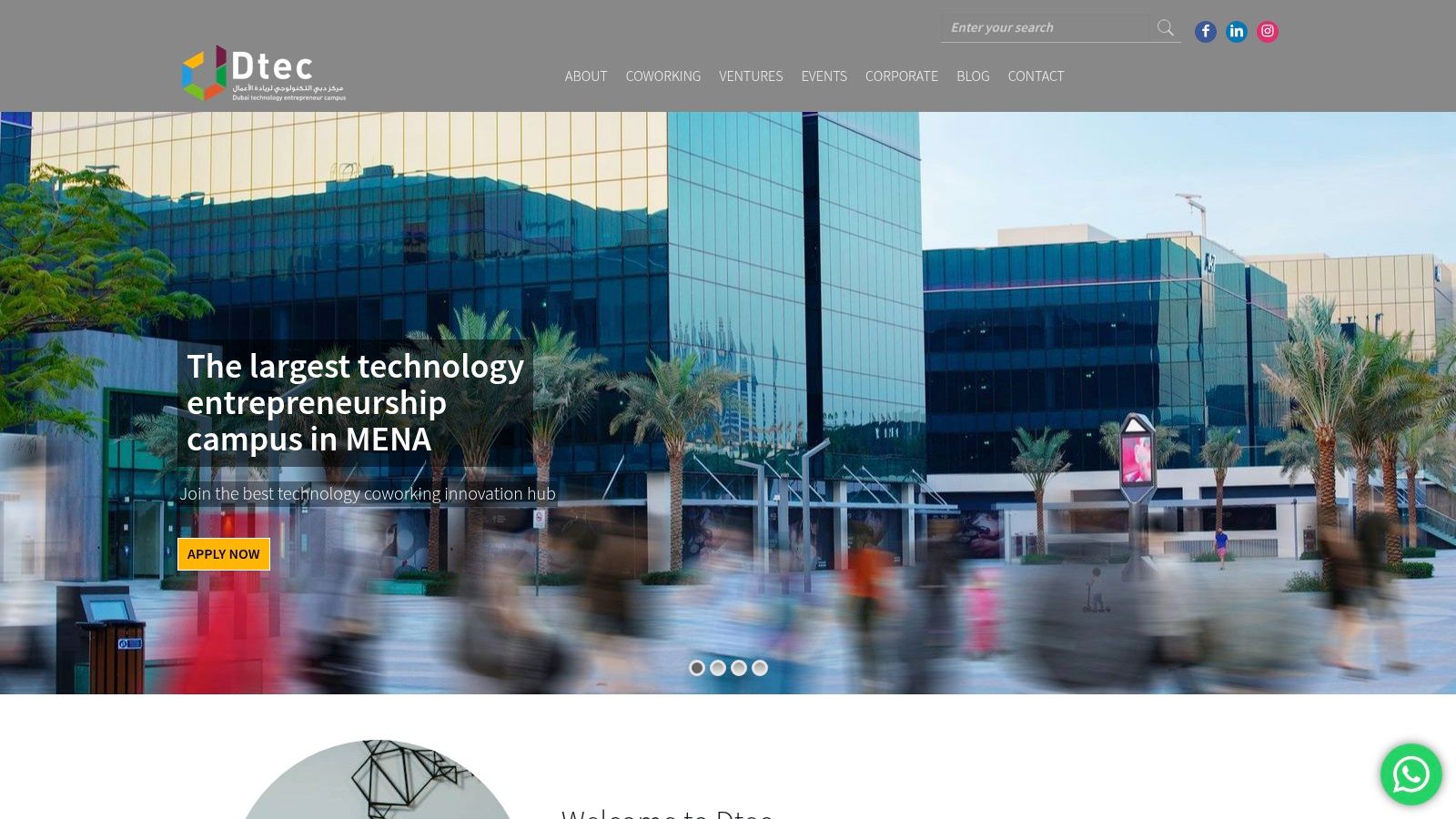
The campus setting is the practical advantage. You can use a pitch session to find out whether a technical product makes sense to someone outside the founding team, then keep refining the explanation through the wider technology community. If your product is complex, don't lead with a list of features. State who has the problem, what they do today and why your approach changes that decision.
Stage access may depend on programme eligibility or selection, and the format can differ between sessions. That makes Dtec less predictable for a founder who needs a guaranteed rehearsal slot by a particular date. Check the session requirements on Dtec's website, and ask whether you'll pitch, observe or receive feedback before committing time.
A useful practice prompt for a technology founder is: “What would a customer need to believe before agreeing to a pilot?” Make the answer specific to the UAE buyer, purchasing organisation or regulatory setting. The official Make it in the Emirates Startup Pitch Competition frames pitching as a way to connect startups with industry partners, investors and other ecosystem stakeholders. That's a good reason to prepare a sector-specific version of your pitch, not just a general company introduction.
4. Founder Institute GCC
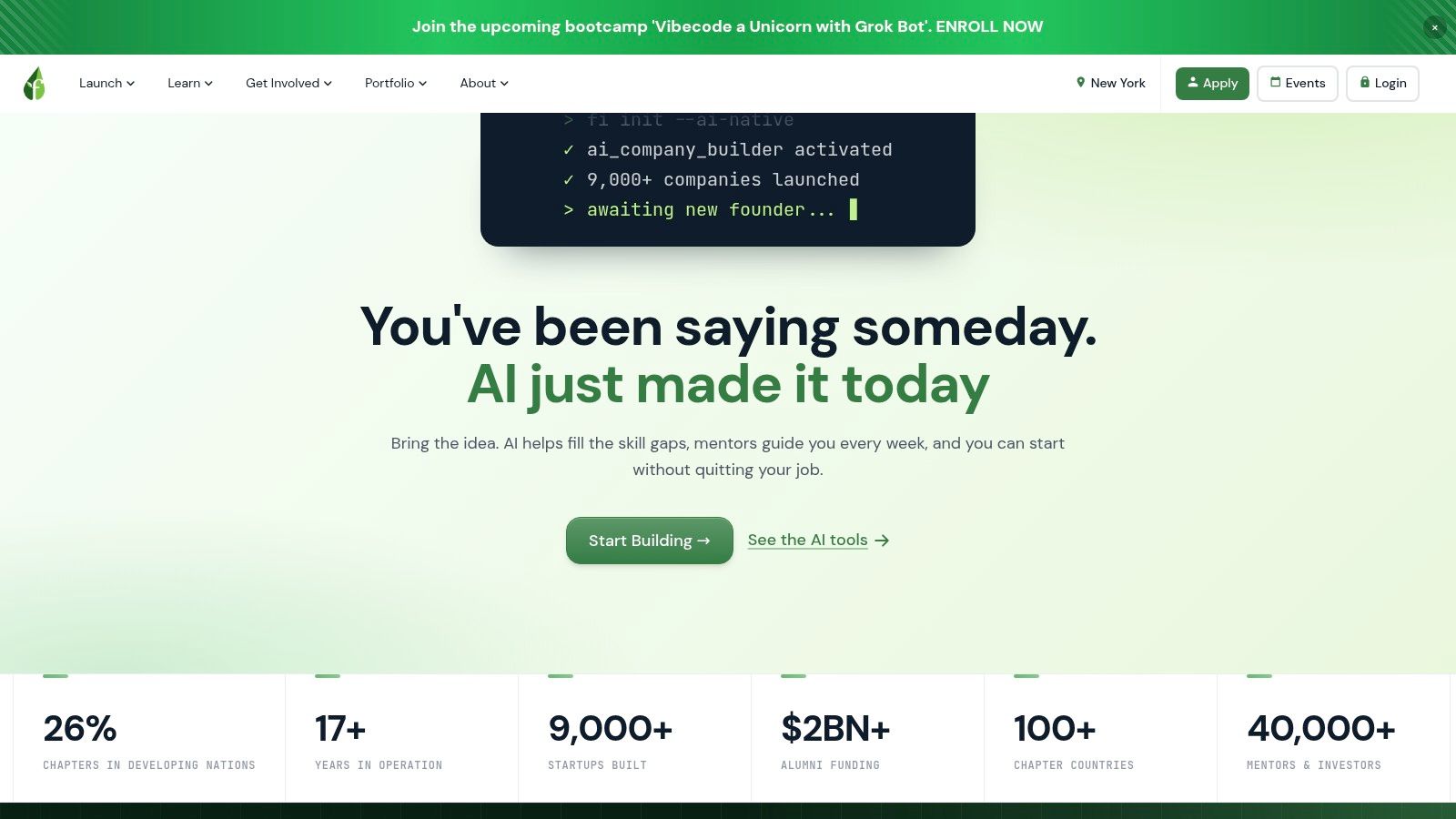
Founder Institute GCC is better suited to founders who need a practice rhythm than a one-off appearance. Its accelerator-style programme combines pitch-development modules, a dedicated Pitch Gym, regular mentor feedback and cohort milestones. The value is repetition: you can refine the story as the business develops, rather than rehearsing once and treating the pitch as finished.
A mentor can press you to separate a confident claim from evidence. If you say customers love the product, be ready to explain what they use, what they pay for and what they do next. If you're raising, explain what the capital will let the company achieve, rather than relying on a broad ambition to scale. Those answers make the short pitch more credible because the underlying business story holds together.
The trade-off is commitment. Cohort tuition applies, and the weekly structure takes meaningful time. Check current fees, requirements and schedule directly on Founder Institute before applying. This is less suitable if you only need a quick, low-pressure run-through before a Meetup.
Repeated feedback works only when you change the pitch between rehearsals. Keep a note of each challenge, the evidence you need and the line you'll rewrite.
The UAE's entrepreneurial intent also means founders can be at very different stages. The Ministry of Economy reported that around 67% of adults either know an entrepreneur or believe they have the skills to start a business, while 70% perceive strong local opportunities, in its Global Entrepreneurship Monitor 2024–2025 announcement. For an early-stage founder, use mentor sessions to test whether the opportunity is evidenced, not just whether the story sounds ambitious.
5. Startup Grind Dubai
Startup Grind Dubai can suit founders who want to test a pitch in front of a community without signing up for an accelerator. Its community Meetups may include founder showcases, live pitch exercises, audience reactions and judge-style feedback. That makes the format useful for pressure-testing your opening and checking whether you can explain the company without drifting into a product tour.
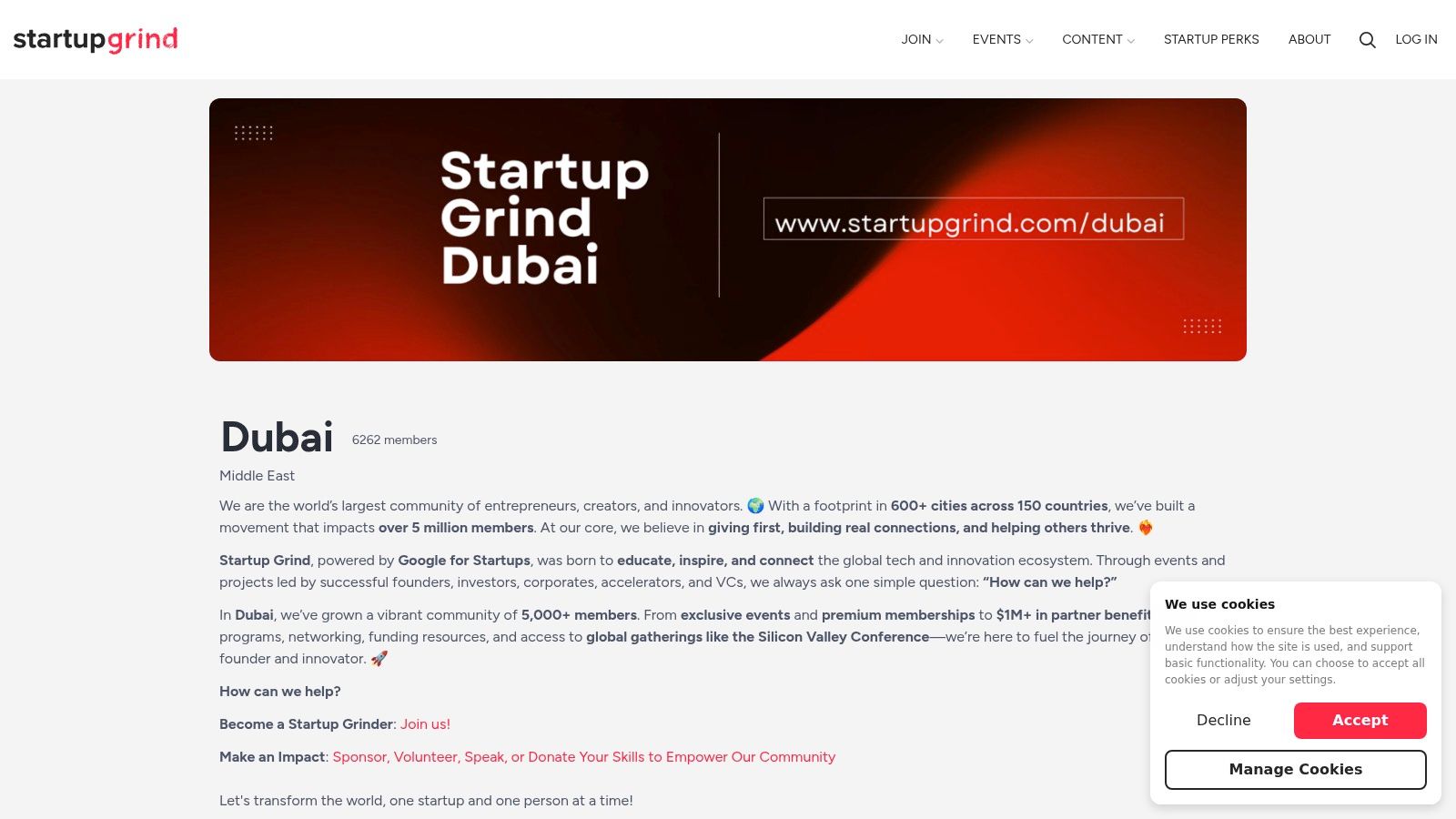
Live delivery forces you to notice where listeners lose the thread. If they can't repeat the problem, customer and ask after your pitch, simplify the opening before polishing the deck. A concise pitch can still lead to a useful follow-up conversation, but a warm audience reaction alone doesn't prove that the market wants the product.
Pitch slots may be limited or selected, and feedback depth can vary between Meetups. Check the format on Startup Grind Dubai and ask whether the session includes founder pitches or is primarily a conversation or showcase. Don't assume every Meetup offers stage time.
- Best for: Founders who want a live audience and a low-commitment way to test the opening.
- Ask beforehand: Will participants pitch, and what kind of feedback can presenters expect?
- Follow up: Compare the audience's understanding with actual customer feedback, using these customer feedback analysis strategies.
The audience may include operators and ecosystem participants with different priorities. Adapt the final ask to the room: request a customer conversation, a pilot discussion or a follow-up with someone who understands the sector. For a broader view of founder communities in the city, see this guide to founder communities in Dubai.
6. Founders Live Dubai
Founders Live Dubai's fast-paced pitch nights are useful when your pitch needs a sharper hook. Short founder presentations, live questions and audience voting make it easier to see whether listeners grasp the proposition and remember it afterwards. That's a different test from a longer mentor session, where you can explain context and work through detail.
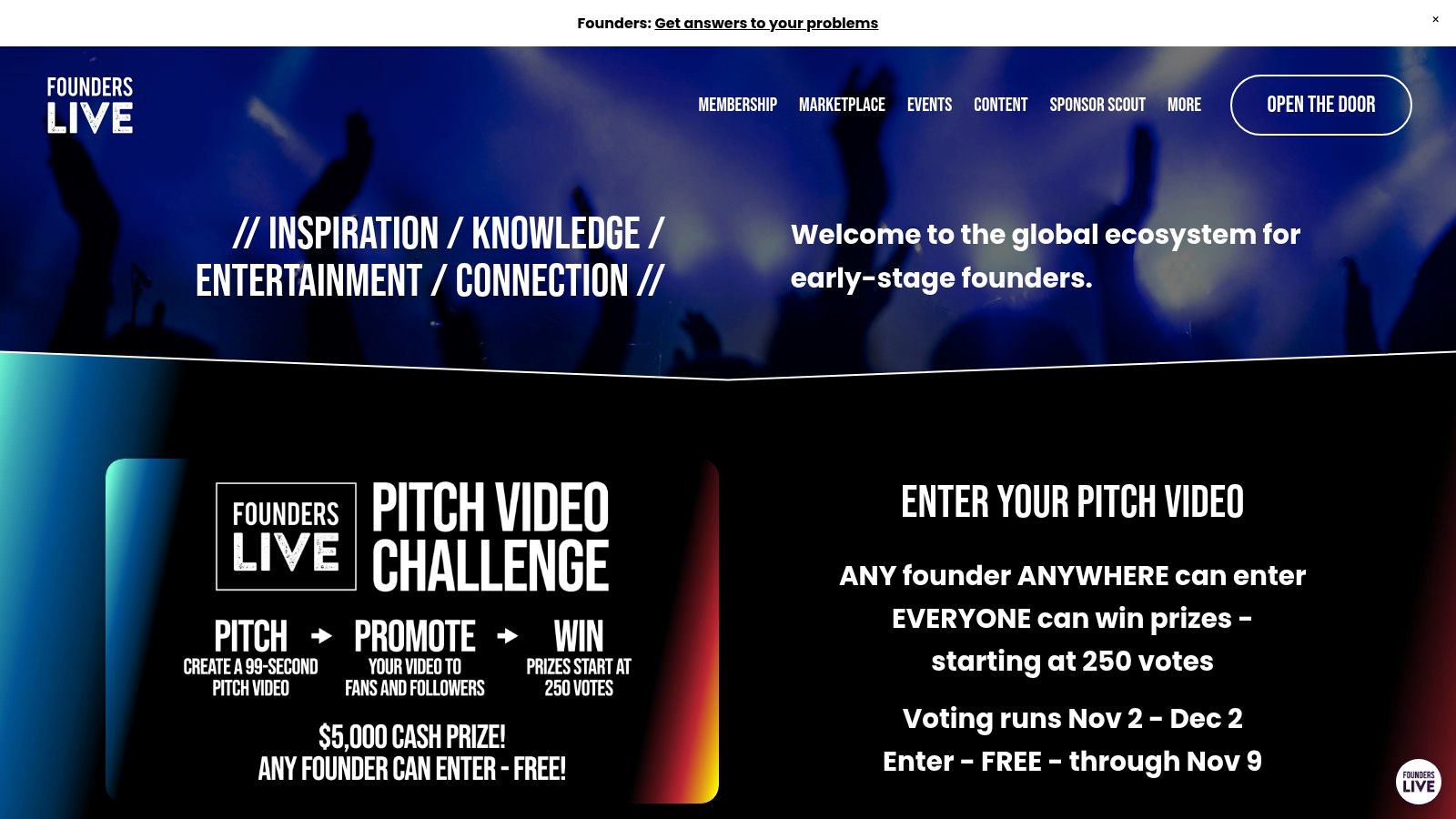
Use the room to check the order of your story. Lead with the customer's problem, explain the solution in plain language, then give one piece of evidence and finish with an ask. After you pitch, ask a listener to describe the company back to you without prompts. If they remember the feature but not the customer or value, change the sequence.
The format has limits. A short pitch can flatten a complex B2B sale, especially when the buyer, user and purchasing authority are different people. Stage slots may also be selective. Check the current format on Founders Live before treating a pitch night as a confirmed rehearsal opportunity.
Dubai's digital-startup pipeline includes a strong international and technology-led mix. The Dubai Chamber of Digital Economy supported 582 digital startups in the first nine months of 2025; 70% were international companies, and artificial intelligence represented 21% of supported firms, according to the Dubai Chambers announcement. If you're pitching an AI or SaaS product, prepare a longer follow-up that explains your data advantage, product performance, customer acquisition economics and UAE-to-MENA expansion logic. Keep the short version clear, but don't confuse brevity with proof.
7. TiE Dubai
TiE Dubai is a practical option for founders looking for a more targeted pathway to pitch opportunities. Its programmes can serve women founders, university entrepreneurs and wider startup communities, while selected showcases may combine stage time, mentorship and perspectives from ecosystem participants. For founders who've already rehearsed the story, a showcase can add pressure and introduce a more demanding audience.
The strongest reason to consider TiE is fit. A women-led or university startup may find a relevant track and mentor perspective that a general pitch night doesn't provide. Some opportunities may also lead to regional or global TiE stages, which makes the format useful for founders preparing to pitch beyond Dubai.
Eligibility requirements vary, and participation may involve an application or selection process. Confirm the criteria, format and feedback available through TiE Dubai before building your rehearsal plan around a particular track. Treat a showcase as a chance to test your commercial story, not to deliver it smoothly.
Before applying: Identify the audience you need to persuade, then ask whether the track gives you access to that kind of listener and feedback.
Prepare two versions of the pitch: a concise introduction for a general room and a sector-specific version that explains the UAE customer, purchasing organisation, regulatory setting or industrial use case. UAE pitch competitions can connect startups with industry partners and other stakeholders, so make your requested next step concrete. A listener should know whether you're asking for a pilot conversation, customer interview or investor follow-up.
Dubai Pitch Practice: 7-Program Comparison
| Program | 🔄 Implementation Complexity | Resource Requirements | 📊 Expected Outcomes | Ideal Use Cases | ⭐ Key Advantages |
|---|---|---|---|---|---|
| Founder Connects | Moderate; application screening for community access | Peer participation; residency costs $582 for six months; virtual and in-person options | Pitch practice, peer accountability, and practical feedback | Founders seeking ongoing peer support and concise pitch rehearsal | Vetted founder network and multiple participation formats |
| in5 Innovation Centers | Moderate; access and availability vary by program | Session or program access; pricing varies | Investor-focused storytelling and practice answering challenging questions | Founders preparing for investor meetings | Structured, investor-aligned rehearsal |
| Dubai Technology Entrepreneur Campus (Dtec) | Moderate; stage access may require selection | Program eligibility; access to campus and founder resources | Improved delivery and messaging through live feedback | Tech founders seeking pitch practice within a startup ecosystem | Recurring sessions and themed opportunities |
| Founder Institute GCC | High; structured cohort and weekly milestones | Significant time commitment; cohort tuition | Repeated rehearsal and mentor feedback to refine the pitch | Early-stage founders seeking sustained, structured development | Accountability and GCC-specific mentor and peer input |
| Startup Grind Dubai | Low to moderate; pitch slots may be limited | Event participation; availability varies | Live delivery practice and audience reactions | Founders testing a concise opening and message | Low-commitment exposure to fellow founders and operators |
| Founders Live Dubai | Low to moderate; stage slots may be selective | Event participation; short pitch format | Fast feedback on pitch clarity, hook, and memorability | Founders testing a simple, concise pitch | ⚡ Quick audience response and peer comparison |
| TiE Dubai | Moderate; applications and eligibility may apply | Program or showcase access; requirements vary | Mentorship, feedback, and potential progression to larger showcases | Women-led or university startups seeking targeted pitch pathways | Access to targeted programs and regional or global stages |
Choose the Feedback You Need
Match the format to the weakness you want fixed. A low-pressure community Meetup suits a founder who needs repeated run-throughs in front of peers. A structured cohort suits one who needs sustained mentor scrutiny over weeks. A live showcase suits one who already knows the story and wants to test delivery under stage pressure. A founder who cannot explain the customer problem clearly needs a different rehearsal from one who has traction but falters on questions about revenue, milestones or capital.
Decide what the room should assess before you attend. Ask for one specific critique: does the opening explain the customer, does the evidence support the claim, is the ask actionable. Rehearse aloud with a timer. Prepare a fuller fact sheet for follow-up questions so your short pitch and your detailed answers use consistent definitions and numbers.
A compelling story is not fundable proof. UAE startups raised $541 million across 114 deals in H1 2025, while fintech attracted $265.8 million across 35 deals, according to The Startup Scene's H1 2025 coverage. Use that context to ask a sharper question: what evidence is still missing from your own pitch, whether customer interviews, paid pilots, retention, regulatory readiness or unit economics?
For peer-led rehearsal, Founder Connects runs a timed Pitch Night where founders test clarity under a strict limit, supported by peer learning and accountability that keep the story improving after the stage. Check current booking details through Founder Connects Meetups or the Founder Connects booking page.
Bring a focused ask to the next Pitch Night, test your story with other founders and keep refining it with feedback that goes beyond the slides. Book your spot through the Founder Connects Meetups page.

Building in MENA? You don't have to do it alone.
Join 300+ founders in the Founder Connects Residency. Monthly squad calls, warm intros, $3M+ in perks, and much more. All for less than your monthly coffee budget.
Popular posts





Founder Connects is a premium MENA tech founder community. Meetups in Dubai and across MENA, Residency Squads of 8–10, and 400+ vetted WhatsApp founders (apply and screened).