
Saudi Chamber of Commerce: Navigate KSA Market Entry

Building in MENA? You don't have to do it alone.
Join 300+ founders in the Founder Connects Residency. Monthly squad calls, warm intros, $3M+ in perks, and much more. All for less than your monthly coffee budget.

The first time I expanded from the UAE into Saudi, I treated the process like a free zone setup. That was the mistake. I had the company docs ready, the trade name clear, and the team lined up, but actual movement started only when I understood how the Chamber sat inside the registration and relationship system.
My First Encounter with the Saudi Chamber of Commerce
In the UAE, founders get used to clean pathways. You pick a free zone, choose a licence activity, pay the fee, and move forward. Saudi felt different from day one. The system looked less like a productised setup flow and more like a live operating environment where registration, local credibility, and market access are tied together.
That difference catches a lot of UAE founders off guard. You think the Chamber is a stamp. In practice, it's part of the machinery that makes your Saudi presence work.
What changed things for me was dropping the “how do I complete this form?” mindset and replacing it with “who in this structure do I need to work with early?” Once you do that, the Saudi Chamber of Commerce stops looking like friction and starts looking like an asset.
Practical rule: In Saudi, the paperwork matters, but the sequence matters more.
The first useful mental model is this. A UAE free zone authority is usually a setup platform. A Saudi chamber is closer to a market institution. It touches registration, business representation, local introductions, and how companies plug into the commercial system in a specific city.
That's why founders entering Riyadh, Jeddah, or the Eastern Province shouldn't approach Saudi the way they approach a UAE licence renewal. The Chamber can slow you down if you ignore it. It can also speed up your commercial traction if you use it properly.
If you're still deciding where Saudi sits in your regional expansion plan, this Saudi market overview for founders is a useful starting point before you lock your entity structure.
A lot of official material describes chambers in broad terms. What founders need is simpler. What does the chamber do, what does it cost, what paperwork blocks people, and how do you get more from it than a mandatory registration line item? That's the essential playbook.
What the Chamber Actually Does for Founders
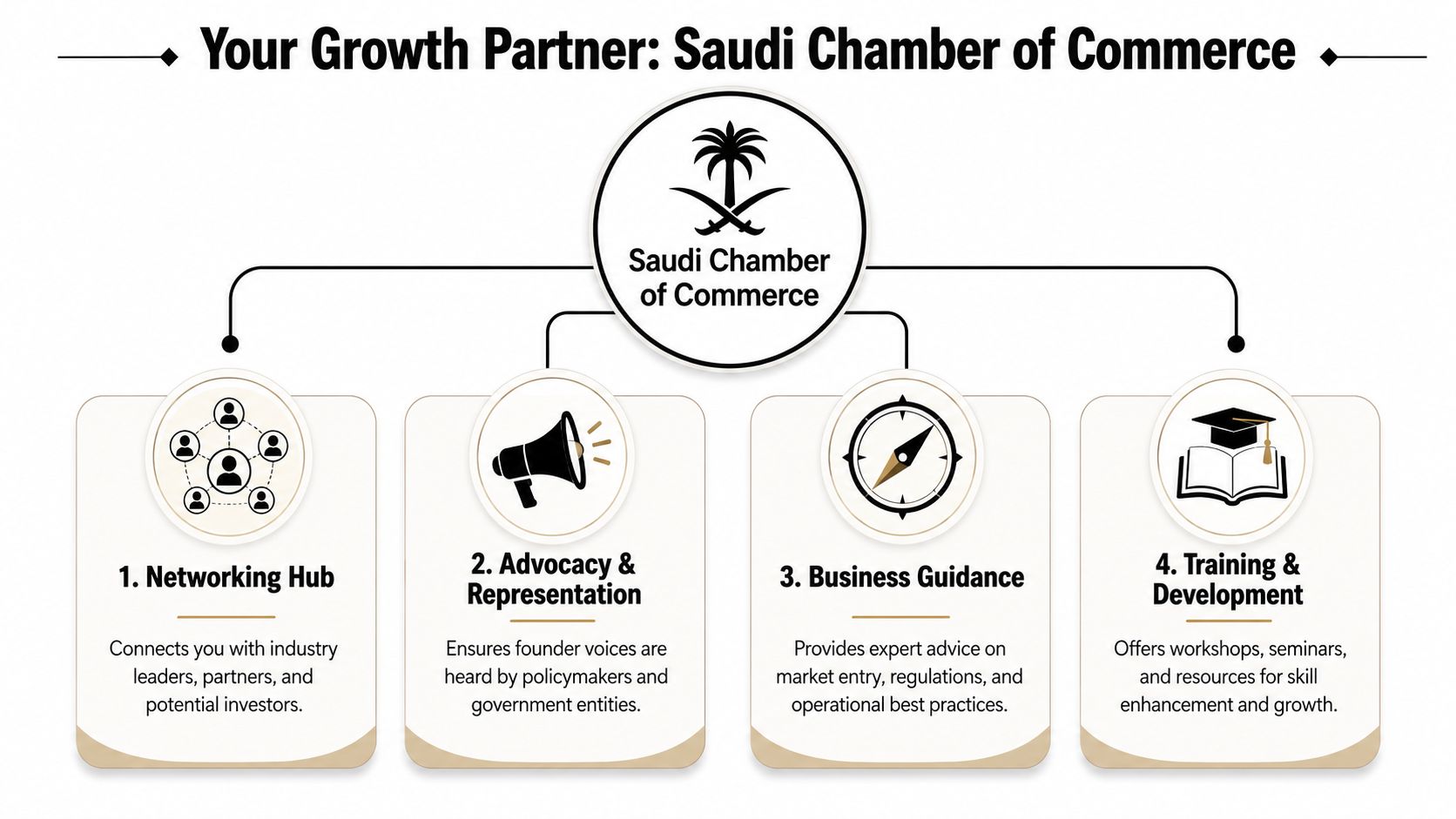
A common mistake is treating the Saudi Chamber like a single counter where documents get stamped. In practice, your relationship is with the chamber in the city where you operate, and that matters because access, introductions, and day-to-day usefulness are local.
The gatekeeper role
For founders, the Chamber sits inside the operating system. It shows up in registration, renewals, document handling, and the practical steps that keep your company usable inside the Saudi commercial environment.
That is the first difference from the UAE free zone mindset.
In the UAE, founders often expect the licensing authority to act like a setup platform with a support desk attached. In Saudi, the chamber is closer to a business institution tied to a specific city's commercial network. If your company is based in Riyadh, Jeddah, or the Eastern Province, the local chamber becomes part of how you get things done properly and on time.
The market access role
Smart founders get more value than the fee they pay.
The chamber can open doors to sector committees, business events, trade delegations, workshops, and introductions that would take far longer to arrange cold. For a UAE founder entering Saudi, that matters because the fastest route into the market is rarely a generic outbound push. It is usually a mix of compliance, credibility, and warm context.
I have found that chamber activity works best when the ask is specific. Do not ask for “market insights.” Ask which committee follows your sector, which events attract serious buyers, or which business group is active in your category. Clear requests get clearer responses.
If you have worked with chambers elsewhere in the region, this Oman chamber comparison for regional expansion is a useful reference point for how these systems differ across Gulf markets.
The advocacy role
The Chamber also gives companies a channel into broader business discussions. At local level, it brings together sector players and surfaces commercial issues. At national level, the wider chamber system represents business interests in discussions with government bodies.
Founders should stay realistic here. Membership will not give a startup special treatment. What it can do is put you closer to the conversations that signal where a sector is heading, which compliance issues are frustrating operators, and which relationships matter before a rule change hits your timeline.
That information is useful early.
What founders should actually use it for
The companies that get real value from the Saudi Chamber show up with an operating plan, not just a registration file.
What works
- Join with a clear commercial target: pick the city, sector, and type of customer or partner you want to reach.
- Choose events carefully: attend the sessions where buyers, large local companies, and committee members spend time.
- Use the chamber to shorten trust-building: a warm introduction through the right forum can save months of cold outreach.
- Ask operational questions: for example, which authority handles your activity, which committee is relevant, and who you should meet next.
What wastes time
- Passive membership: paying the fee alone does very little.
- Generic Gulf-wide pitching: Saudi buyers usually expect a Saudi-specific proposition, local references, and a clearer execution plan.
- Treating the chamber like a free zone customer support desk: that assumption leads to slow progress and the wrong questions.
Navigating Membership Tiers and Mandatory Fees
The first time this catches UAE founders is usually at the worst moment. The company is almost ready, the Commercial Registration is in motion, someone assumes the chamber step is routine, and then a missing membership detail slows the file. In Saudi, chamber membership sits inside the operating stack. Treat it like a side admin task and it can hold up work that should have been straightforward.
That is the main budgeting point. The fee matters, but timing matters more.
Membership is effectively tied to obtaining or renewing a Commercial Registration, so mistakes here can interfere with licensing timelines, as reflected in the Riyadh Chamber's overview of the regulatory framework. Founders used to the UAE free zone model often expect a clearer packaged process. Saudi is workable, but you need to manage the dependencies yourself or make sure your local adviser does.
What the fee actually tells you
The annual fee is less about buying access and more about placing your entity correctly inside the chamber system. Your chamber, tier, signatory details, and company profile need to match what is happening on the CR side. If they do not, you create avoidable follow-up.
As noted earlier in the article, chambers classify companies into membership categories with different fee levels. For planning purposes, founders should expect a low annual fee for smaller entities and a higher fee for larger or higher-capital companies. The amount is rarely the problem. The operational challenge is getting the classification and company details right the first time.
Example Riyadh Chamber Membership Tiers
| Tier | Example Annual Fee (SAR) | Key Benefit Example |
|---|---|---|
| Second | 200 | Entry-level chamber membership tied to smaller company profile |
| First | Varies by company size and capital | Broader fit for established operating companies |
| Excellent | Up to 5,000 | Suitable for larger-capital entities needing full chamber servicing profile |
Do not build your budget or filing plan on a screenshot from another founder's renewal. Chamber treatment can change based on legal form, capital, activity, and region.
The practical difference versus the UAE is simple. In a free zone, founders are used to one authority acting like a central operator. In Saudi, the chamber is one part of a wider system, and that system expects your company records to stay aligned across several touchpoints. If your team already understands the Dubai chamber certificate process for UAE companies, use that as a reference point, then assume Saudi will require tighter coordination between chamber records, CR status, and authorised signatories.
Where founders lose time
The fee itself does not hurt. Bad sequencing does.
A chamber issue can delay renewals, attestations, contract paperwork, or signatory updates in practical terms. I have seen teams spend days chasing a problem that started with an outdated board resolution or a signatory name that did not match the Arabic records exactly. Saudi bureaucracy is manageable, but it rewards clean paperwork and punishes assumptions.
Identity mismatches are a common reason for rework, especially for foreign-owned entities. If your ops team needs a clean reference on how these checks are typically handled, point them to Matil's comprehensive identity verification guide.
Founder move: Put chamber renewals, CR renewals, signatory changes, and board approval updates in one compliance calendar owned by one person.
What to confirm before you pay
Use this checklist with your local team or incorporation adviser:
- Which regional chamber applies: Riyadh, Jeddah, Eastern Province, or another chamber tied to your entity.
- Which membership tier fits your company: based on current legal form, capital, and activity.
- Who signs on behalf of the company: and whether that authority matches current resolutions and IDs.
- What renews at the same time: chamber membership, CR, municipality records, or other linked approvals.
- Which language version controls: if your English and Arabic records do not match, fix that before filing.
One page is enough. Map every licence, renewal, signatory, and chamber dependency on a single sheet and keep it current. That habit saves more time than arguing over a few hundred riyals in annual fees.
The Document Checklist for Joining and Compliance
Most market-entry plans become slower and more expensive than they need to be. Not because the requirements are impossible, but because founders prepare only for incorporation documents and forget product compliance, identity checks, and local operating evidence.
Your core document pack
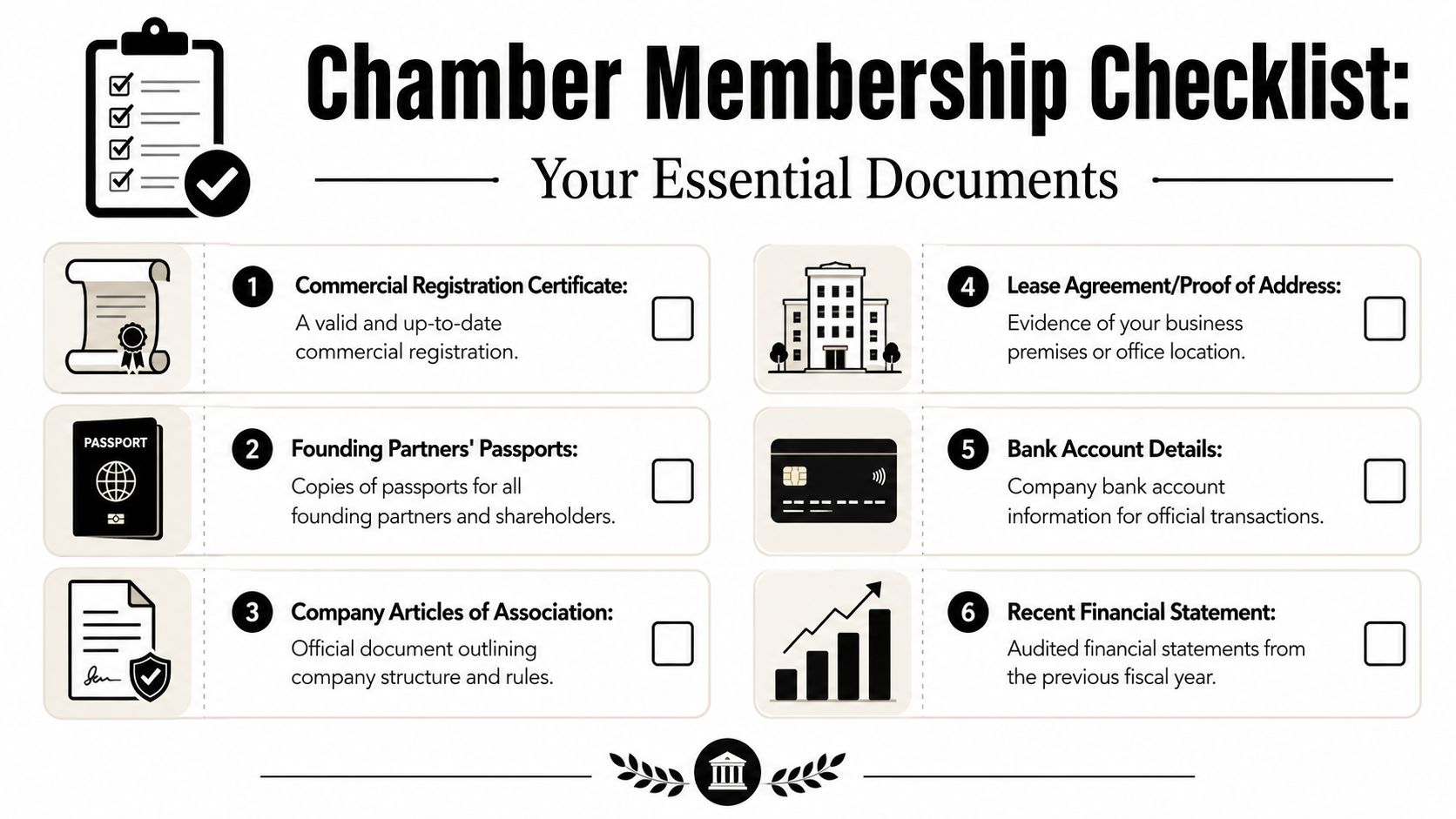
Start with the company documents that usually trigger follow-up requests if they're inconsistent, expired, or poorly translated.
- Home-country registration documents: If you're expanding from the UAE, keep the parent company commercial documents current and consistent across names, dates, and activities.
- Constitutional documents: Articles of Association, Memorandum of Association, and any supporting incorporation records should match the Saudi structure you're setting up.
- Board approvals and authority documents: If the Saudi entity is a branch or subsidiary, make the board resolution explicit about the setup, scope, and authorised signatory.
- Founder and manager IDs: Passports and identification details must align exactly with the legal documents and appointment records.
- Proof of premises or operating address: Don't leave this until late. Address evidence often becomes a sequencing issue.
- Banking and financial support documents: Keep bank details and any required financial statements organised in one file set.
For teams handling foreign shareholders, messy identity verification is an avoidable source of delay. A practical refresher on document consistency and onboarding controls is Matil's comprehensive identity verification guide, especially if your shareholders, directors, and signatories sit across multiple countries.
The hardware and product compliance trap
The second checklist is the one software-first founders often miss. If you sell connected hardware, smart devices, telecom-enabled equipment, or IoT products, chamber registration is only part of the picture.
The SABER platform, integrated with SASO and CST, requires regulated products, especially IoT and telecom equipment, to go through conformity assessment and type approval before customs clearance, as outlined in this Saudi TMT compliance guide. If you don't plan it early, it can become a multi-month delay.
Don't ship first and “sort compliance later”. In Saudi, that's how inventory gets stuck and launch dates slip.
A founder-ready checklist
Use this as a pre-submission screen before your team starts the chamber process.
| Item | Why it matters | Common founder mistake |
|---|---|---|
| Commercial registration documents | Confirms legal existence and business activity | Using outdated or inconsistent records |
| Articles and constitutional papers | Supports legal structure review | Mismatch between UAE and Saudi entity setup |
| Board resolution and appointments | Confirms authority to establish and sign | Vague wording on signatory powers |
| Passport and ID records | Needed for shareholder and manager verification | Name spellings not matching exactly |
| Address and lease evidence | Supports operating presence | Leaving premises proof too late |
| Bank and financial documents | Supports formal transactions and file completeness | Scattered document ownership across teams |
| SABER and technical approvals if applicable | Required for regulated product entry | Assuming customs clearance is a simple import step |
If your UAE team is used to document routines around attestations and business certificates, this Dubai chamber certificate guide is a helpful comparison point for how official trade paperwork habits differ across markets.
What to prepare before the first call
Bring three things to your first serious Saudi setup discussion:
- A clean corporate pack
- A product classification view
- A named internal owner for compliance
If nobody owns the compliance workflow end to end, the process drifts between legal, finance, operations, and sales. That's where founders lose weeks.
How the Chamber Connects You to Investors and Partners
Most founders discover the Saudi Chamber of Commerce because they have to. The stronger reason to care is growth. Saudi chambers run sector-specific committees and forums where companies can pitch projects to government entities and large corporates, and they also facilitate introductions to institutional investors and family-owned holding groups, according to this overview of Saudi chamber business services.

Where the real value shows up
This is one of the biggest differences between “we registered in Saudi” and “we're building a Saudi business”. If your membership only exists in your finance folder, you're wasting part of its value.
Good chamber use creates structured access to:
- Sector committees where industry issues and opportunities are surfaced
- Matchmaking forums that compress months of cold outreach
- Government-adjacent conversations where procurement logic becomes clearer
- Local capital networks that are hard to break into through email alone
Founders from the UAE often underestimate how much better a targeted in-person introduction works in Saudi than a polished outbound sequence. The deck still matters. The path into the room matters more.
How to show up properly
Don't attend chamber events with a generic “we'd love to explore Saudi” message. That rarely lands. Go in with a specific ask and a specific buyer profile.
Use a one-page brief with:
- Your Saudi use case: what problem you solve in this market
- Target counterparties: corporates, distributors, regulators, family groups, or public-sector entities
- Local operating model: direct sales, channel, pilot, JV, or licensed distribution
- Compliance status: especially if your product touches regulated categories
Field note: The best chamber introductions happen after you've made it easy for someone local to explain your business in one minute.
A short explainer like “UAE-based B2B SaaS for logistics groups entering Saudi warehouse operations” travels far better than a broad regional pitch.
This discussion gives a practical view of relationship-led business development in the market:
Unwritten rules founders should know
Some patterns work repeatedly:
Pick the right chamber first
Riyadh isn't automatically the answer. If your category is better served commercially through Jeddah or the Eastern Province, start where your buyers sit.Ask for one strong introduction, not ten weak ones
One relevant corporate lead beats a pile of polite business cards.Follow committee logic
If your product fits logistics, industry, retail, healthcare, or digital infrastructure, find the most relevant committee or forum rather than attending broad business mixers.Localise your materials
Decision-makers respond better when they can see your Saudi route to market, not just your GCC ambition.
The next action here is simple. Ask your team to build a “Saudi introductions list” with three columns: target partner type, ideal intro source, and chamber touchpoint.
Saudi Chamber vs UAE Free Zones A Founder's Take
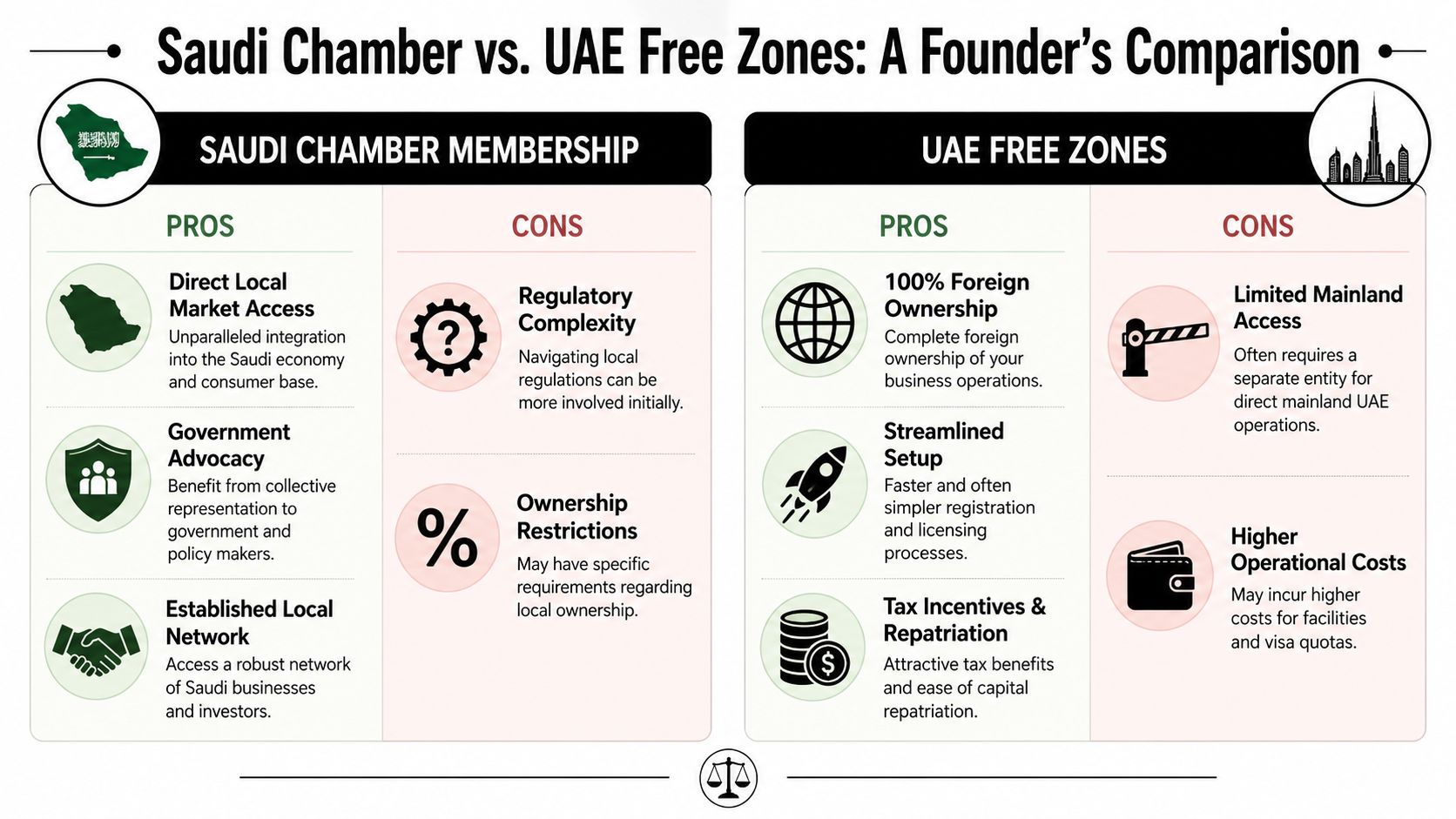
If you've built in the UAE, your benchmark is probably a free zone. That's reasonable. Free zones are built to reduce friction. They package licensing, visas, facilities, and admin into something founders can understand quickly.
Saudi works differently. The Council of Saudi Chambers functions as the primary institutional interface between private enterprise and government ministries such as the Ministry of Commerce and Investment, which makes the chamber system a policy and regulatory access channel rather than a setup operator in the UAE free zone sense, as described in this Saudi business environment guide.
When the UAE model is still better
A UAE free zone is often the better base if you need:
- A fast regional HQ setup
- Operational simplicity for a lean team
- Cleaner early-stage administration
- A holding or service structure that doesn't yet require Saudi domestic depth
That's one reason many founders begin in Dubai or Abu Dhabi, then expand once sales pull justifies the extra operating complexity.
If you're tightening commercial controls before expansion, especially around cross-border contracts and scope definitions, Legitt AI's UAE contract insights are useful to revisit before you mirror those terms into Saudi arrangements.
When the Saudi route is worth the bureaucracy
The chamber-linked Saudi route becomes worth it when your business needs real domestic market participation.
That usually means:
- Selling directly into the Saudi market
- Working with large Saudi corporates
- Pursuing government or public-sector-linked opportunities
- Building local partnerships that require formal market presence
- Hiring and operating in a more embedded way
Here's the honest trade-off. Saudi is more bureaucratic than a typical UAE free zone journey. But that bureaucracy sits closer to your target market. If your growth thesis depends on Saudi revenue, local relationships, procurement access, or structured enterprise sales, the extra effort can be rational.
My view after doing both
I wouldn't call the Saudi Chamber model “better” than UAE free zones. I'd call it more commercially integrated and less founder-friendly at first touch.
UAE free zones optimise setup. The Saudi chamber ecosystem matters once you need access, credibility, and traction inside the Kingdom.
That distinction matters. Founders lose time when they choose based on ease instead of market objective.
A simple decision filter works well:
| If your priority is... | Better fit |
|---|---|
| Fast launch and regional admin simplicity | UAE free zone |
| Deep Saudi market entry and local commercial access | Saudi mainland and chamber ecosystem |
| Testing Saudi demand lightly from outside | UAE base first |
| Building direct Saudi enterprise or institutional relationships | Saudi route sooner |
The right structure depends on where your next meaningful revenue should come from, not where the setup is easiest.
Your Action Plan for Leveraging the Chamber
Don't leave this as general knowledge. Turn it into an operating task list this week.
Choose your actual Saudi entry city
Decide whether Riyadh, Jeddah, or another market is your real commercial base. Don't pick by reputation alone. Pick by buyer concentration, partner access, and operational fit.Run a pre-audit before filing anything
Put one person in charge of your document pack, signatory map, and product compliance review. If your product crosses borders, language quality matters more than founders expect. This guide on avoiding translation risks in global expansion is worth sharing with whoever owns legal and compliance documentation.Write your chamber ask in one sentence
Don't approach the Saudi Chamber of Commerce with “we want to expand”. Say exactly what you want. Example: an introduction to distributors in a specific sector, access to a committee, or guidance on a regulated product path.
Founders who win in Saudi usually do one thing well. They treat compliance and relationship-building as one system, not two separate jobs.
If you want sharper founder-to-founder insight before making your Saudi move, Founder Connects gives UAE and MENA founders a high-signal way to compare notes, get practical introductions, and pressure-test expansion decisions with people who are building.

Building in MENA? You don't have to do it alone.
Join 300+ founders in the Founder Connects Residency. Monthly squad calls, warm intros, $3M+ in perks, and much more. All for less than your monthly coffee budget.
Popular posts





Founder Connects is a premium MENA tech founder community. Meetups in Dubai and across MENA, Residency Squads of 8–10, and 400+ vetted WhatsApp founders (apply and screened).